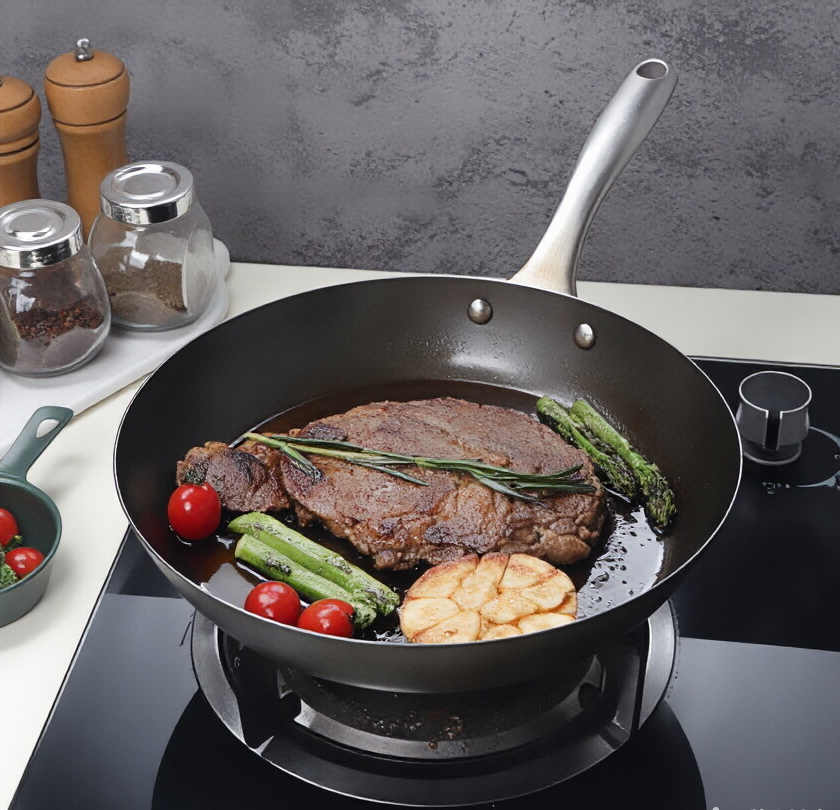
In the absence of flavorful ingredients, well-browned food has a richer, more varied flavor then poorly browned food.
What is browning?
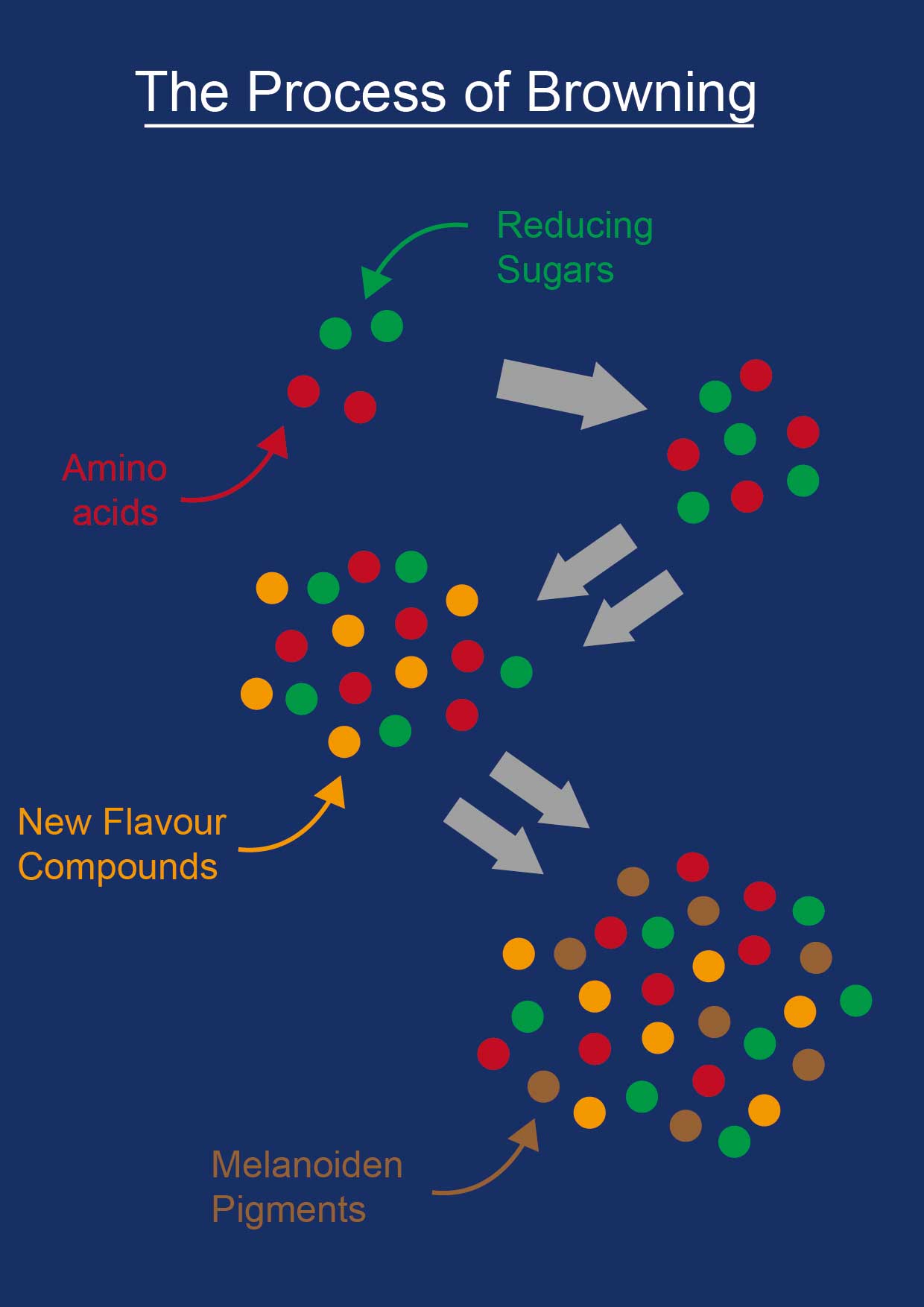
 Browning is a chemical reaction, also known as the Maillard Reaction after the French scientist, Louis Camille Maillard, who first described the process in the early 1900s. The chemistry behind this reaction is not completely understood even today but, put simply, in many foods heat causes the amino acids (the building blocks of proteins) to react with certain types of sugars to create new, distinct flavor compounds. These compounds in turn react with more amino acids to form even more compounds, rapidly increasing in quantity on both the surface of the cooking food and the pan itself. Finally, very large molecules called Melanoidin pigments are formed which create the deep brown hue on the crusts of meat and vegetables.
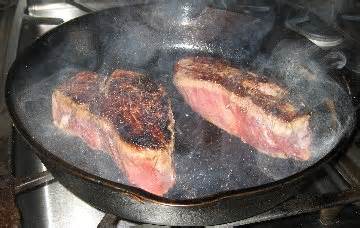
Sauteing and searing are generally considered the best cooking methods for giving meat, such as steak, or vegetables a well-browned, flavourful crust. In order to achieve this, a proper pan temperature is crucial for success. If the pan is too cool the foods may cook too slowly and virtually steam in exuded juices, preventing both crust and flavor development. The Maillard Reaction occurs only when the surface temperature exceeds 300 degrees.
What is the best frying pan for a delicious, browned crust on food?
Although aluminum and tri-ply stainless steel pans conduct heat around a frying pan very evenly, they do not conduct it to the surface of the pan very quickly. Significant heat is required to jump start the chemical reaction that causes food to brown; and longer cooking time, as with an aluminum or stainless steel pan, won’t lead to more browning unless the food is cooked for a very long time. However, if food is cooked for too long there will be large loss of moisture, so that that although the food might be well-browned on the outside, it will be too dry and chewy on the inside.
Ultimately, a hotter pan equals more browning. Cast iron is excellent for this because it not only retains heat extremely well but also, once heated up, conducts heat to the surface of the food very quickly. However, for cooking usage cast iron does have some significant disadvantages: it is heavy, expensive, difficult to clean, and the temperature of the pan can be difficult to control.
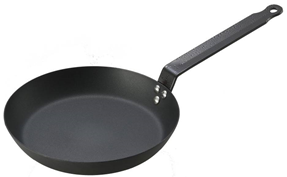
In contrast, a Lotus Rock pan shares many of the benefits of cast iron but is lighter, cheaper, easier to clean, and the pan heats up quickly too, but at a controlled setting, for excellent browning and flavourful crust development on food.
2 Responses
But is it totally safe safe to use at high temperatures? Absolutely nothing happens to the coating at high heat ?
Dear Mr Choudhury,
Thank you for your question with us regarding the high heat resistance of Lotus Rock. Lotus Rock’s surface is a specially configured design which has very high heat resistance. Most general non-stick cookware, which is organic-bonded, can easily break under a high temperature. This can, consequently, create a harmful chemical smoke which is bad on environmental and health grounds. In contrast the Lotus Rock silicon-oxide crystal coating is made up of inorganic substances: it is in the form of a thin crystal, which has no traces of carbon within it. Conversely, the type of ceramic material that the silicon-oxide crystal coating rests on can resist temperatures of up to 350 degrees centigrade, which is particularly advantageous for a high-heat cooking method such as stir frying.
However, a low-medium heat is still advised for a couple of reasons. First, if a high heat is always used then over time the pan might start to warp. Second, genearally for high heat cooking it is advised to slowly heat up the pan so when the temperature of the pan has reached the Leidenfrost effect stage then the heat has spread more evenly around the pan and the cooking effect, along with the non-stick release of the oil, will be better.