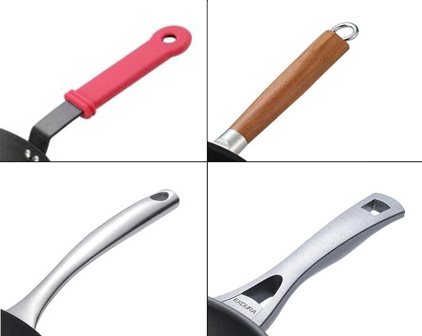
 As explained in the previous blog post, Lotus Rock has designed and patented a number of highly eye-catching, ergonomic handles for its various cookware and BBQ items. Handle materials can vary from forged steel, to a natural wood such as acacia or bamboo, to bakelite with soft-touch coating, and lastly a silicone material, molded into a variety of different shapes, such as a lollipop.
However, for cookware usage a good handle should not just have an attractive appearance or a comfortable, stay-cool grip, it should also be safe to use as well. One particularly important feature for a handle with a Lotus Rock pan is its strength and secure attachment to the pan’s body. All Lotus Rock pans come with a very heavy carbon steel substrate of 2.0mm in thickness. Although not nearly as heavy as cast iron a Lotus Rock pan is still quite a heavy weight for certain types of cooking utensils, such as a 12” stir wok or a 28cm frying pan. Therefore, a strong, well-designed handle is especially important for a safe cooking experience with a Lotus Rock pan.
The kitchenware industry commonly uses a bending strength test, from testing standard BS EN 12983/ 7.5, to assess whether a handle is sturdy and strongly attached enough to a pot or pan.
BS EN 12983/ 7.5 Bending Strength Test Procedure
The BS EN 12983/ 7.5 procedure for the Bending Strength Test is as follows:
Attach the cookware firmly to the rigid base so that the contacting face of the loading bar is 10mm + 1mm from the end of the handle. Then apply the load, gradually without shock, to the handle, until the load is supported or the fixing system fails.
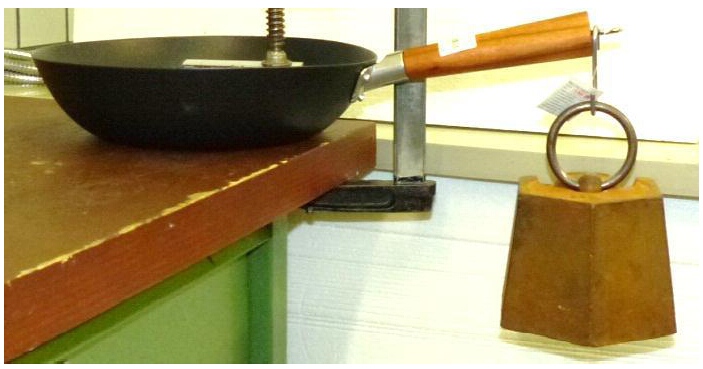
Lotus Rock Acacia handle
Lotus Rock Titlis Handle
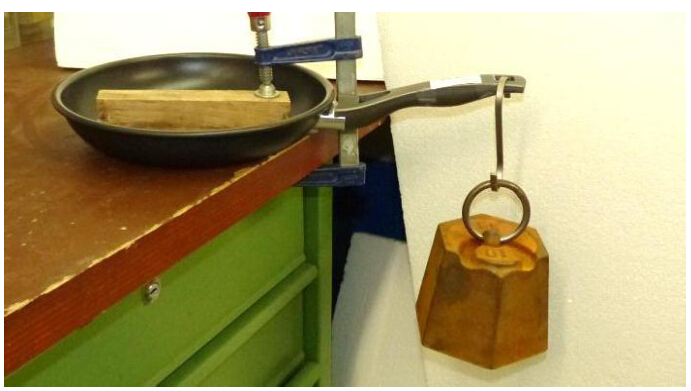
Since Lotus Rock’s was introduced into the market, a number of different types of handles for Lotus Rock pans have been tested according to the BS EN 12983/ 7.5 bending strength test. As shown in the photos above both the Acacia square wooden handle, which uses a riveted attachment method, and the Titlis bakelite handle, which uses a welding attachment method, have both been stress tested with a 10kg weight attached firmly to the end of the handle. Both of these handles passed without any recorded major failure at a SQTS (Swiss Quality Testing Services) testing lab.