April 20, 2015 / arnoldtnn / 0 Comments
As noted previously here, all Lotus Rock pans have an excellent high heating effect, a desirable quality which helps produce delicious tasty food. What thermal properties give a cooking utensil an excellent heating effect? Well, first, the pan must heat up quickly when placed on the heat sources; second, it has to be thick enough to heat up evenly across its surface; and third, it needs a large enough thermal capacity to minimise loss of heat when food is added to the pan.
Let’s start with the Lotus Rock pan’s prompt response to heat. Although carbon steel does not heat as evenly as aluminum, it does heat up much more quickly. Some methods of cooking require the pan to have reached a certain temperature before it is used; for example, browning, which is best done on a pan with a temperature of 180 degrees (this is the temperature when the Maillard Reaction begins to take effect). If an impatient cook starts before the pan reaches this temperature then the meat or vegetables being seared might still be browned but will have lost a large amount of moisture, making it dry and un-appetizing.
However, although carbon steel heats up quickly, a thin gauge of steel will do so unevenly, heating up most quickly in the centre of the pan. This not only creates a hot spot, causing uneven cooking, but will eventually warp the pan and give it a convex shape, causing oil and other liquids to slide to the edges. In order to disperse the heat more evenly around the pan all Lotus Rock pans are made with 2.0mm gauge steel. As is shown in the diagram below, a thicker gauge broadens the area at which the heat reaches the surface of the pan.
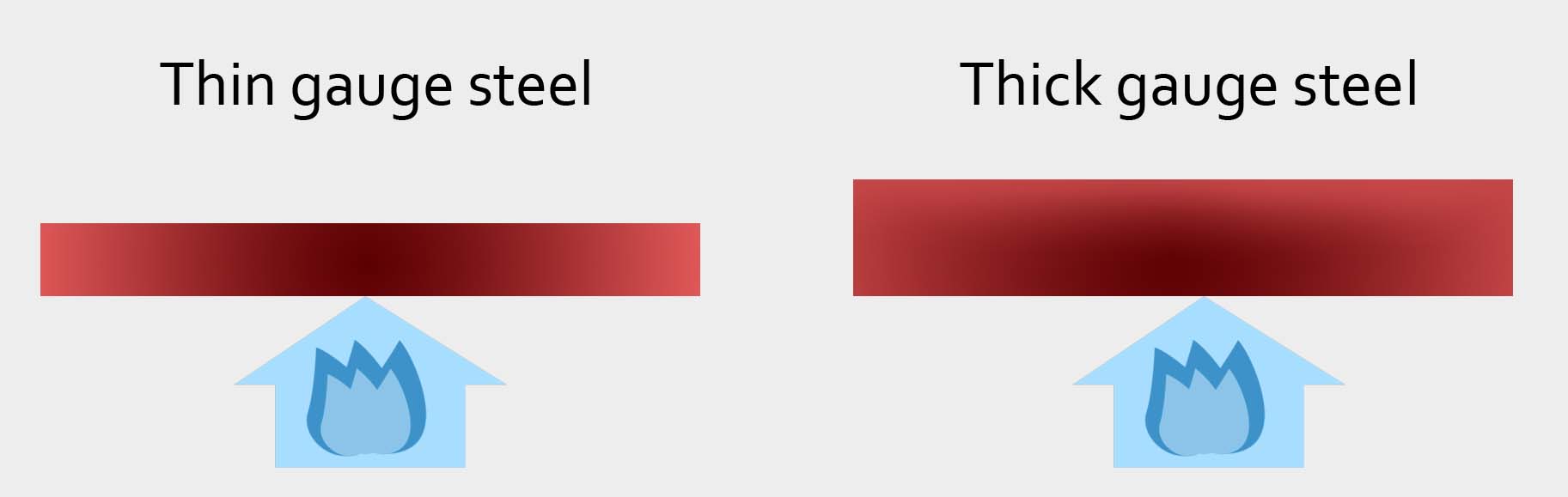
So with carbon steel as its substrate Lotus Rock pans can not only heat up very quickly but can also, due to the steel’s thick 2.0 gauge, provide a more dispersed heating effect so that the food is cooked evenly. It thus meets the first and second criteria for an excellent high heating effect. What about the third criterion? What happens to the heating effect of a Lotus Rock pan when food is added?
If you were to compare all the main metals for cookware usage, you would find that carbon steel is among the most dense (three times more dense than aluminum, for example), and as we know, Lotus Rock has a very heavy carbon steel gauge. This extra mass and space in its substrate means a Lotus Rock pan has a high heat storage capability, an essential component for an excellent heating effect. When a steak is placed on a grill pan to impart that smoky, chargrilled aroma, or a large quantity of vegetables are quickly added to a stir wok, the high thickness and density of a Lotus Rock pan will minimiss heat loss. So instead of steaming in their own juices, the steak and vegetables will sizzle and heat up quickly and evenly for a delicious and crispy taste.
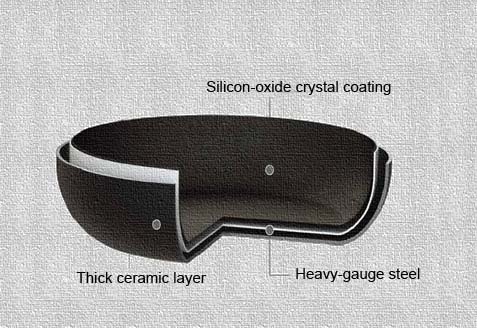
A second factor facillitating heat retention is the thick layer of ceramic on both the interior and exterior of all Lotus Rock pans. Most coatings on cookware sold throughout the world today have a thickness between 15-30 microns; the ceramic layer on Lotus Rock pans is in contrast around 100 microns thick. This thick coating increases the heat retention capability of all Lotus Rock pans due both to its extra mass and poor heat conductivity. Ceramic does not conduct heat very well, but it is good at storing heat – this is why it is often used for oven dishes.
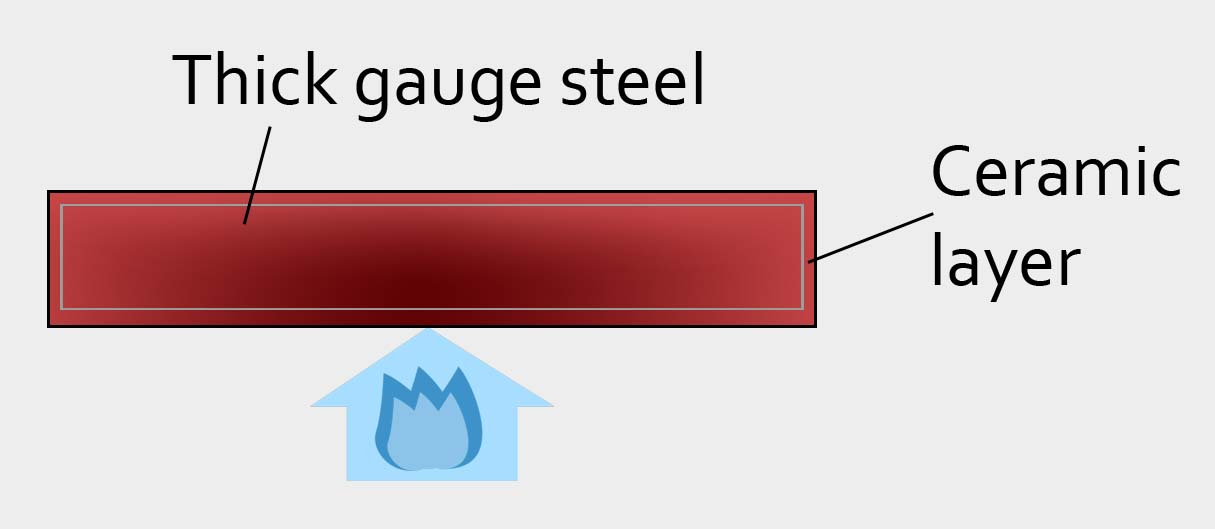
So when food is added to an already well heated Lotus Rock pan the temperature should not drop significantly, in part because of the heavy gauge carbon steel substrate but also because of the thick ceramic layer on both the interior and exterior of the pans. Thus the very thick material of a Lotus Rock pan is perfect for high heat cooking methods, such as for sautéing, searing, grilling and stir frying.
April 14, 2015 / arnoldtnn / 0 Comments

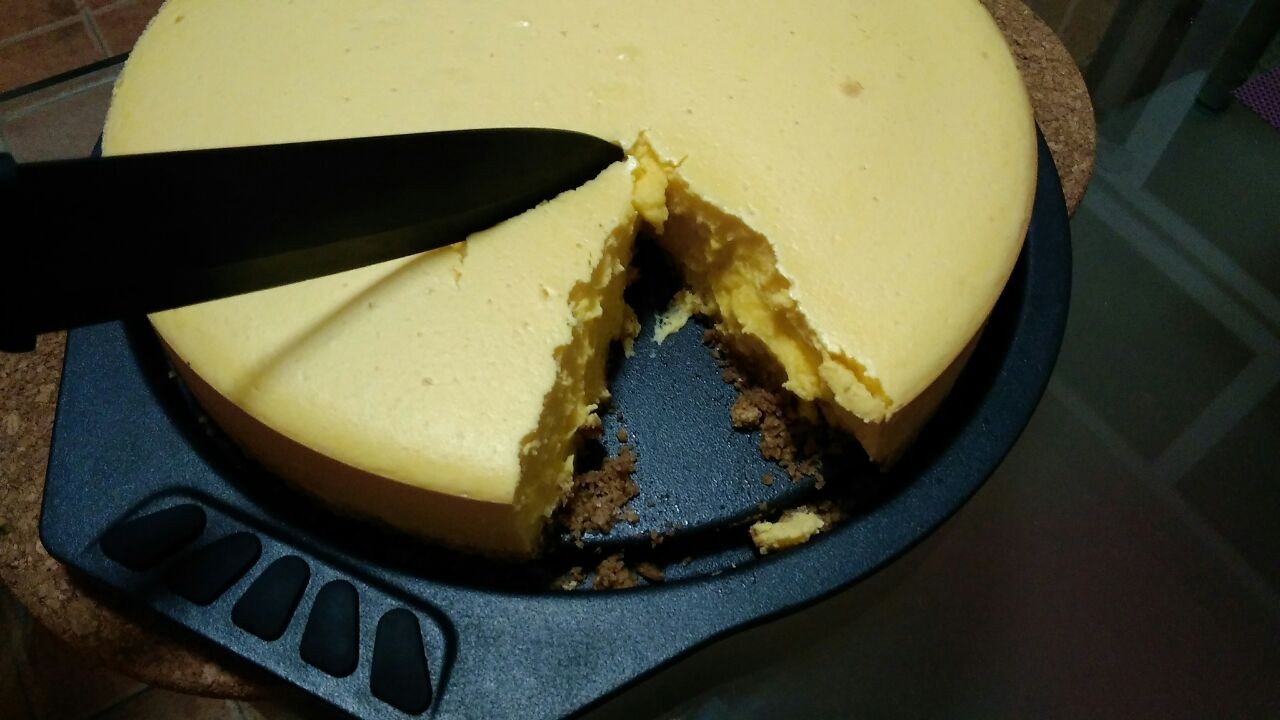
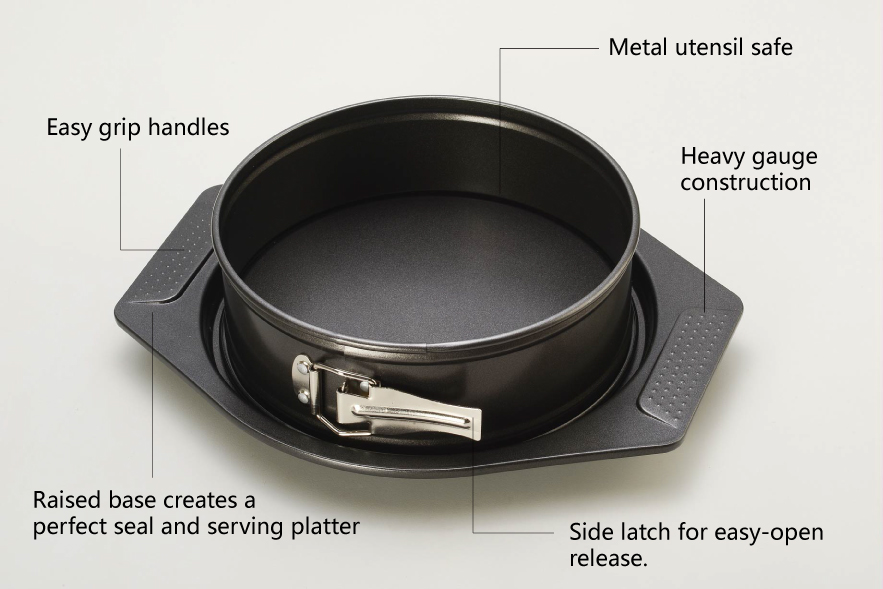
Professional-quality Lotus Rock spring form cake pan releases flawless cheesecake, torte, coffee cake and frozen dessert. The pan’s rim springs free from the base when the clamp is released, so you can remove baked goods without breaking. Easy to grip handles allow easy movement to and from the oven.
Natural, highly durable non-stick coating, with a metal utensil safe surface – suitable for carving a cake with a sharp, steel knife for serving directly on the table. Lotus Rock bakeware’s hydrophobic surface is easy-to-clean and with excellent colour stain resistance. Heavy gauge steel substrate, with a thick layer of ceramic on both the interior and exterior of the pan distributes heat quickly and evenly for consistent baking results.
Product features
- Easy-close latch creates a leak-resistant seal, keeping dessert intact.
- Spring form design is particularly helpful when releasing items that can’t be inverted, such as cheesecake, quiche, deep-dish pizza and layered frozen desserts.
- Rolled edges add rigidity to retain pan shape.
- Raised base creates a perfect seal and serving platter.
- Thick-walled construction prevents warping or bending.
- The premium Lotus Rock bakeware will not rust, chip, flake, peel or blister.
- Natural, durable nonstick coating ensures easy release and clean up.
- Ceramic coating on base is metal utensil safe.
- Lotus Rock bakeware is oven-safe to 550 F and broiler-safe.
- PTFE- and PFOA-free round springform pan is nonreactive to acidic or dairy ingredients and will not affect the flavors of foods or discolor over time like natural metals.
April 10, 2015 / arnoldtnn / 0 Comments

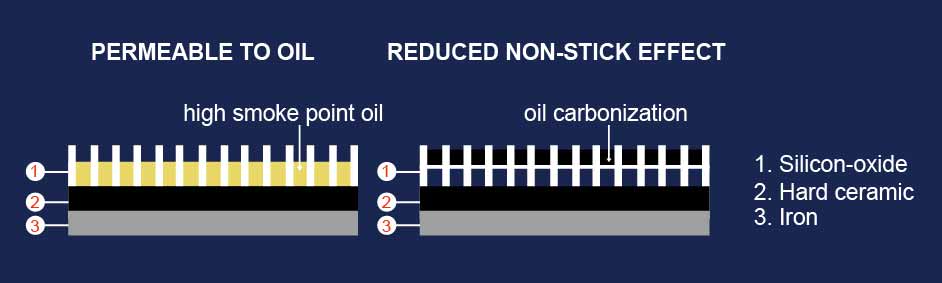
One of the significant benefits of a Lotus Rock pan is its amazing heating effect, for example, it is perfect for searing a delicious brown crust on meat and vegetables. However, if the wrong cooking oil is used for this heating effect then a dark build-up on the surface of the pan can appear, in most cases this is because of oil carbonization. This occurs over time when cooking oil is used above its smoke point – extra virgin olive oil or butter is the usual culprit. Oil carbonization can impart two particular defects to a Lotus Rock pan, first it makes it very difficult to clean, the pan no longer has a hydrophobic surface to assist for easy cleaning. The second difficulty with oil carbonization on a Lotus Rock pan is that it stops any cooking oil from permeating the lipophilic surface of the silicon-oxide crystal coating – thus making the pan no longer non-stick.

What to do?
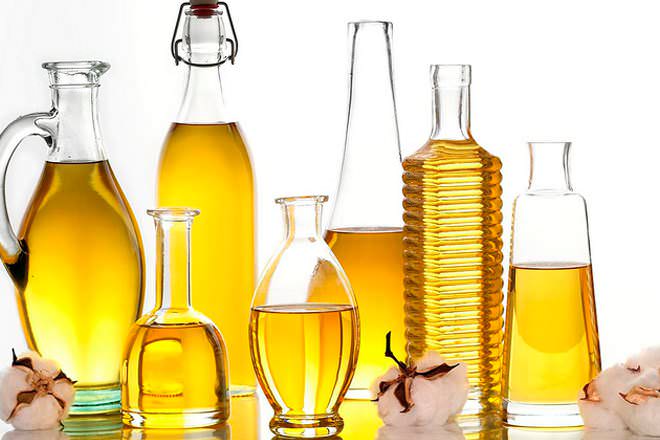
Using a cooking oil with a high smoke point is very important, as it can give the oil time to seep into the Lotus Rock pan’s surface and provide a non-stick release for cooking, before it can carbonize and scorch on the pan. Lotus Rock recommends vegetable, canola or extra-light olive oil for most cooking needs. Unlike olive oil, for example, which should never be used because it has a very low smoke point, these three oils have quite a high smoke point and so are more suitable for the fast and high heating effect of Lotus Rock pans.
In addition to using the correct cooking oil, after each use a Lotus Rock pan should be scrubbed thoroughly with a grease fighting dish soap. This will stop too much oil from remaining on the pan, which might later become quite sticky and therefore scorch the pan when it is next used.
What if my Lotus Rock pan already has an oil carbonization mark on it?
A lot of cookware manufacturers recommend using baking powder and water to remove oil carbonization marks on a pan. However, from our own testing we have found this to be not very effective at completely removing the marks from the pan. Instead we recommend using the procedure as described here to purify the pan and renew the non-stick release.
April 2, 2015 / arnoldtnn / 6 Comments
As was noted previously here, Lotus Rock does not have a chemical non-stick release. Unlike most other famous non-stick coated pans, such as Calphalon, Scanpan and Tefal, which contain a chemical compound called PTFE for non-stick release, a Lotus Rock pan has instead a natural, durable non-stick release, which is PTFE-free.
When a general, PTFE non-stick coated pan loses its non-stick release, it cannot be renewed – it becomes obsolete. With no non-stick release a PTFE-coated pan will become harder to clean and the coating may start to peel off, making the pan unfit and hazardous for further use. However, if after some use, food begins to stick to a Lotus Rock pan and it becomes harder to clean then it can, just like with uncoated cast iron or steel, be “re-seasoned”, or to put it in a more appropiate way for a Lotus Rock pan, the non-stick release can be ‘renewed’.
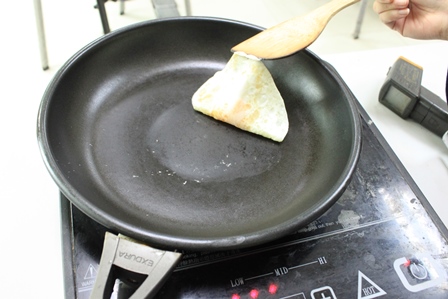
If your Lotus Rock pan does become hard to clean, with a reduced non-stick effect, then the below steps can be followed to remedy this.*
*Please note, that in addition to the steps shown below, the consumer must still wipe some oil onto the surface of a Lotus Rock pan before each use.
Lotus Rock non-stick renewal procedure
First step – boil water
- Fill a Lotus Rock pan half full of water and heat until boiling.

- Continue boiling the water for around 10-15 minutes, until the residual substances inside the surface of the pan are released.
- Some gentle scrubbing may need to be done to help complete this process.

- Once finished, pour the water out of the pan, clean it and then dry.
Second step – heat oil
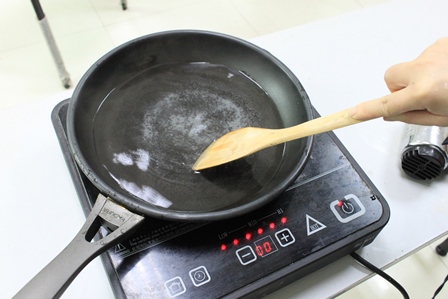
- Fill the pan with oil about 1cm deep and heat the oil until it starts to smoke.

- Then, carefully pour the oil out of the pan into a suitable container.
- Clean the pot dry, and then start to use the pan again for cooking.*

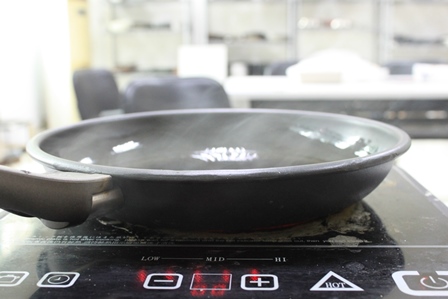
As is shown in the photos above, the Lotus Rock pan used in this test has a special feature included – the Stable Concave design. For more information about this please read here.
*Important! The pan must be washed after use. If too much cooking oil remains in the silicon-oxide crystal surface this will affect the non-stick release. Just like if oil is left around a jar it becomes sticky, which makes it uncomfortable to use
April 1, 2015 / arnoldtnn / 0 Comments
The metal substrate for all Lotus Rock pans is heavy gauge carbon steel. There are numerous reasons why Lotus Rock uses this substrate instead of more commonly used metals for cookware, such as aluminum or stainless steel, as explained here. Traditionally for cookware usage carbon steel is often sold as uncoated, with just a protective coating on it which needs to be removed prior to use. Generally, the instructions on the packaging for uncoated carbon steel cookware items such as stir woks, frying pans and paella pans advise the consumer to season the pan before use.
What exactly is seasoning?
According to Wikipedia, seasoning is “the process of treating the surface of a saucepan, wok, crepe griddle or other cooking vessel with a stick-resistant coating formed from polymerized fat and oil on the surface.” It goes on to say that it is desirable for carbon steel cookware “because otherwise they are very sticky to foods and rust-prone. It is generally not desired on other types of cookware either for cosmetic reasons or because the chemical composition of the pan already results in a non-stick surface.”
So, basically uncoated carbon steel cookware needs a polymerized oil film over it for two reasons:
- Corrosion resistance
- Non-stick release.
Regarding the first reason to season a carbon steel pan – corrosion resistance – this is not necessary for Lotus Rock. This is because on both the interior and exterior of all Lotus Rock pans there is a thick ceramic coating. So, as long as the Use & Care instructions are followed properly a Lotus Rock pan will not rust because the coating prevents the surface of the steel from any form of oxidation.

Is seasoning needed for non-stick release?
For the second reason to season a carbon steel pan – the non-stick release – this is also not necessary because all Lotus Rock pans have a silicon-oxide crystal coating. As explained here, this lipophilic coating gives all Lotus Rock pans a natural, durable non-stick release. While most non-stick pans on the market today have PTFE included in their coating to give them a non-stick effect, all Lotus Rock pans in contrast are PTFE/ PFOA free. The non-stick release for Lotus Rock comes from the consumer adding oil themselves to the pan prior to cooking and letting it permeate the silicon-oxide crystal coating.
However, although both seasoning and the process explained above do involve heating oil on an iron pan, the latter cannot be termed as seasoning for two reasons. First, seasoning is a reaction between the oil and the steel surface. With all Lotus Rock pans, cooking oil is never in contact with the heavy gauge steel substrate; instead the added cooking oil rests within the silicon-oxide crystal coating and on top of the thick ceramic coating.
The second reason is that for a carbon steel pan to be properly seasoned the oil needs to react with the steel surface and be polymerized. For seasoning to be successful the oil needs to surpass its smoke point, and then the chemical composition of the oil will alter to form a solid, hard film over the steel. For a Lotus Rock pan to have an effective and potent non-stick release or for that matter any other non-stick pan to be maintained well, the cooking oil should never be allowed to polymerize. If done so, it will form a barrier between the food and silicon-oxide crystal coating, which will impair the non-stick quality of the pan.
Disadvantages of a seasoned pan
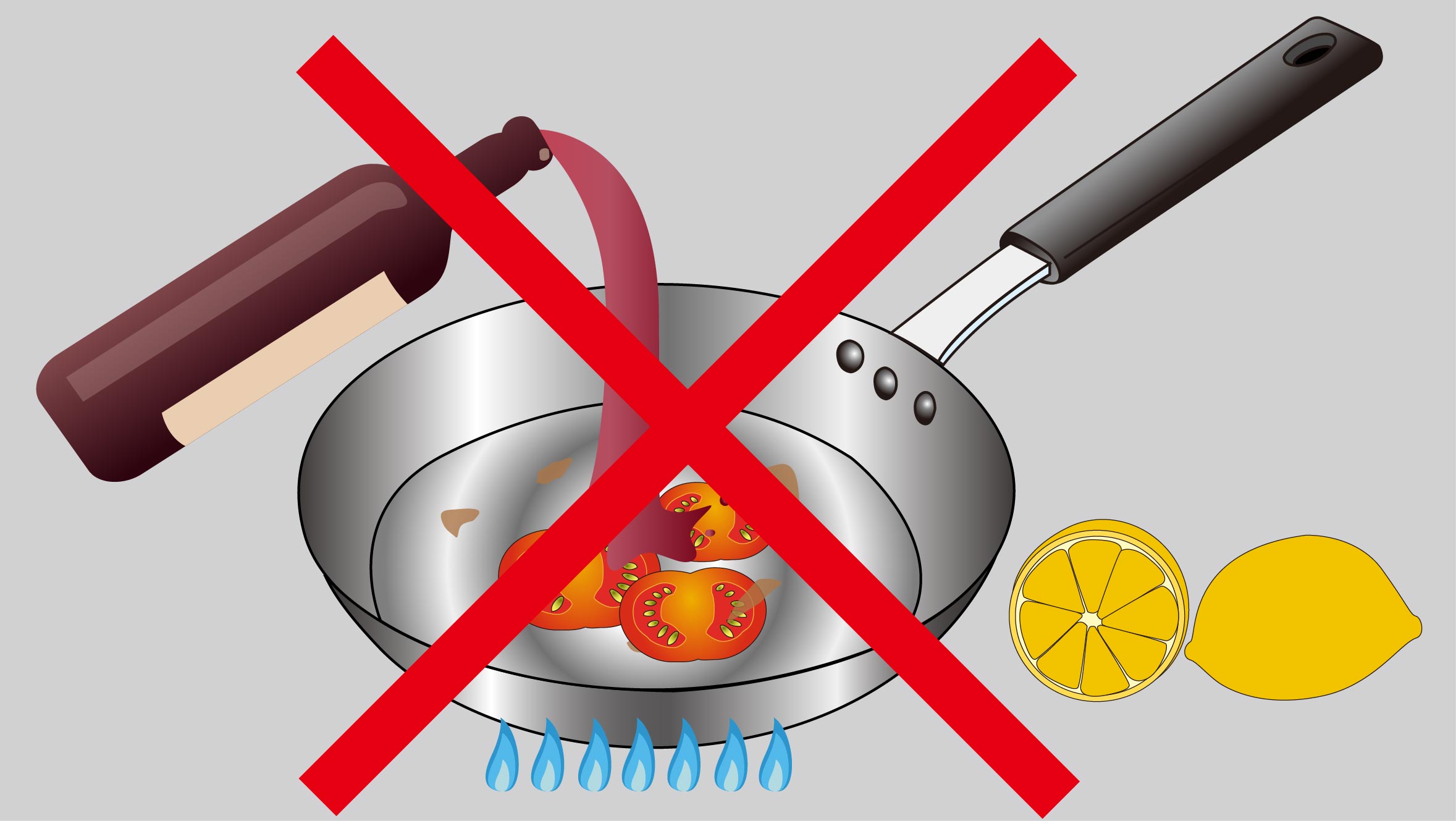
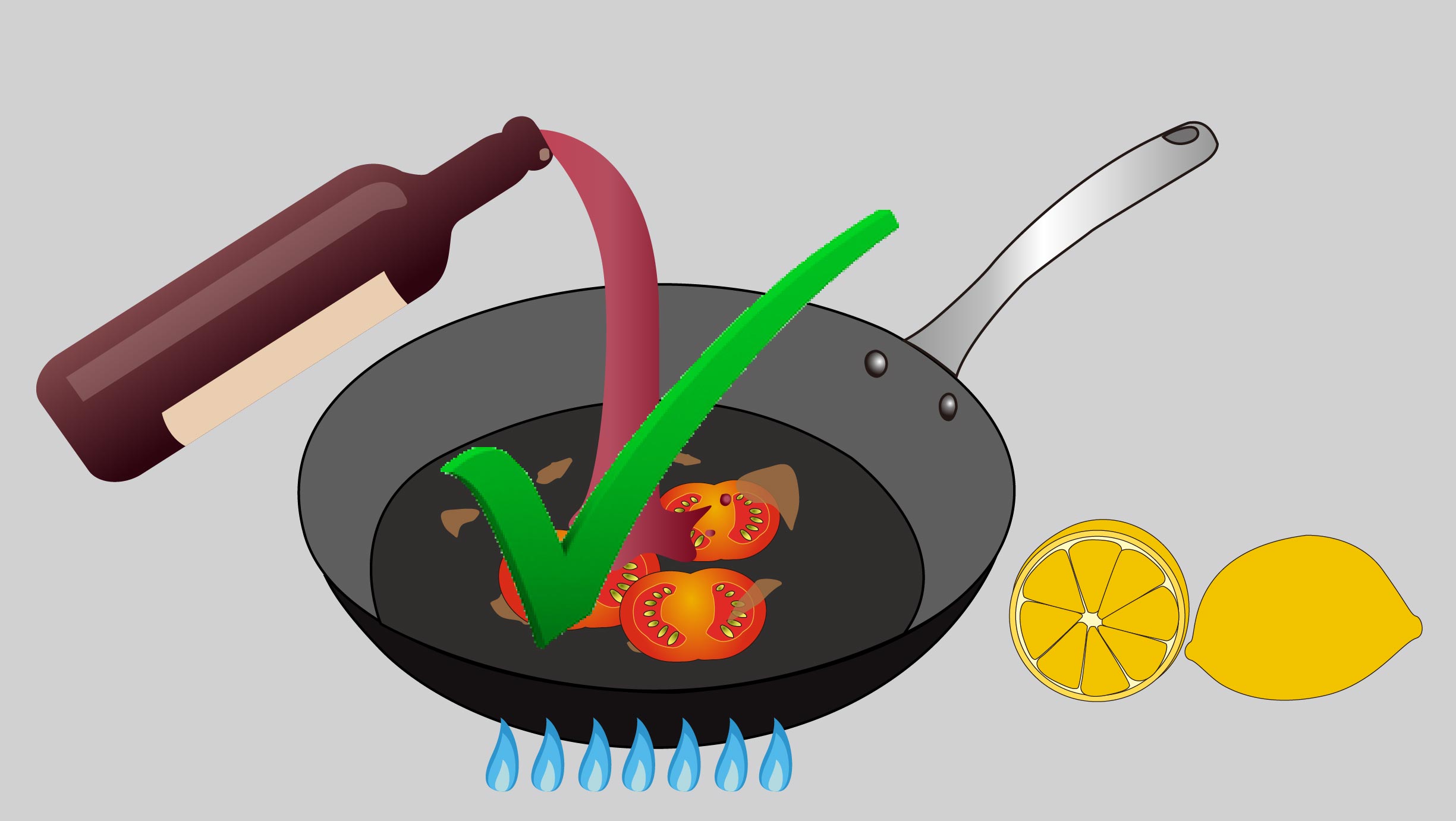
Although a seasoned steel pan undoubtedly has many benefits, to continually re-season a pan can be for some quite a hassle. Moreover, a seasoned pan does have some limitations when it comes to cooking. For example, ingredients which have are highly acidic cannot be used, such as lemon juice or tomatoes, because they will remove the non-stick patina which with continued use of fat for cooking occurs naturally on the pan. Another difficulty with a seasoned pan is that it is not suitable for de-glazing. Once the fond has built up on the pan after searing meat, generally an acidic liquid such as wine or broth is added to create a sauce. However, as has already been explained, the acidic nature of these sauces will react with the steel surface and impair the non-stick quality of the pan.
The silicon-oxide crystal coating of a Lotus Rock pan on the other hand is much less troublesome for cooking with. All kinds of acidic ingredients can be used with a Lotus Rock pan. So, for instance, a spaghetti Bolognese can be cooked on a Lotus Rock pan without any detriment to the quality of the non-stick release. In addition, a sauce such as gravy can be prepared from the fond after some chicken breasts have been seared on the stove top.
Conclusion
Generally, in the market place today carbon steel cookware, such as with famous brands including DeBuyer or Rosle, is sold uncoated. In order to protect these pans from rust, and to give them a non-stick release, the consumer is advised to season them before use. Seasoning involves heating oil to a high temperature on a steel pan, passed its smoke point. During this process the pores of the steel open and while this is happening the polymerized fat creates a hard, glassy film between and over the steel surface. With this treatment the steel pan is now not only protected from rust, but also conditioned with a non-stick effect.
Although Lotus Rock does use carbon steel, it does not need to be seasoned because on both the interior and exterior of the pan is a thick ceramic coating protecting it from oxidation. This coating, just like the polymerized fat of a seasoned pan, provides effective corrosion resistance. However, unlike an uncoated steel pan, a Lotus Rock pan doesn’t give the consumer the hassle of re-seasoning the pan after each use. The thick ceramic coating on Lotus Rock is metal utensil safe and is highly durable for long lasting protection from rust.
In addition, a Lotus Rock pan also doesn’t need to be seasoned to create a non-stick release because on top of the thick ceramic interior is a silicon-oxide coating. When oil is added to a Lotus Rock pan it permeates the lipophilic surface of the silicon-oxide coating to create a natural, non-stick effect. A significant advantage of the silicon-oxide crystal coating over the non-stick patina of a seasoned pan is that it is safe to use with acidic ingredients or sauces, so the consumer can use the pan for a greater variety of cooking methods.