Lotus Rock and the Fond
As was explained in the blog post “High heat develops flavor” browning, the Maillard reaction is the source of deep flavors in meat. However, what is not commonly known is that after the meat has been sautéed or pan-seared, the caramelized browned bits that remain on the bottom of the pan, known in French as the ‘fond’, can be used to create a delicious sauce.
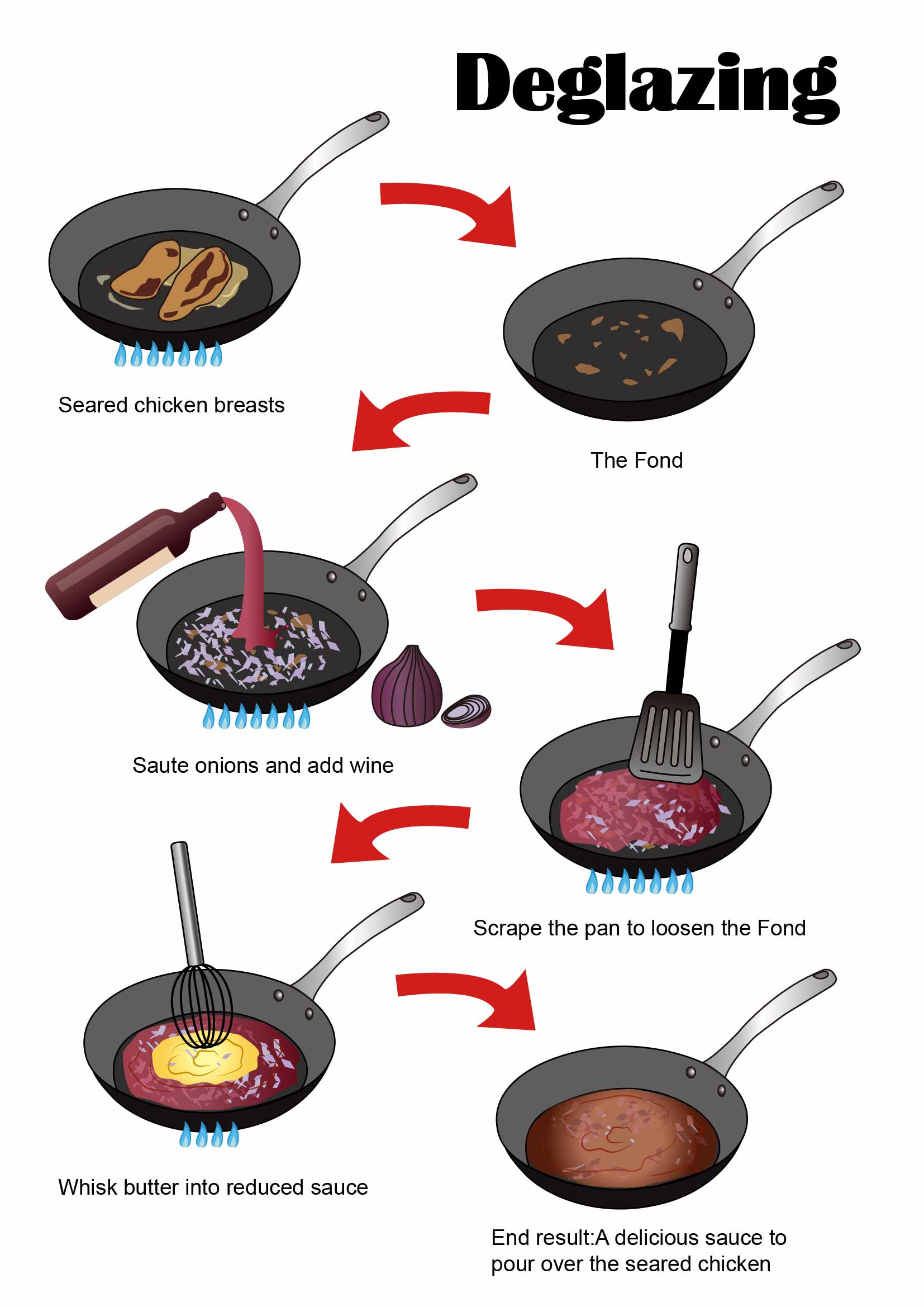
This process, known among professional chefs as Deglazing, is actually relatively simple. First, the meat and any excess fat must be removed from the pan. Then an aromatic (a shallot, garlic or onion) is sautéed, after which a liquid (broth, wine, cider or beer) is added. Many professional chefs consider wine the best liquid for deglazing because its acidity detaches the fond from the pan and immerses it within the sauce more quickly. In order to help the process along a spatula is often used to scrape the bottom of the pan to loosen these brown bits further. The fond will then dissolve into the sauce, adding complexity and depth.
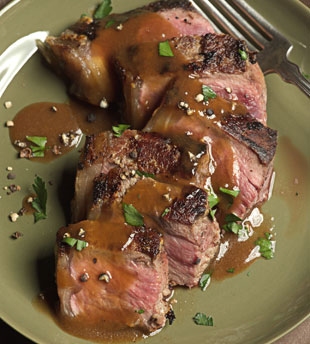 Later the liquid is reduced to concentrate the flavours of the sauce, and a little butter is whisked into the reduced sauce to give it some body. The finished sauce is then poured over the already well-browned meat to add extra flavor to an already crispy, succulent crust.
What is the best pan for Deglazing?
Deglazing doesn’t work well on non-stick cookware, because the non-stick coating prevents food sticking to the pan and creating a fond. Stainless steel, on the other hand, is good because seared meat, such as steaks, chicken or pork chops, will stick to the pan and produce the fond needed to create a sauce. However, as was explained here, stainless steel does not conduct heat quickly to the surface of the pan, so it does not reach the necessary temperature quickly enough to produce large amounts of caramelized browned bits on the bottom of the pan. The resulting fond is therefore not as dense and flavourful as it would be if the meat had been browned more intensely.
Cast iron has an excellent heating effect for browning, but is not suitable for deglazing if the pan is uncoated, because any acidic liquids such as wine used to create the sauce will react with the iron to remove the natural non-stick patina which is formed on the pan’s surface. Enameled cast iron pans can be used instead, but are extremely heavy and awkward to use.
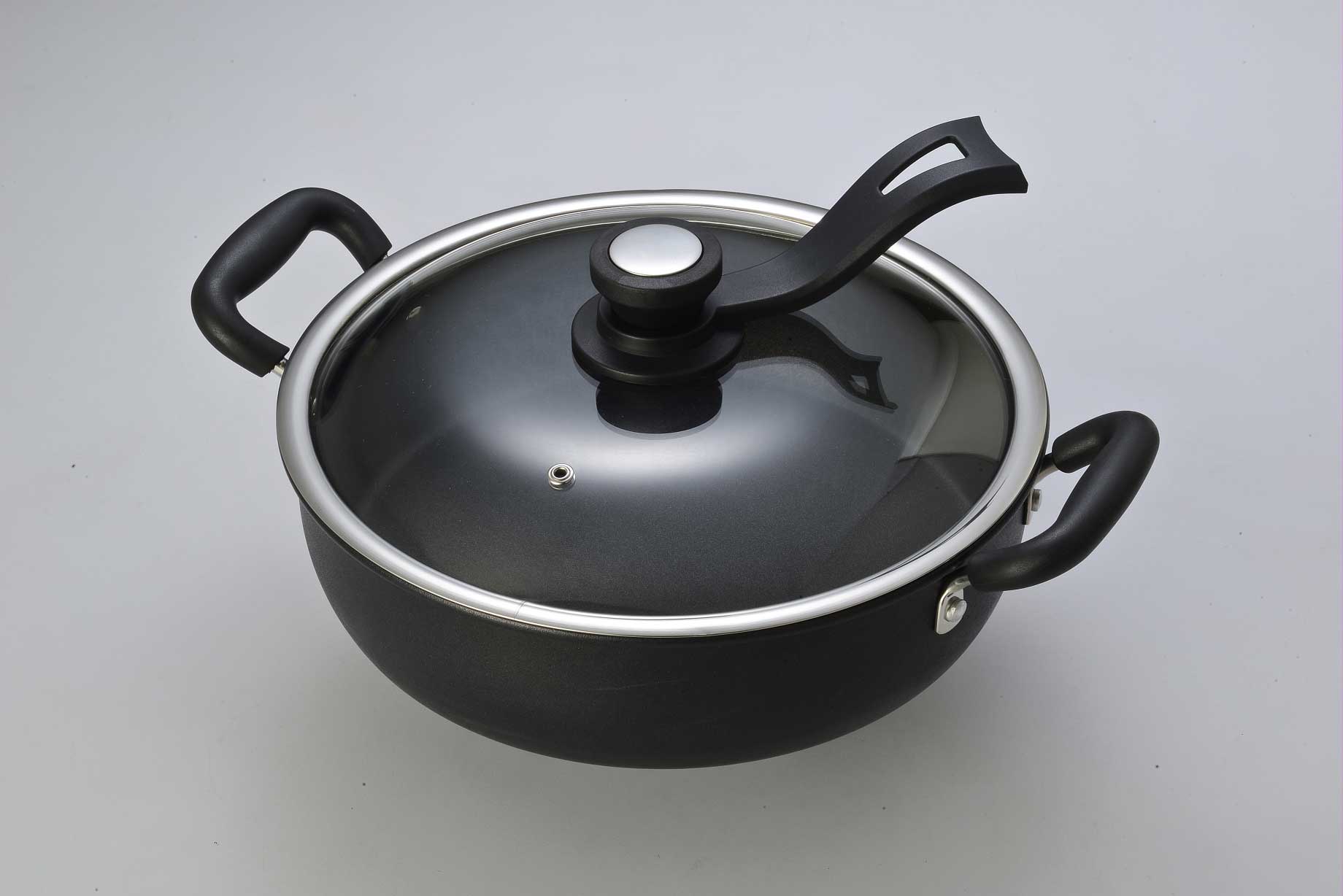
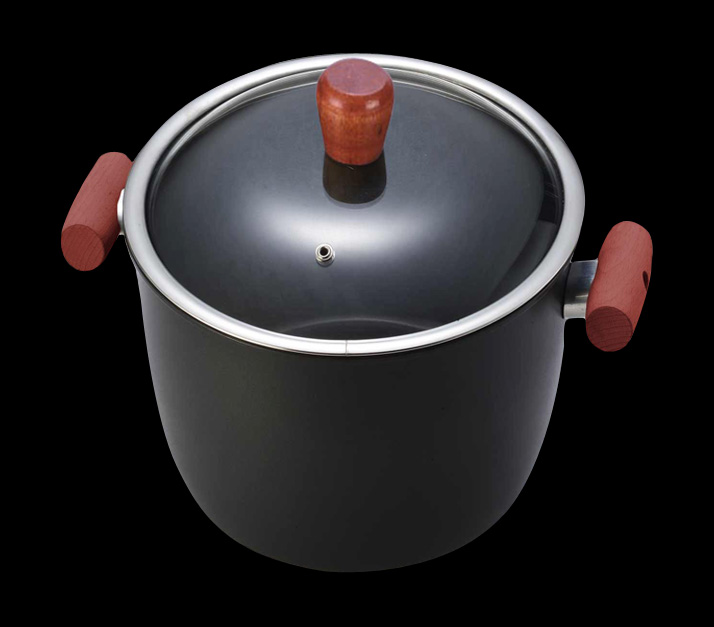
A Lotus Rock pan is perfect for both searing meat to produce a crispy, well-browned crust, and for deglazing afterwards to create a delicious sauce. The heavy-gauge steel construction and thick ceramic interior mean a Lotus Rock pan can sear or sauté a piece of meat quickly and evenly for excellent browning. If no cooking oil was added before cooking (Lotus Rock’s non-release works best if fat is wiped onto its lipophilic coating) an abundance of brown bits should remain on the pan. This fond can then be used with an aromatic, a liquid and a thickener, for example an onion, wine and butter, to create an intensely flavourful sauce with a lot of body.