April 29, 2025 / arnoldtnn / 0 Comments
As many consumers have written in their reviews here, Lotus Rock has a number of significant benefits for cooking in a domestic kitchen. Some of these consumers mention about Lotus Rock’s excellent heating effect for pan frying, such as for chops, steak and frittatas; some like the weight of the pans – that they are heavy but not nearly as much as a cast iron pan; others love that they can use metal utensils without chipping off the surface; and some really appreciate that all Lotus Rock pans are induction safe. These are to name but a few of the benefits that come with using a Lotus Rock cookware utensil.
However, it is highly probable that a number of these consumers enjoyed using their Lotus Rock pan because they had in fact done what many of us just don’t want to do and……..read the instructions first before use.
On all Lotus Rock packaging sold around the world, the wording may vary slightly, but there are 5 basic use and care instructions, there are:
1. Hand wash in hot soapy water with a scouring pad. Put the pan on a medium heat setting and wait for all the moisture to evaporate. Once the pan is completely dry apply oil around the interior surface.
For more information about this procedure please read here.
2. Transfers heat very fast. Pre-heat the pan on a medium-low setting, a little later add oil to the pan, and when it appears to be hot enough add the ingredients for cooking.
For more information about this please read here.
3. Never leave your pan unattended while cooking.
As the 2nd instruction states, a Lotus Rock pan heats up very quickly, much faster than most other standard materials used for cookware, so a pan should always be supervised while it is being heated on the stove. Quite often if this is not done then a white mark will appear on the pan. A Lotus Rock pan can still be used after this has happened, however some of the non-stick function from the silicone-oxide crystal coating would have been impaired beyond repair.
4. Always keep your pan dry when not in use.
Primarily because of its extremely thick and strongly bonded coating, a Lotus Rock pan does have much better corrosion resistance than other coated carbon steel pans sold in the market today. However, if a Lotus Rock pan is stored in a very moist condition, or if it is left to soak in a sink for an extended period of time, then the likelihood of rust developing is much more likely.
5. Hand wash recommended.
In fact, a Lotus Rock can technically be used in a dishwasher, but it is not recommend for two reasons. Firstly, as pointed out in the 4th instruction, although a Lotus Rock pan does have a very thick coating, the intensity and duration of a wash in a dishwasher will increase the likelihood of rust (especially along the edges of a pan). Second, dishwasher use may gradually impair the quality of the silicon-oxide crystal coating, which is an essential component for the non-stick release of a Lotus Rock pan.
There is another very useful use and care instruction for a Lotus Rock pan which is not often included on the packaging because of its complexity and the lack of space available: this is to re-new the non-stick effect of the pan. For information about this please read here.
April 20, 2025 / arnoldtnn / 0 Comments
As noted previously here, all Lotus Rock pans have an excellent high heating effect, a desirable quality which helps produce delicious tasty food. What thermal properties give a cooking utensil an excellent heating effect? Well, first, the pan must heat up quickly when placed on the heat sources; second, it has to be thick enough to heat up evenly across its surface; and third, it needs a large enough thermal capacity to minimise loss of heat when food is added to the pan.
Let’s start with the Lotus Rock pan’s prompt response to heat. Although carbon steel does not heat as evenly as aluminum, it does heat up much more quickly. Some methods of cooking require the pan to have reached a certain temperature before it is used; for example, browning, which is best done on a pan with a temperature of 180 degrees (this is the temperature when the Maillard Reaction begins to take effect). If an impatient cook starts before the pan reaches this temperature then the meat or vegetables being seared might still be browned but will have lost a large amount of moisture, making it dry and un-appetizing.
However, although carbon steel heats up quickly, a thin gauge of steel will do so unevenly, heating up most quickly in the centre of the pan. This not only creates a hot spot, causing uneven cooking, but will eventually warp the pan and give it a convex shape, causing oil and other liquids to slide to the edges. In order to disperse the heat more evenly around the pan all Lotus Rock pans are made with 2.0mm gauge steel. As is shown in the diagram below, a thicker gauge broadens the area at which the heat reaches the surface of the pan. 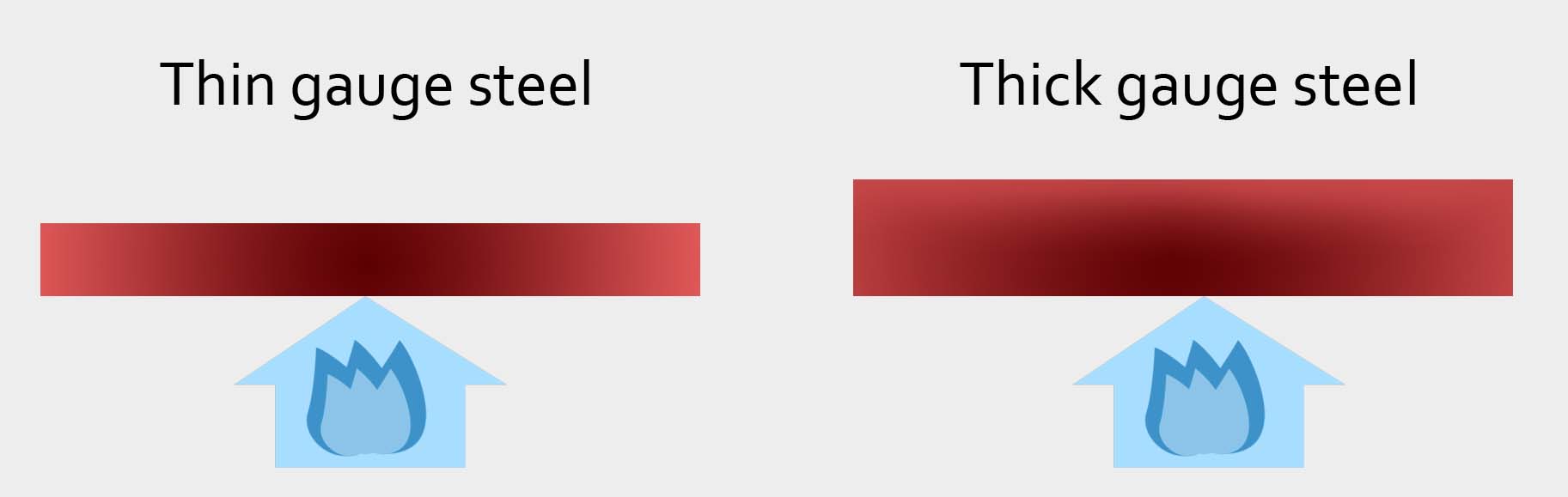 So with carbon steel as its substrate Lotus Rock pans can not only heat up very quickly but can also, due to the steel’s thick 2.0 gauge, provide a more dispersed heating effect so that the food is cooked evenly. It thus meets the first and second criteria for an excellent high heating effect. What about the third criterion? What happens to the heating effect of a Lotus Rock pan when food is added?
If you were to compare all the main metals for cookware usage, you would find that carbon steel is among the most dense (three times more dense than aluminum, for example), and as we know, Lotus Rock has a very heavy carbon steel gauge. This extra mass and space in its substrate means a Lotus Rock pan has a high heat storage capability, an essential component for an excellent heating effect. When a steak is placed on a grill pan to impart that smoky, chargrilled aroma, or a large quantity of vegetables are quickly added to a stir wok, the high thickness and density of a Lotus Rock pan will minimiss heat loss. So instead of steaming in their own juices, the steak and vegetables will sizzle and heat up quickly and evenly for a delicious and crispy taste.
A second factor facillitating heat retention is the thick layer of ceramic on both the interior and exterior of all Lotus Rock pans. Most coatings on cookware sold throughout the world today have a thickness between 15-30 microns; the ceramic layer on Lotus Rock pans is in contrast around 100 microns thick. This thick coating increases the heat retention capability of all Lotus Rock pans due both to its extra mass and poor heat conductivity. Ceramic does not conduct heat very well, but it is good at storing heat – this is why it is often used for oven dishes. 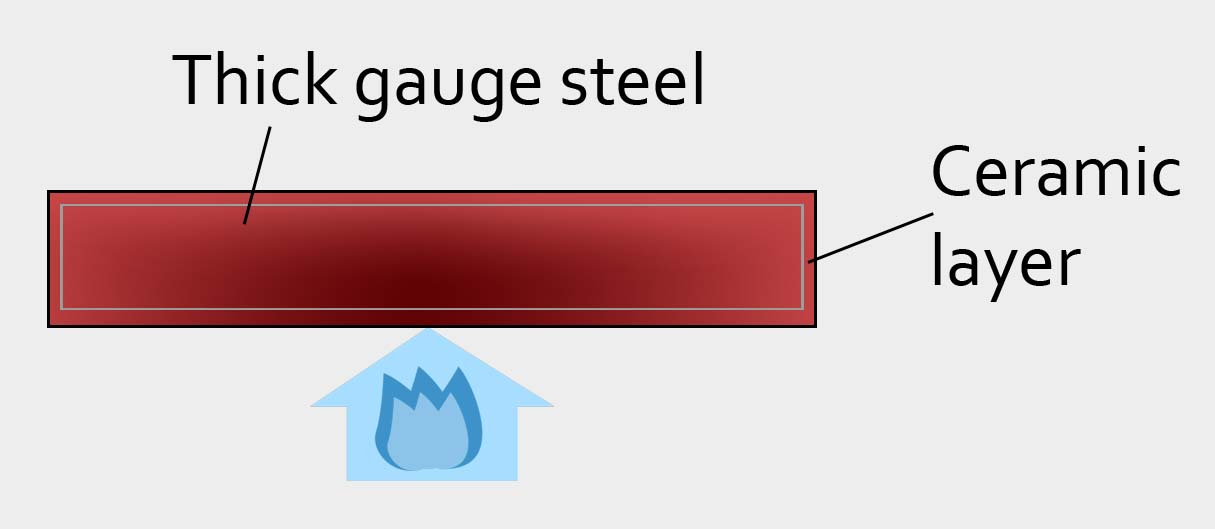 So when food is added to an already well heated Lotus Rock pan the temperature should not drop significantly, in part because of the heavy gauge carbon steel substrate but also because of the thick ceramic layer on both the interior and exterior of the pans. Thus the very thick material of a Lotus Rock pan is perfect for high heat cooking methods, such as for sautéing, searing, grilling and stir frying.
April 11, 2025 / arnoldtnn / 0 Comments
Crepes are a famous French delicatessen which is extremely versatile, perfect for brunch, lunch, a light supper — and definitely dessert. Crepes are served with a variety of fillings, from the most simple with only sugar to flambéed crepes Suzette or elaborate
savoury galettes.

A Lotus Rock pan is perfect for cooking crepes for the following reasons:
Fast heating effect. For a delicious, tasty crepe the whole cooking process should not take any longer than 80 seconds; 60 seconds at first, and then 20 seconds after the crepe has been flipped over. In order for this to happen most effectively the crepe needs to be on a pan that heats up quickly – carbon steel, the substrate for all Lotus Rock pans, is ideal for this. None of the other commonly used substrates, such as aluminum*, stainless steel, cast iron and copper, heats up as quickly as carbon steel.
*A big disadvantage about aluminum is that even though it does spread heat evenly around a pan extremely well (only copper is better at doing this), it heats up much slower than carbon steel. This means the crepe will not be as crispy and tasty as it could be if it is cooked on a Lotus Rock pan. In fact, a crepe cooked on an aluminum pan could easily be overcooked or become rubbery.
Heat dispersion. Although carbon steel does heat up quickly, it does so in the centre of the pan. If the gauge of the carbon steel crepe pan is too thin then the outer edges of the crepe pan will cook much slowly than the centre, meaning either the centre is burned or the edge of the crepe is undercooked. Because Lotus Rock has a thick 2.0mm carbon steel gauge and a thick coating on top of that, the pan heats up quickly but also evenly. This creates the perfect heating effect for a delicious, appetizing crepe.
Heat retention. Although crepes, because of their thin nature, should not have too much of a thermal load, and thus not reduce the temperature of the pan much, a good crepe pan should still retain as much heat* as possible while cooking. If it does then by the 2nd or 3rd crepe the pan should reach a suitable and stable temperature to transmit heat effectively to the batter to create a better tasting crepe.
*The only other metal substrate which retains heat better than carbon steel is cast iron. However, cast iron is extremely heavy, so some people will find flipping more than a few crepes a bit troublesome.
Easy clean-up. A lot of crepe pans in the market today are produced with carbon steel or cast iron but are uncoated. This means that the customer has continually to re-season the pan which some cooks find time-consuming and complicated. Moreover, consumers cannot use washing-up detergent or scrub too hard on the pan’s surface, because that might remove the natural non-stick patina that forms on crepe pans after some use. On the other hand Lotus Rock hydrophobic nano-silica coating is extremely easy-to-clean, with any type of washing-up liquid or abrasive pad.
Other benefits of a Lotus Rock crepe pan include:
- Induction safe. This type of cooking top surface is particularly suitable for cooking crepes, which need to be cooked quickly, because induction stove tops transmit heat much faster than either gas or electric.
- Metal utensil safe. A metal spatula can be used for flipping the crepe without damaging the coating.
- Low sides. This is especially useful for easy removal of crepes.
- Other uses. Lotus Rock crepe pan is also ideal for heating up tortillas, acting as a griddle for pancakes, and for making other delicious items such as Indian flatbread and Omelets.
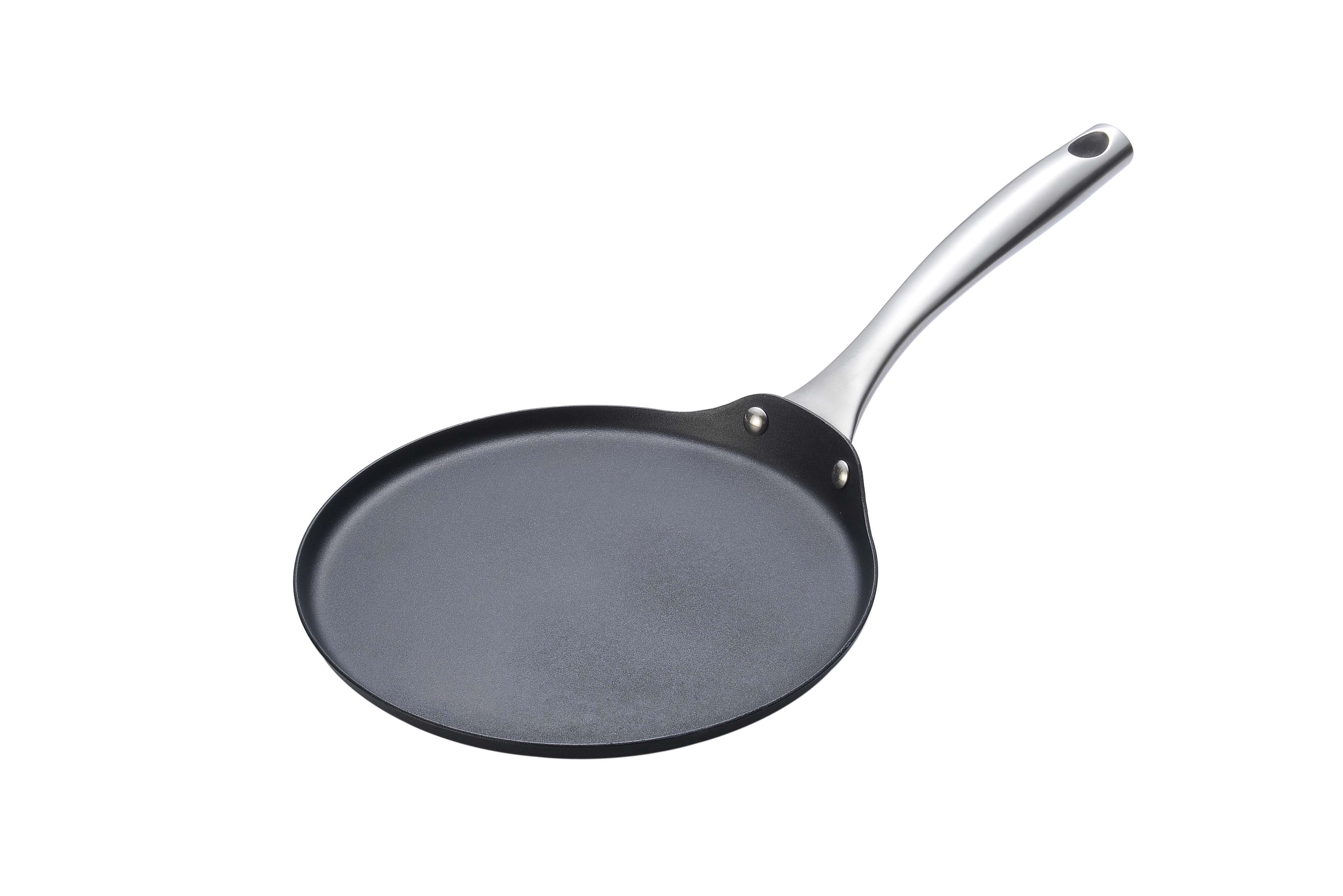
A Lotus Rock crepe pan is sold in a 24cm, 26cm, 28cm and 30cm sizing. With the hollow cast stainless steel handle above the pan is oven safe to 650 degrees Fahrenheit and it is broiler safe. It is suitable for all cooktops, including electric, gas, halogen, ceramic, glass and induction. After limited use a Lotus Rock crepe pan can be used in a dishwasher, but a regular hand wash is recommended.
April 1, 2025 / arnoldtnn / 0 Comments
The metal substrate for all Lotus Rock pans is heavy gauge carbon steel. There are numerous reasons why Lotus Rock uses this substrate instead of more commonly used metals for cookware, such as aluminum or stainless steel, as explained here. Traditionally for cookware usage carbon steel is often sold as uncoated, with just a protective coating on it which needs to be removed prior to use. Generally, the instructions on the packaging for uncoated carbon steel cookware items such as stir woks, frying pans and paella pans advise the consumer to season the pan before use.
What exactly is seasoning?
According to Wikipedia, seasoning is “the process of treating the surface of a saucepan, wok, crepe griddle or other cooking vessel with a stick-resistant coating formed from polymerized fat and oil on the surface.” It goes on to say that it is desirable for carbon steel cookware “because otherwise they are very sticky to foods and rust-prone. It is generally not desired on other types of cookware either for cosmetic reasons or because the chemical composition of the pan already results in a non-stick surface.”
So, basically uncoated carbon steel cookware needs a polymerized oil film over it for two reasons:
- Corrosion resistance
- Non-stick release.
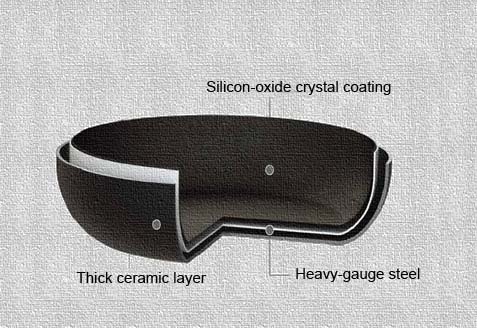
Regarding the first reason to season a carbon steel pan – corrosion resistance – this is not necessary for Lotus Rock. This is because on both the interior and exterior of all Lotus Rock pans there is a thick enamel coating. So, as long as the Use & Care instructions are followed properly a Lotus Rock pan will not rust because the coating prevents the surface of the steel from any form of oxidation.
Is seasoning needed for non-stick release?
For the second reason to season a carbon steel pan – the non-stick release – this is also not necessary because all Lotus Rock pans have a silicon-oxide crystal coating. As explained here, this lipophilic coating gives all Lotus Rock pans a natural, durable non-stick release. While most non-stick pans on the market today have PTFE included in their coating to give them a non-stick effect, all Lotus Rock pans in contrast are PTFE/ PFOA free. The non-stick release for Lotus Rock comes from the consumer adding oil themselves to the pan prior to cooking and letting it permeate the silicon-oxide crystal coating.
However, although both seasoning and the process explained above do involve heating oil on an iron pan, the latter cannot be termed as seasoning for two reasons. First, seasoning is a reaction between the oil and the steel surface. With all Lotus Rock pans, cooking oil is never in contact with the heavy gauge steel substrate; instead the added cooking oil rests within the silicon-oxide crystal coating and on top of the thick ceramic coating.
The second reason is that for a carbon steel pan to be properly seasoned the oil needs to react with the steel surface and be polymerized. For seasoning to be successful the oil needs to surpass its smoke point, and then the chemical composition of the oil will alter to form a solid, hard film over the steel. For a Lotus Rock pan to have an effective and potent non-stick release or for that matter any other non-stick pan to be maintained well, the cooking oil should never be allowed to polymerize. If done so, it will form a barrier between the food and silicon-oxide crystal coating, which will impair the non-stick quality of the pan.
Disadvantages of a seasoned pan
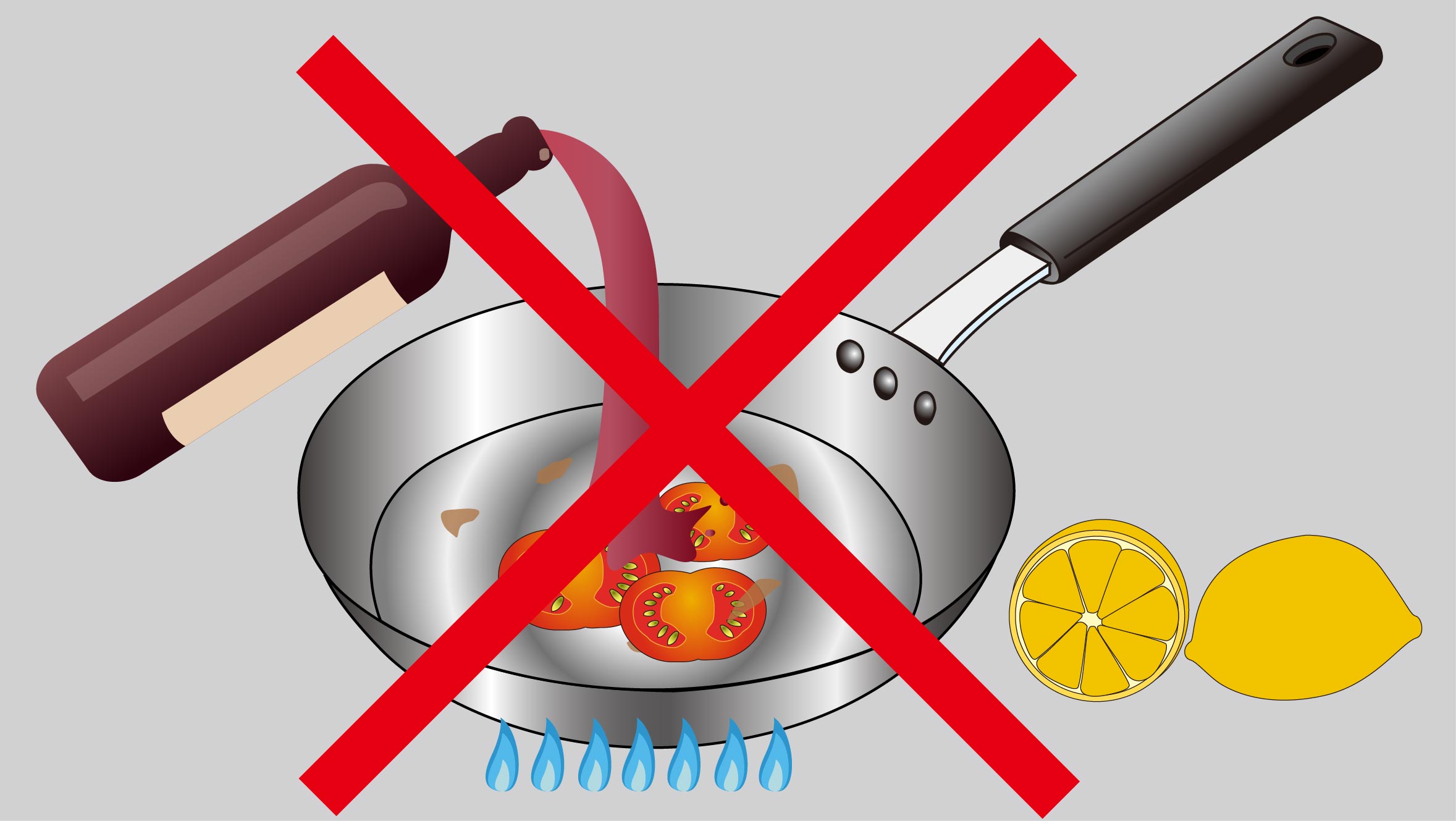 Although a seasoned steel pan undoubtedly has many benefits, to continually re-season a pan can be for some quite a hassle. Moreover, a seasoned pan does have some limitations when it comes to cooking. For example, ingredients which have are highly acidic cannot be used, such as lemon juice or tomatoes, because they will remove the non-stick patina which with continued use of fat for cooking occurs naturally on the pan. Another difficulty with a seasoned pan is that it is not suitable for de-glazing. Once the fond has built up on the pan after searing meat, generally an acidic liquid such as wine or broth is added to create a sauce. However, as has already been explained, the acidic nature of these sauces will react with the steel surface and impair the non-stick quality of the pan.
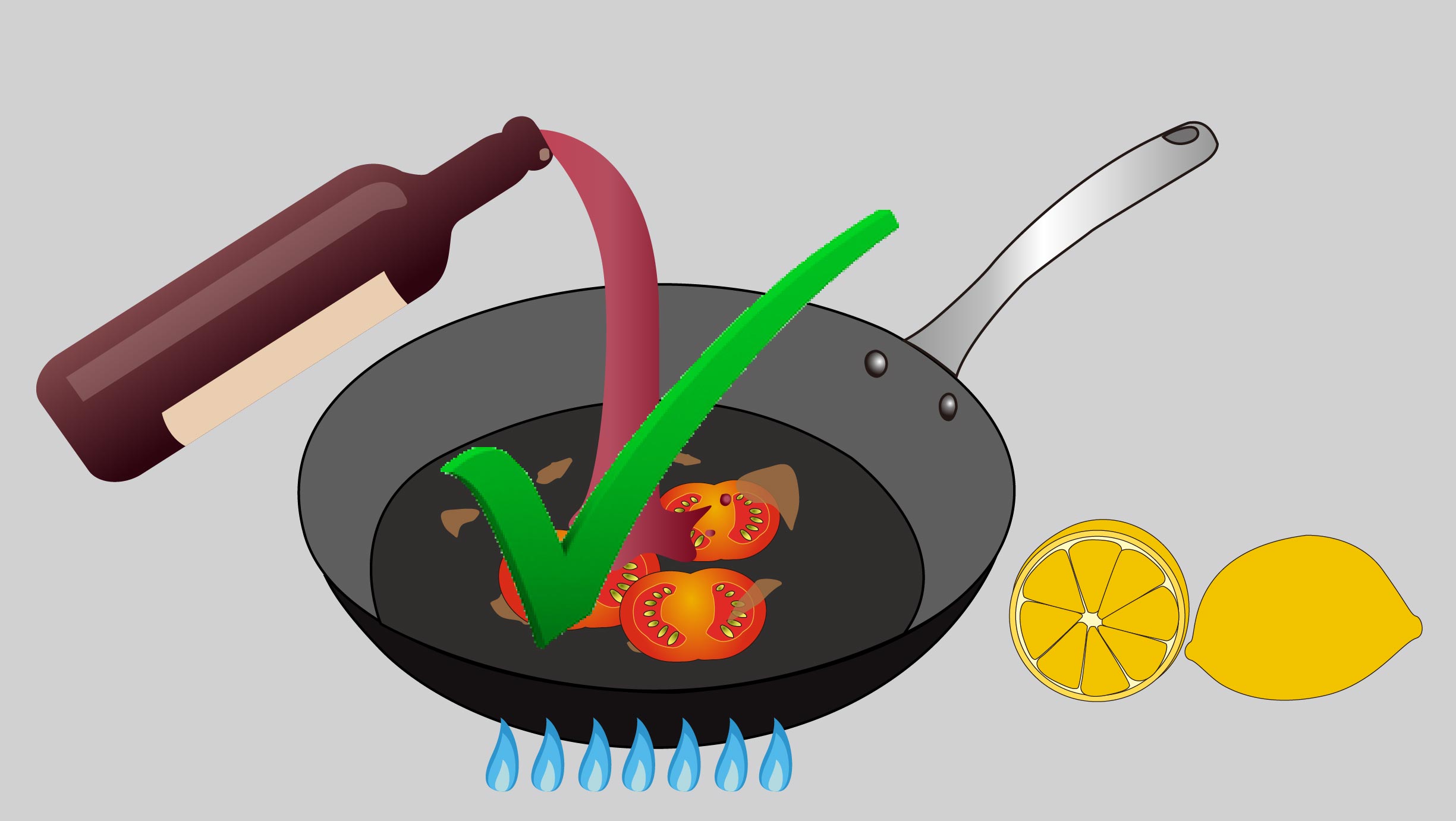 The silicon-oxide crystal coating of a Lotus Rock pan on the other hand is much less troublesome for cooking with. All kinds of acidic ingredients can be used with a Lotus Rock pan. So, for instance, a spaghetti Bolognese can be cooked on a Lotus Rock pan without any detriment to the quality of the non-stick release. In addition, a sauce such as gravy can be prepared from the fond after some chicken breasts have been seared on the stove top.
Conclusion
Generally, in the market place today carbon steel cookware, such as with famous brands including DeBuyer or Rosle, is sold uncoated. In order to protect these pans from rust, and to give them a non-stick release, the consumer is advised to season them before use. Seasoning involves heating oil to a high temperature on a steel pan, passed its smoke point. During this process the pores of the steel open and while this is happening the polymerized fat creates a hard, glassy film between and over the steel surface. With this treatment the steel pan is now not only protected from rust, but also conditioned with a non-stick effect.
Although Lotus Rock does use carbon steel, it does not need to be seasoned because on both the interior and exterior of the pan is a thick enamel coating protecting it from oxidation. This coating, just like the polymerized fat of a seasoned pan, provides effective corrosion resistance. However, unlike an uncoated steel pan, a Lotus Rock pan doesn’t give the consumer the hassle of re-seasoning the pan after each use. The thick enamel coating on Lotus Rock is metal utensil safe and is highly durable for long lasting protection from rust.
In addition, a Lotus Rock pan also doesn’t need to be seasoned to create a non-stick release because on top of the thick ceramic interior is a silicon-oxide coating. When oil is added to a Lotus Rock pan it permeates the lipophilic surface of the silicon-oxide coating to create a natural, non-stick effect. A significant advantage of the silicon-oxide crystal coating over the non-stick patina of a seasoned pan is that it is safe to use with acidic ingredients or sauces, so the consumer can use the pan for a greater variety of cooking methods.