September 25, 2014 / arnoldtnn / 0 Comments
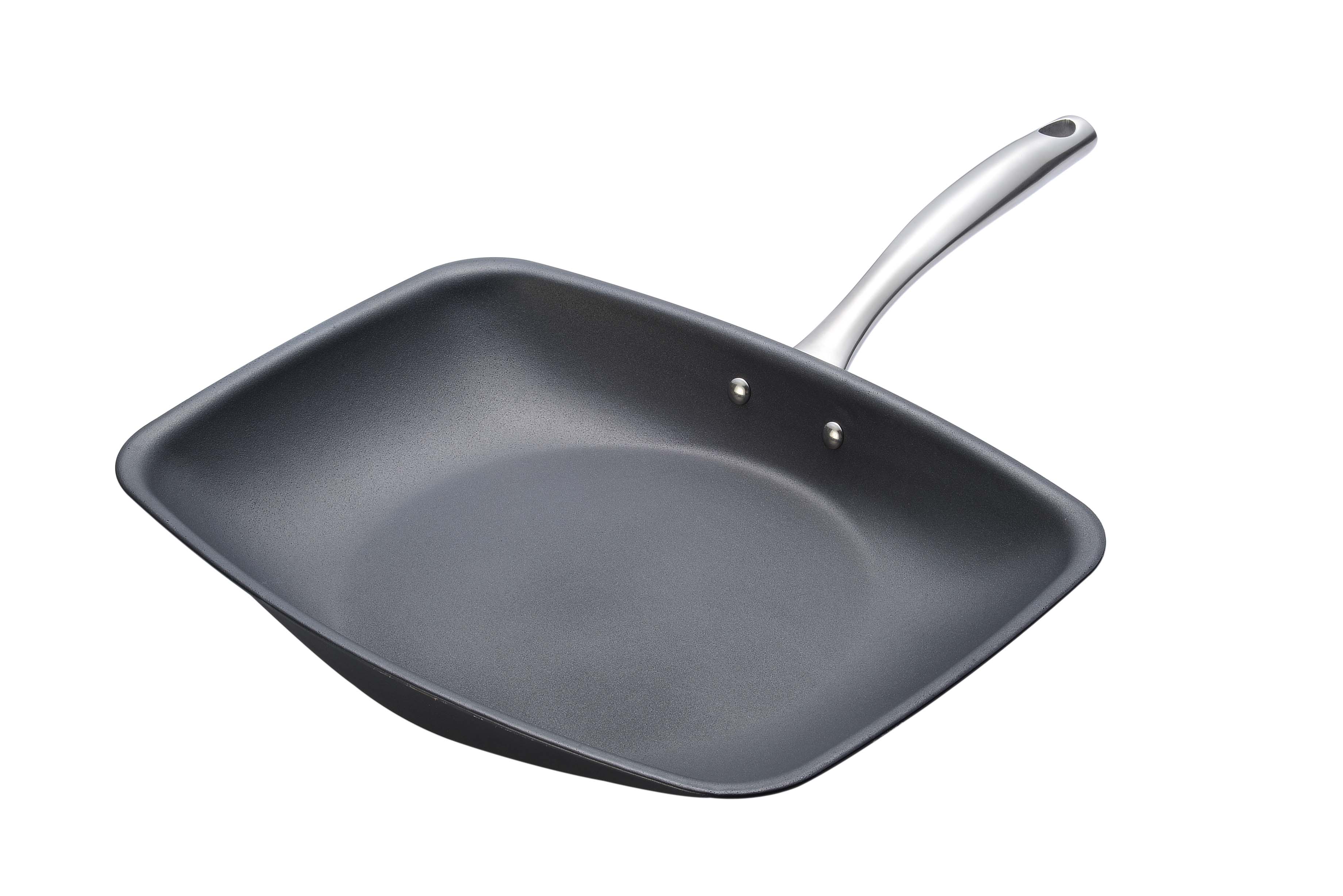
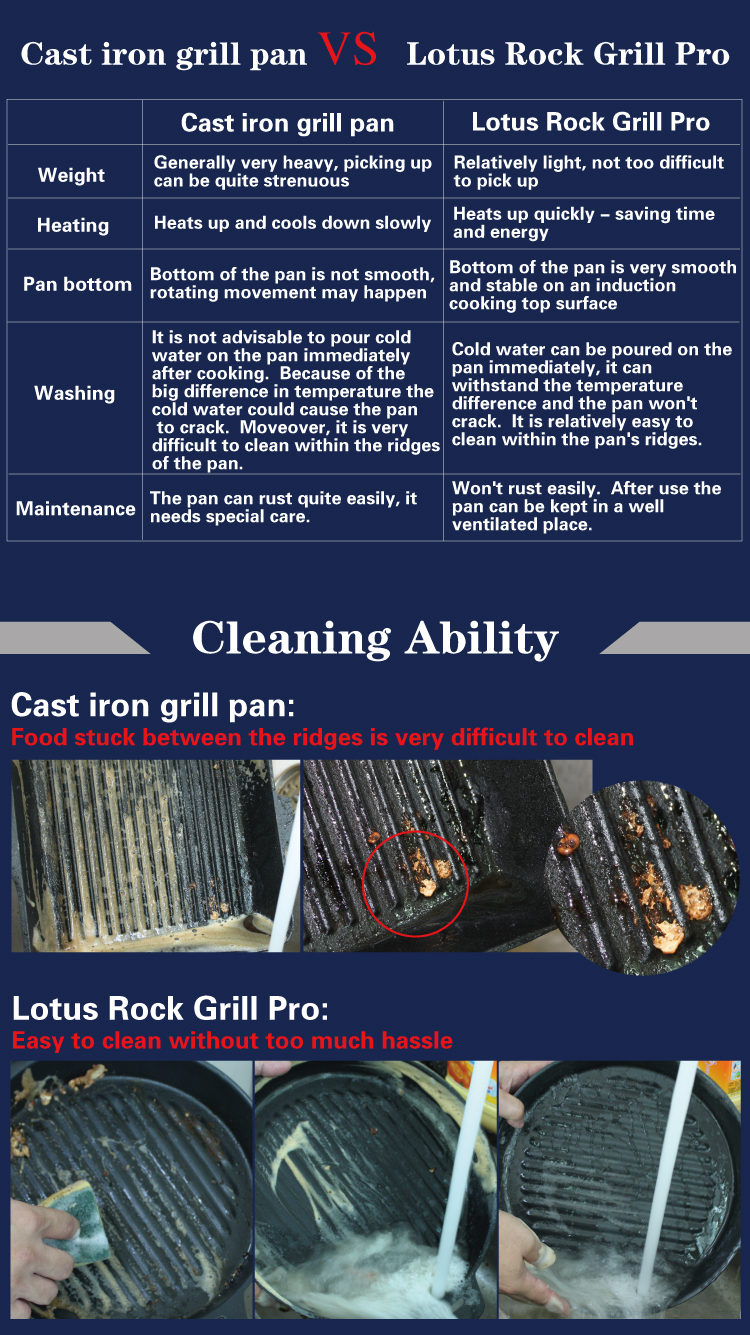
In the market place today some of the most commonly used indoor grill pans are made with cast iron. Famous cookware suppliers, such as Le Creuset of France and Lodge of USA all use this type of material for their grill pans, and for numerous other cookware items as well. Undoubtedly cast iron does have a number of benefits for use as a grill pan, for example it does a good job of making those black chargrilled marks on steaks and burgers etc. However, the Lotus Rock Grill Pro can perform this function as well, as outlined in the previous blog post, and compared to cast iron grill pans, the Grill Pro has other significant advantages, as explained below.
September 19, 2014 / arnoldtnn / 0 Comments
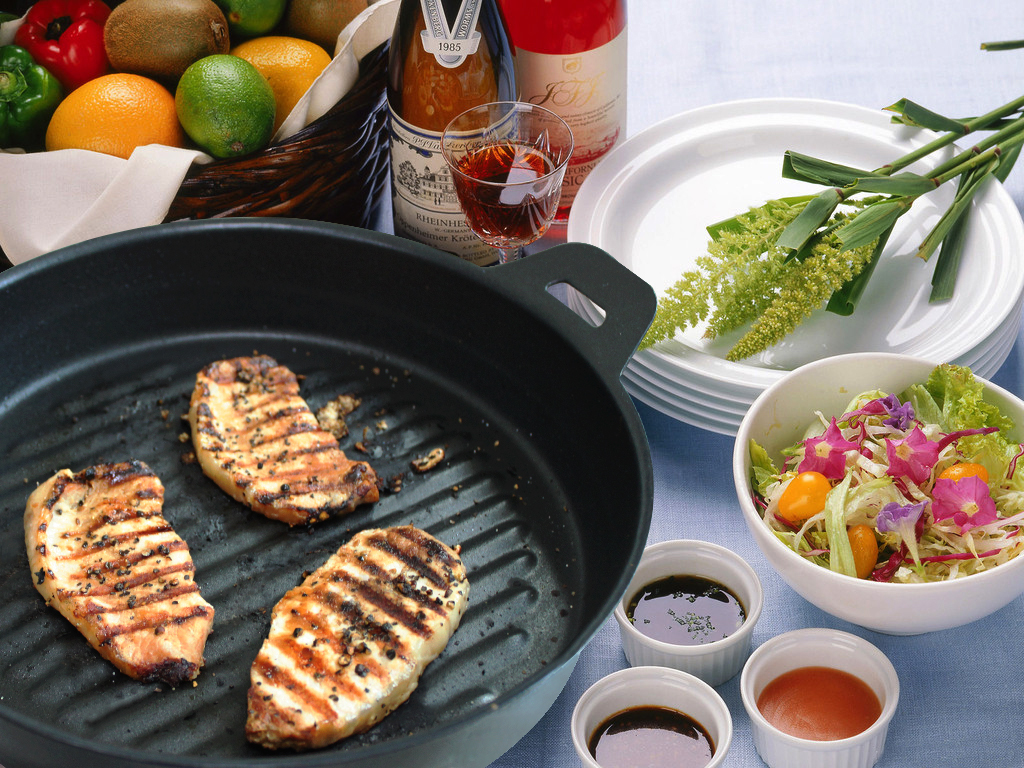
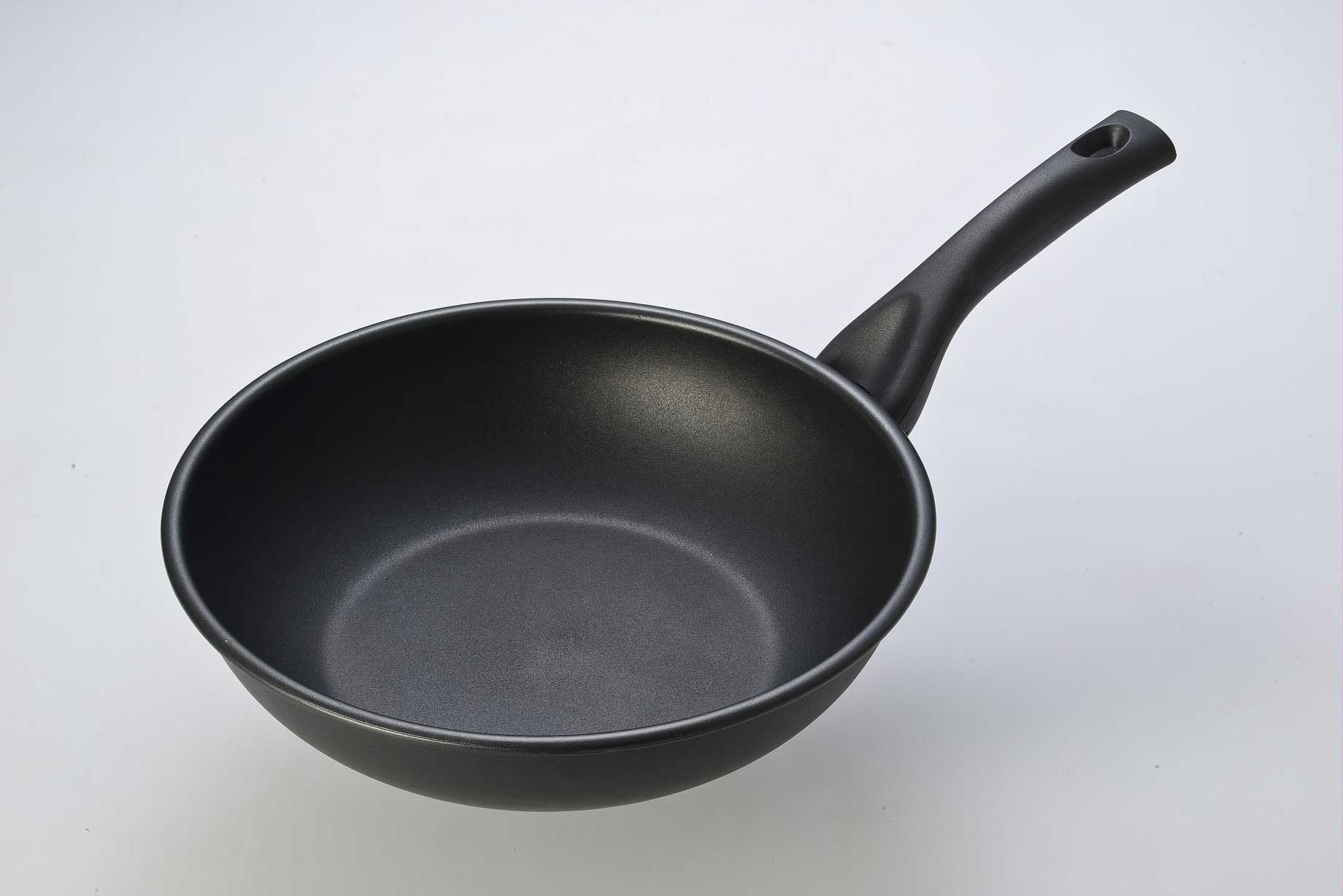
Made from high quality, heavy gauge carbon steel the Lotus Rock Grill Pro is an excellent choice for those consumers who love chargrilled, smoky flavored meat or vegetables. The Grill Pro is especially convenient for those who don’t want to deal with the hassle associated with outdoor grilling, but instead want to enjoy grilling in the comfort of their own home.
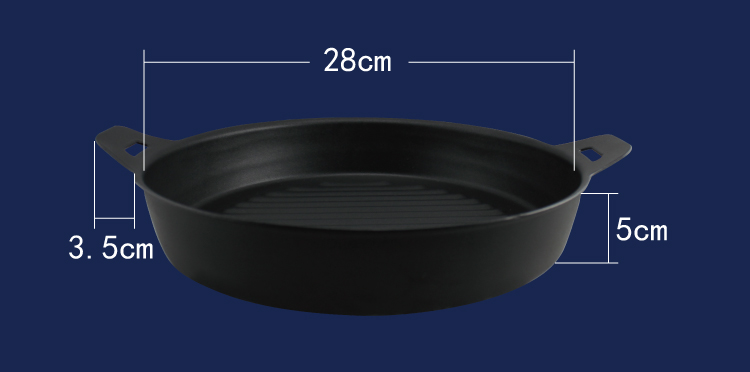
If a small diameter pan is used for grilling then the congested area would trap the moisture and poach the meat instead of grilling it. With a wide base, the Grill Pro provides enough room for each piece of meat to grill properly, without jamming too much of it together.
Higher edges of the Lotus Rock Grill Pro retain more dry heat within the pan for a better grilling effect on the food. Moreover, at 5cm in height the high edges protect your oven’s surface from grease and food splatters while you cook.
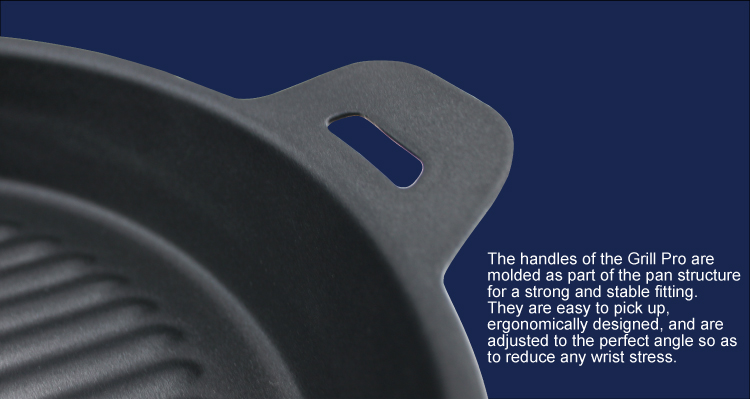
The Lotus Rock Grill Pro has high ridges within the pan which are important for the black chargrilled marks that give the meat that smoky, tasty aroma.The ridges allow fat to flow off the meat, just like it would drip between the grates of a grill, so a burger doesn’t sit and boil in its own juices.
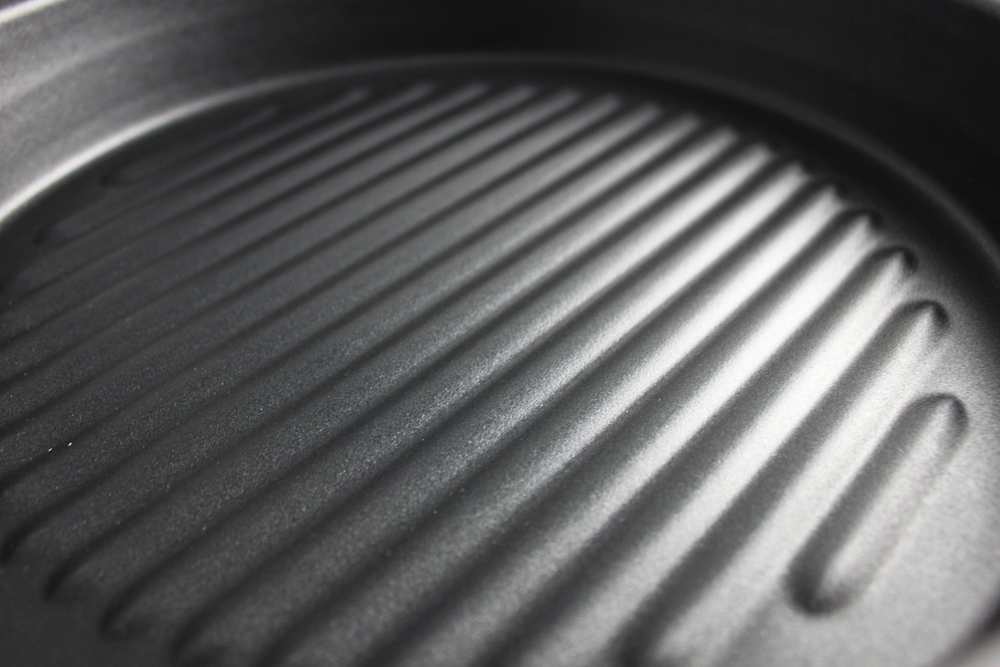
The Lotus Rock Grill Pro has a natural, non-stick release which is free of PFOA/ PTFE and other harmful chemicals. This makes it healthier than most other general non-stick pans, nearly all of which contain either PTFE or some other chemical substance. The Lotus Rock Grill Pro is also more durable and more suitable for grilling than general non-stick pans. A high temperature is essential for good grill marks. If a general non-stick pan is continually heated at a high temperature the non-stick release will gradually impair and will quite soon become redundant. It is precisely because a Lotus Rock Grill Pro doesn’t have a chemical non-stick coating that it has very high heat resistance, and so therefore can be used in a kitchen for a long period of time.
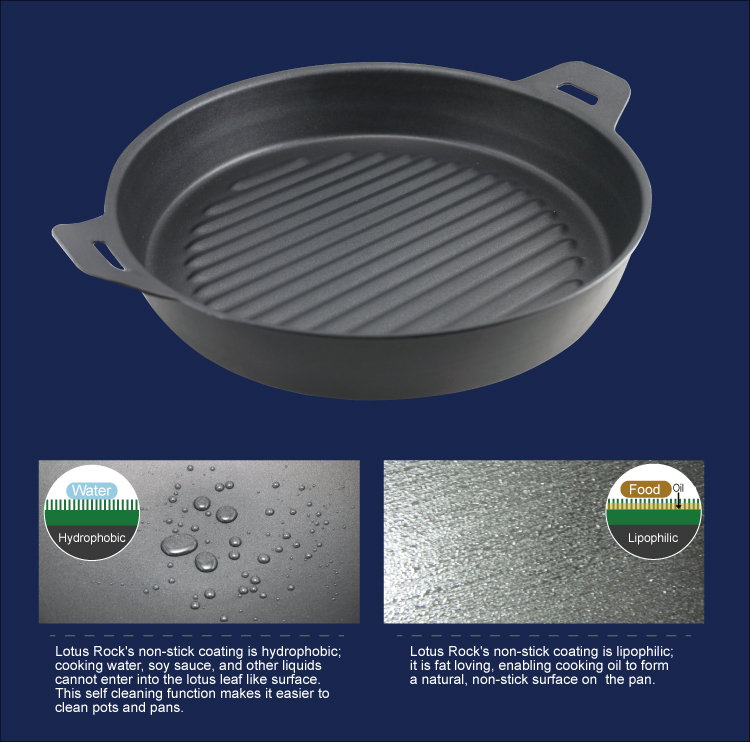
Examples of grilled food with the Lotus Rock GrillPro
September 18, 2014 / arnoldtnn / 2 Comments
As was previously explained in the blog post Why does Lotus Rock use carbon steel instead of aluminum?, the metal substrate used for all Lotus Rock pans is carbon steel. In this post we would like to look in more detail at the different grades and types of carbon steel; the type used can affect the quality and performance of carbon steel cookware in numerous different ways.
All Lotus Rock pans are made of a high quality grade of carbon steel with a plain and heavy shape. Elements such as Sulfur, Manganese, Phosphorous, and Chromium are all removed from this the steel prior to production, leaving them with a high iron content. Some of the benefits of this high iron content carbon steel include: strong acid corrosion resistance and excellent resistance to abrasion from metal utensils and steel wool.
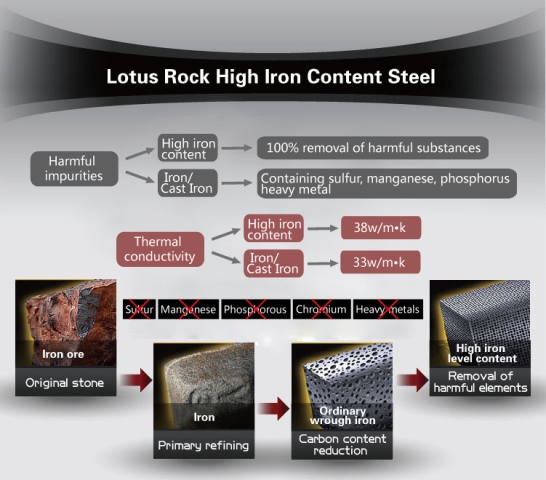
Compared to cast iron or to carbon steel which has not had the above harmful impurities removed, Lotus Rock’s purer carbon steel has much better thermal conductivity. This type of high-iron carbon steel heats up food more quickly, and the thicker gauge used for Lotus Rock pans, compared to most other carbon steel pans on the market, means that heat is spread more evenly around the pan, so that foodstuffs such as meat can be seared very much faster. Meat that is not cooked for too long has a more succulent taste, and also retains a higher vitamin content, leading to a healthier diet.
September 16, 2014 / arnoldtnn / 0 Comments
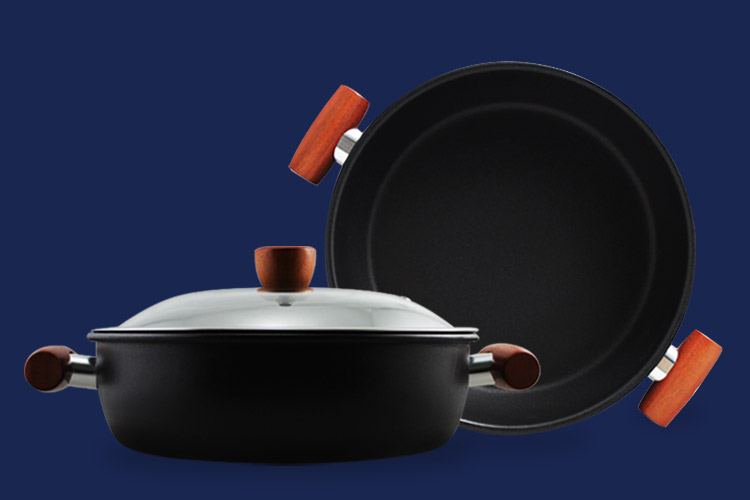
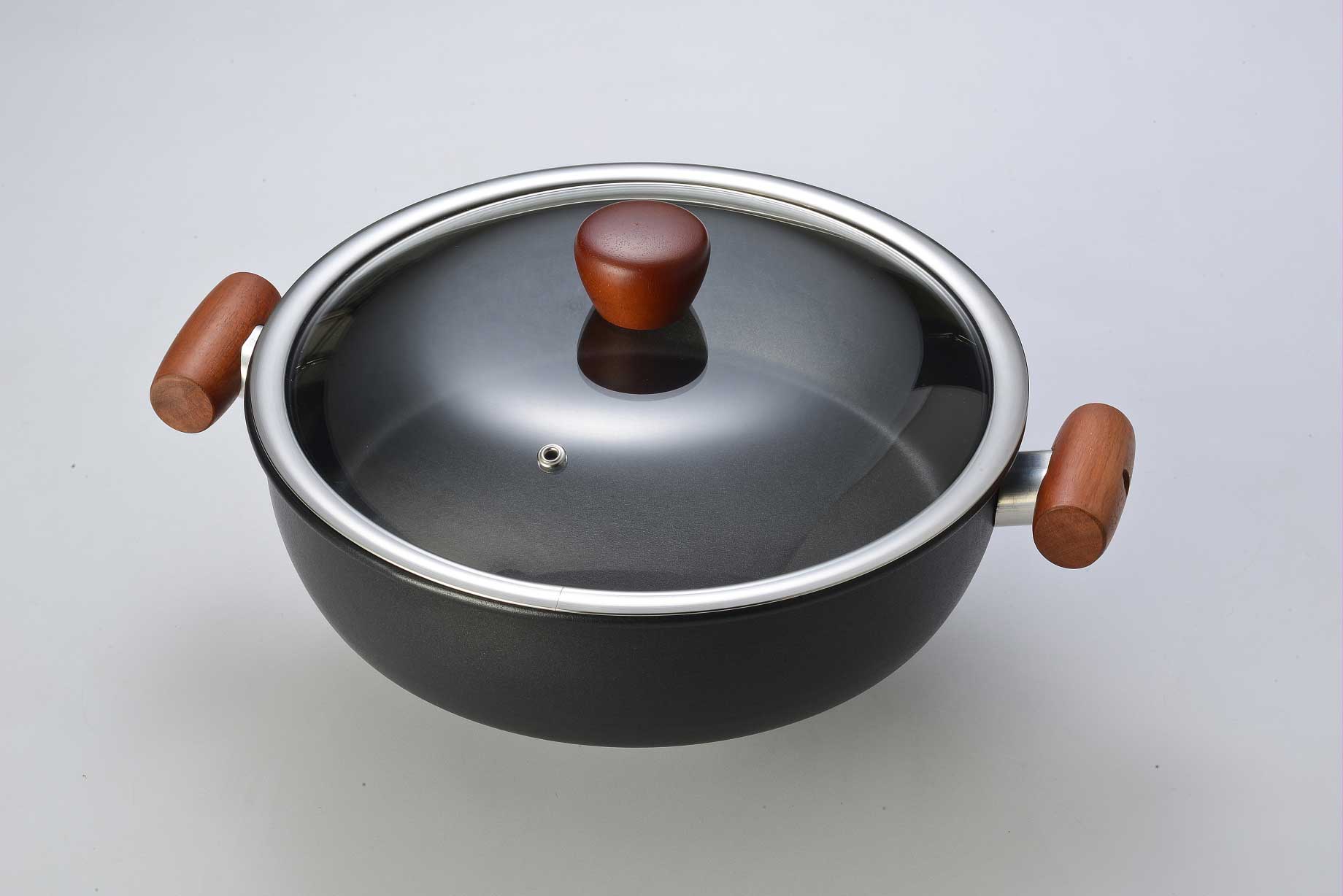
A Lotus Rock Braiser is best used for recipes which require meats or vegetables that need to be seared quickly in the open pan and then covered with a lid to cook slowly in their liquid and the moisture that is created. Both at the bottom and at the sides, a Lotus Rock Braiser has a heavy gauge 2.0mm carbon steel substrate, with a thick ceramic coating on both the interior and exterior of the pan. This strong construction along with the dark, black coating with a low-gloss matte finish ensures high durablity and heat resistance.
Moreover, high moisture retention is very important for braising so every Lotus Rock Braiser pan includes a tight fitting lid so that the liquid does not evaporate. The lids and pan can either come with a wooden handle (such as in the photo above), or with a bakelite or stainless steel handle (the latter is suitable for oven use).
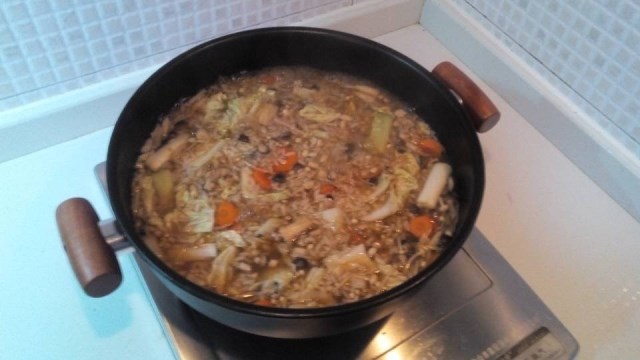
As well as stews (such as the Japenese beef stew shown above) other common dishes that can be prepared in a braiser pan include paella, pasta, potato and enchilada dishes.
Product Features
- This Braiser, with a glass tight-fitting lid, helps food retain moisture and emerge juicy and tender.
- Rain forest effect continuously showers juices, maintaining moistness of foods
- Circulation of juices and even heat distribution ensures uniform roasting of meats and al dente vegetables
- Optimized for steady, even heat, Lotus Rock’s reinforced ceramic interior resists staining, dulling, and wear and tear.
- Black ceramic interior is exceptional for high-heat searing, plus braising and caramelizing
- Lipophilic nano-silica coating, seasoning naturally, without maintenance
- Durable ceramic interior is scratch-resistant; will not chip, discolor or rust
- PTFE and PFOA-free
- Suitable for all cooktops, including induction
- Oven-safe to 500 F and broiler-safe (if with SS handles)
- Dishwasher-safe, but hand washing recommended
- Limited lifetime warranty
September 1, 2014 / arnoldtnn / 0 Comments
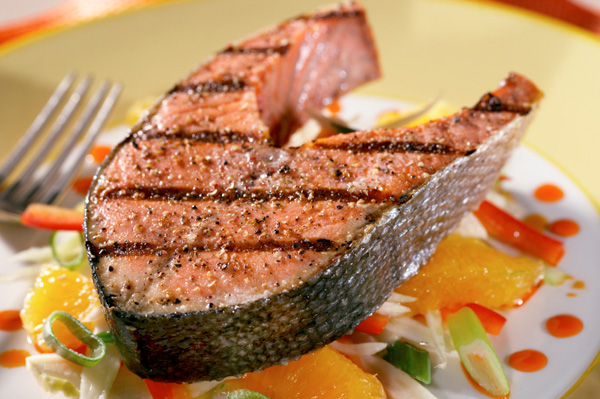
For health conscious consumers who want a highly nutritious diet, fish is generally quite a popular meal because it has both a very high protein content and is very low in fat. Although oily fish like salmon do contain about the same amount of fat per pound as ice cream, it is a type of fat which is in fact very healthy. The fat in salmon — and in all fish with dark flesh and a high oil content, such as mackerel, tuna, sardines, anchovies and bluefish — contains omega-3 fatty acids, which our bodies need to function properly.
However, although fish does undoubtedly have a lot of health benefits, if there is one dish that a consumer generally doesn’t like to cook it is fish. Why? The main reason is that once heated the high protein content of fish makes it stick to a pan very easily. In addition, fish skin is very flaky, so when a fish is turned over during cooking it can easily tear apart, visibly impairing the appearance of the dish.
Why does the high protein content of fish make it liable to stick on the pan so easily? If proteins are allowed to denature – chemically unravel – slowly, they stick firmly (glue is made of proteins which have denatured). Since proteins stick when they unravel slowly, you have to make sure they cook quickly. This means that the heat must be high enough to start setting the proteins immediately.
However, other foodstuffs such as meat also have a high protein content, why aren’t they just as difficult to cook as fish? Well, the main reason is that meat is denser than fish: it consists primarily of long fibres arranged in longitudinal bundles, held together by connective tissue called collagen. Fish, on the other hand, is very flaky because it consists of short fibres separated by large, thin sheets of collagen. Not only does the flesh of fish separate into its short fibres much faster than meat, but the collagen in fish is also more fragile and will convert into gelatin much more quickly.
Lotus Rock Construction
Lotus Rock’s Fish Pan is made of carbon steel, which heats up much faster than either aluminum or cladded stainless steel. This type of metal is particularly ideal for cooking fish because, if used properly, its quick heat conduction can ensure that the proteins inside the fish are cooked too quickly to have time to denature and stick to the pan.
Moreover, because the gauge of the carbon steel substrate of a Lotus Rock fish pan is very thick, at 2.0mm, the fish doesn’t heat up too quickly and burn. Instead the heat is retained well within the pan and fish is heated evenly without any hot spots. Why is this important? For fish to be cooked well an attractive and delicious browning texture needs to be seared on to it, but that won’t start until around 320° F, so the surface of your pan must be at least that hot before you add the fish. When the fish is added the cooking temperature of the pan will drop, but because of Lotus Rock’s strong, thick construction this reduction in heat will be significantly less compared to other more commonly used cooking utensils. A Lotus Rock fish pan can therefore cook, say, salmon not just quickly – so the protein won’t denature and cause it to stick – but also evenly, and with an excellent heating effect, giving the salmon a delicious, browned appearance and succulent taste.
Lotus Rock Coating
Besides its strong construction, there is a second reason why a fish doesn’t easily stick to a Lotus Rock pan: the lipophilic silicon-oxide crystal coating. When cooking oil is added on a Lotus Rock Fish Pan before use it seeps through the permeable coating and creates an excellent, natural non-stick surface.
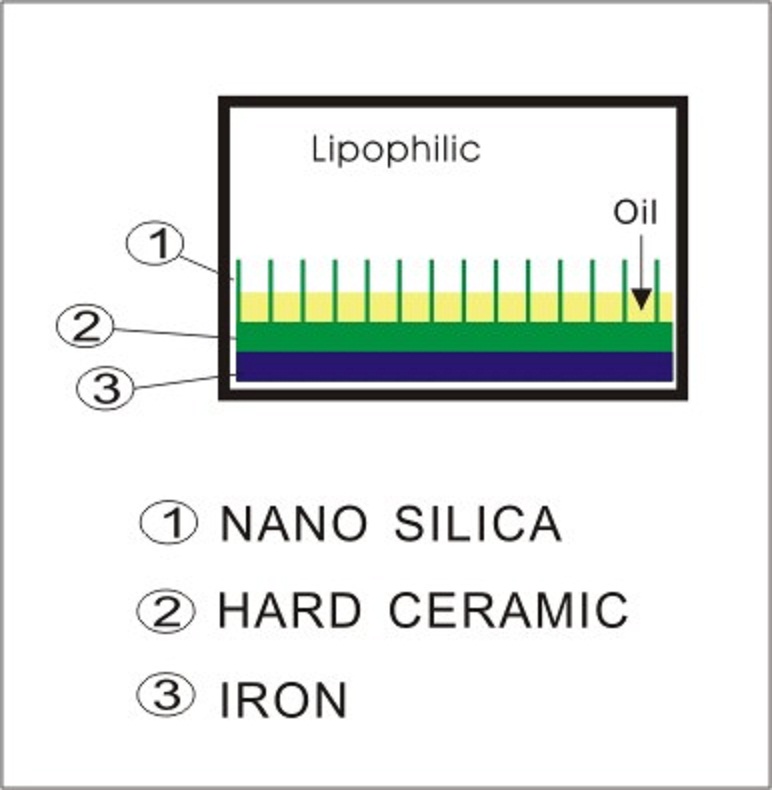
So in addition to the great heating effect from the strong, carbon steel construction, the highly innovative silicon-oxide crystal coating ensures a fish can be turned over easily, without it breaking up on the pan and becoming flaky.
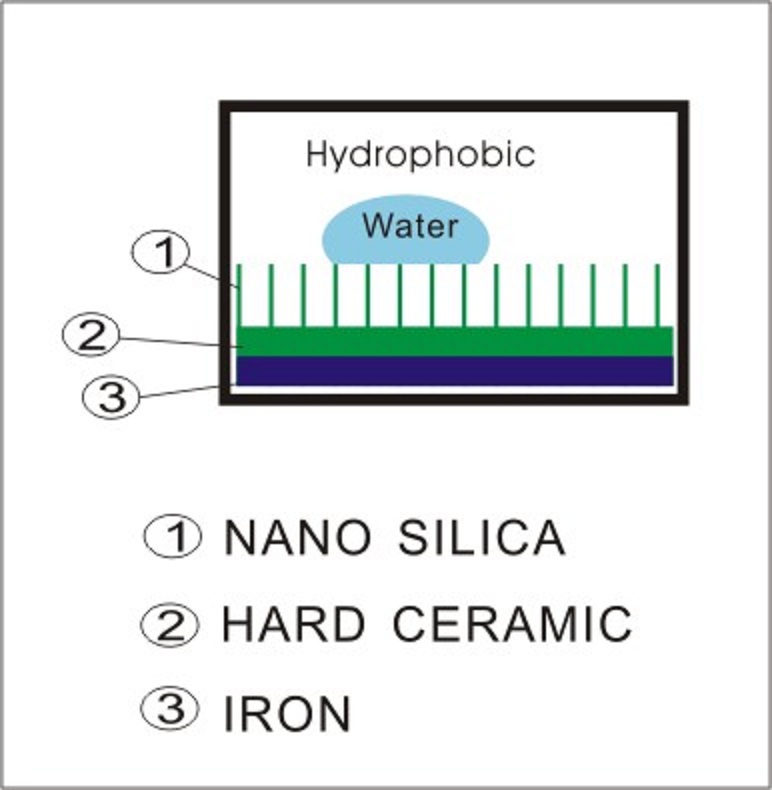
The Lotus Rock fish pan has a further advantage. Condiments or sauces are often used to add flavor to the fish while it is cooking, and after the fish is removed from the pan the remaining liquid is sometimes served on top of the fish to keep it moist and give it a juicy and more flavourful taste. However, because fish is cooked quickly and at a very high temperature, these sauces can sometimes scorch the pan and be rather difficult to remove. The Lotus Rock pan’s hydrophobic (water-hating) silicon-oxide crystal coating prevents these liquids, or any other dirty substances, penetrating its surface, making it much easier to clean than normal non-stick coated pans.
Lotus Rock fish pan shape
The last, and most obvious benefit of the Lotus Rock fish pan is its shape. The head and tail of an average-sized fish will often hang off the sides of a ordinary frying pan, so that not all of the fish will be properly cooked or absorb the sauces in the pan. The Lotus Rock fish pan is 37cm wide, making it easier to cook larger fish and increasing the chances of a better tasting dish.