June 23, 2015 / arnoldtnn / 0 Comments
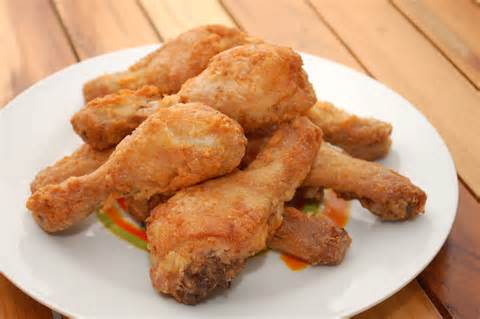
As explained in the previous post, a Lotus Rock Stir Wok is an excellent cooking utensil for steaming various types of food. However, unlike steaming which uses boiling water, Lotus Rock’s non-reactive coating can also be used for another highly intensive cooking method which instead uses boiling oil: deep fat frying.
Oil temperature
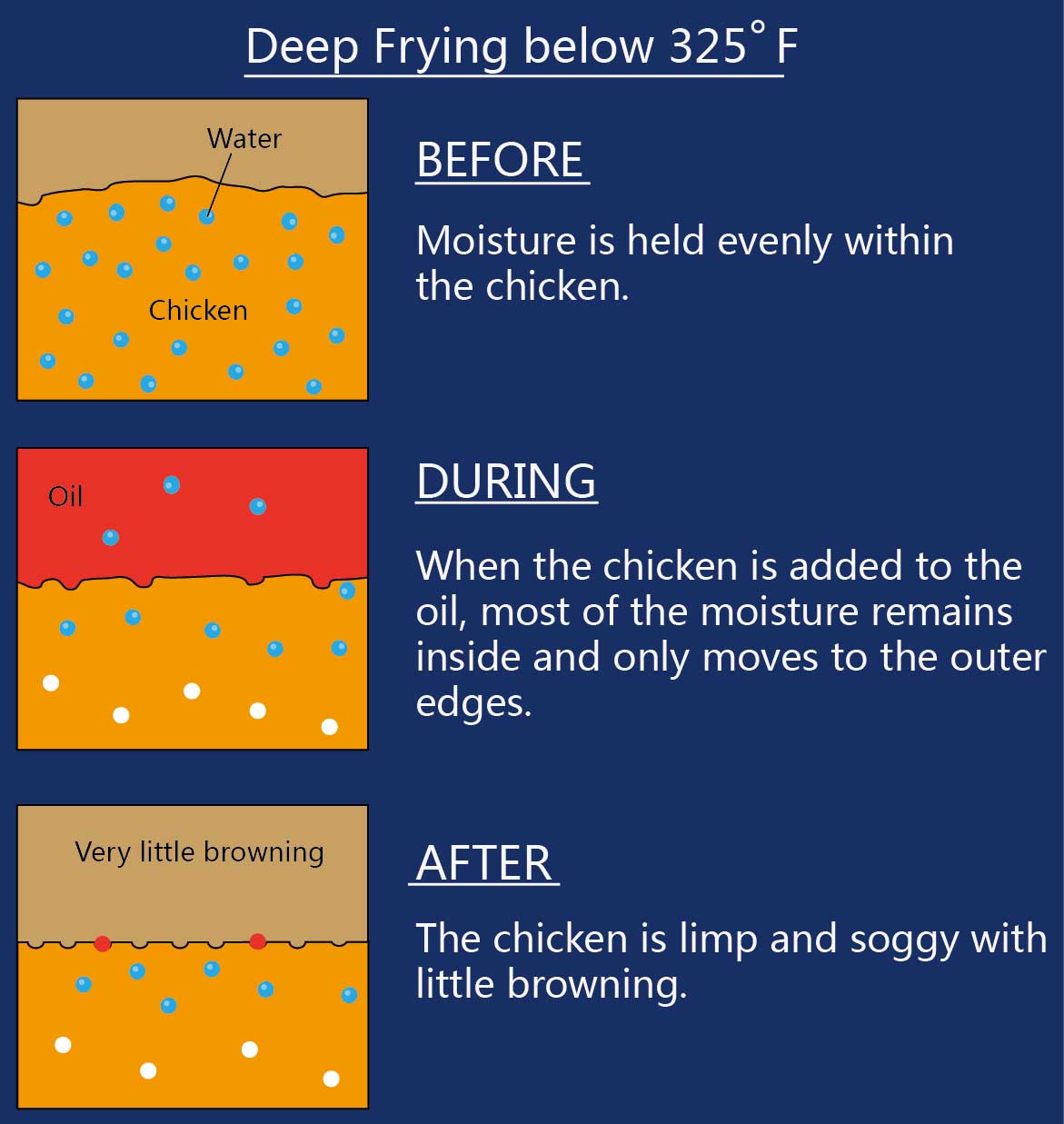
Good deep fat frying is all about getting the right oil temperature. Among cooking experts 325 degrees Fahrenheit is generally considered the optimum temperature at which to deep fry food, such as for chicken, shrimp and French fries. At this temperature the heat is high enough to turn the water in a piece of chicken to steam, to dry out the outer edge, and to form a brown, crispy crust, all the while cooking it for a moisty and creamy centre.
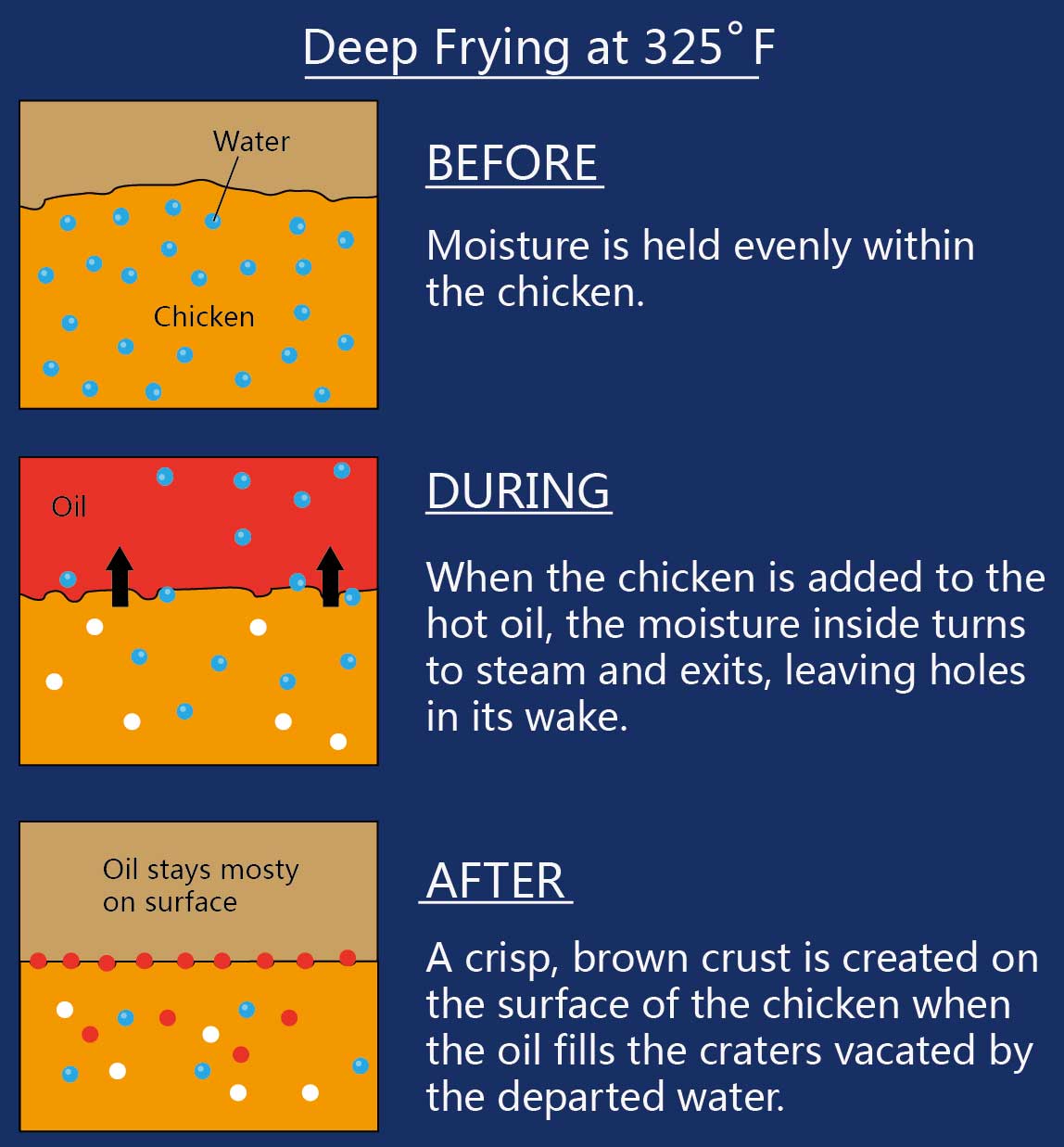
However, if the temperature is too low then the browning reaction does not occur. If this happens then there is nothing keeping the moisture of the fried food from migrating to the outer edges, and the result is a limp and soggy end product.
So, for delicious fried food the oil temperature is very important and a Lotus Rock stir wok has excellent thermal properties to not only reach a a high temperature quickly but also to retain it within the pan while the food is being fried. Lotus Rock is made up of a thick 2.0mm carbon steel substrate, a material which heats up very quickly. On an induction cooking top surface it can reach an internal surface temperature of 284 degrees Fahrenheit after only 60 seconds of heating. At this fast rate of heat conduction the ideal oil temperature for deep fat frying of 325 degrees Fahrenheit can be reached quickly. Conversely, because of the high density of the heavy 2.0mm gauge carbon steel, a high amount of the conducted heat is retained within the wok to maintain a high oil temperature despite the cooling effect of adding food for frying.
Stir wok shape
A Lotus Rock’s stir wok concave shape is particular advantageous for deep fat frying. Normally, for domestic kitchens a straight-sized cooking pot such as a Dutch oven is often used. However, this type of cooking utensil has a number of disadvantages for deep fat frying compared to a stir wok, these include:
- Messy. The straight-sided edges of a Dutch Oven mean the kitchen surface can quite often get splattered with little droplets of oil splashing out from the sizzling food inside the pot. In contrast, the edges of a wok spread out a good 7 centimeters or so on either side from where the oil is cooking, catching any splashes of oil and keeping your kitchen surface cleaner.
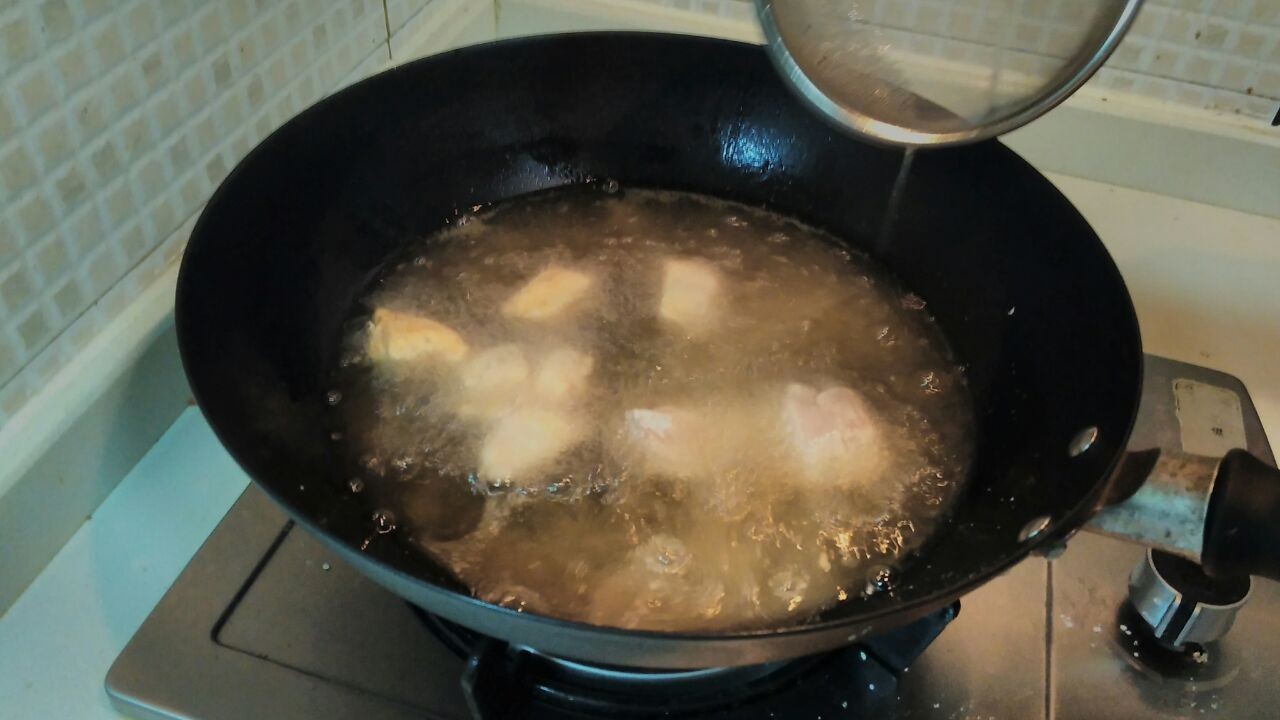 Cooking surface area. The extra space provided with the wide edges of a stir wok is not only beneficial for keeping oil inside, but it is also useful for maintaining a high oil temperature. With deep fat frying it is important that the food is not too crowded inside the pan. If there is too much food in the pan then it will be more likely to congregate together which would cause the temperature of the oil to decrease. As explained above, if this happens and the temperature drops to below 325F (generally considered the optimum temperature for deep fat frying) it can leave the surface of the fried food soggy when instead it should be crispy. With the wider cooking area of a stir wok compared to a Dutch Oven, food can be fried more evenly, at a high temperature in order to develop a tasty dry, crispy crust.
- Easier cleaning. During deep fat frying bits of fried food, such as burnt bread crumbs, will separate and sink to the bottom. With a Dutch Oven these can congregate in the corners of the pan making it very hard to clean properly. With a wok, on the other hand, these dirty particles have nowhere to hide and are easier to remove with a strainer as you fry.
- Less oil needed. Deep-frying in a wok is ideal because its concave shape requires less oil than a regular pot. This is especially useful because you cannot dispose of oil in in a plastic garbage liner. So the less oil you have after cooking, the less hassle you will have to get rid of it.
Conclusion
A Lotus Rock stir wok’s material composition and shape makes it particularly suitable for deep fat frying. It’s fast heating effect can get the oil up to a high temperature quickly while its thickness and density can maintain that temperature even when food is being added to the wok. Unlike a PTFE non-stick coated wok, which might get damaged from hot particles of oil getting inside the coating, a Lotus Rock stir wok has an extremely tight bonded ceramic layer, which has very high heat resistance and can withstand the rigors of deep fat frying. Other materials for a wok, such as stainless steel, might well have a strong construction to withstand the effects of a high oil temperature, but they will not heat up as quickly or retain heat quite as well as a Lotus Rock stir wok. Getting the right oil temperature inside the wok is very important for good deep fat frying for if it is not hot enough, then the moisture inside the food will not turn to steam, the outer edge will not dry out, and the trademark brown and crispy crust will not form. Deep-frying in a wok is ideal because its concave shape requires less oil than a Dutch Oven, and the wide cooking surface area of the wok allows more food to be fried at one time without over-crowding, which with a Dutch Oven would mean frying in fewer batches.
June 16, 2015 / arnoldtnn / 0 Comments
A wok can be used for a variety of different cooking methods. These include the most obvious one, stir frying, and also deep frying and smoking. It is less well known that with the right accessories, such a steel rack and a dome-shaped lid, a wok can also be used for steaming.
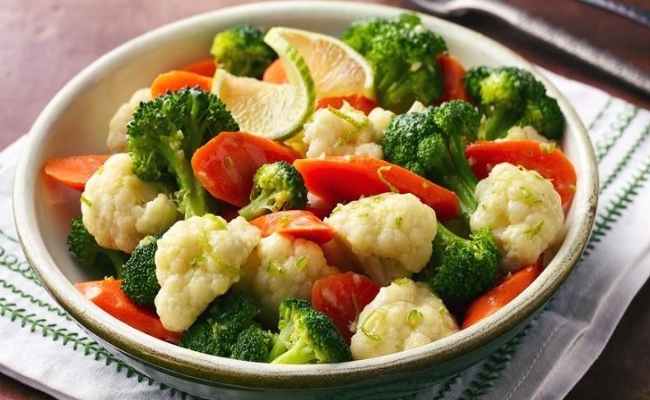
Steaming with a wok involves placing the food on a perforated steel rack above a small amount of simmering water and covering it all with a lid. As the water evaporates it creates steam which transfers the heat energy to the food and cooks it. Foods that can be cooked this way include:
- Pastry-based foods, such as dumplings or other dim sum-related dishes.
- Green vegetables, such as broccoli, artichoke, eggplant, are all very suitable for steaming.
- Shellfish and seafood
- Soft, fatty cuts of meat before stir frying.
What are the benefits of steaming compared to other cooking methods?
Steaming is a relatively quick and hassle-free cooking method for those who wish to spend less time in the kitchen, but without compromising the taste and nutritional value of their food. Steaming preserves nutrients in the food that are destroyed by micro-waving, pressure-cooking or boiling, especially folic acid and vitamin C. Studies have shown that boiling reduces folic acid by 35% and vitamin C by 25%, whereas steaming reduces both by only 15%.
Why use a Lotus Rock stir wok for steaming?
Most stir woks are made of the following materials:
- uncoated carbon steel, uncoated cast iron;
- stainless steel;
- non-stick coated aluminum.
Steaming requires a large amount of water to be boiled, making it preferable for the wok’s surface to be non-reactive (i.e. coated). If it is not, boiling water in the wok will cause rust or will remove or discolour the seasoning. Consequently uncoated carbon steel and cast iron woks, which both have excellent thermal properties for stir frying, are unsuitable for steaming.
Aluminum non-stick coated stir woks have the opposite problem. Although a PTFE non-stick coating is very non-reactive, it is not bonded very tightly together and during steaming the particles of fast moving water vapour can penetrate the coating, making it peel off and impairing its quality. In recent years ceramic coatings have been used on stir woks, and this type of coating is much more tightly bonded together than a PTFE non-stick coating. However, although a ceramic coating may have a stronger construction than a PTFE non-stick coating, the silicone oil which gives the coating its non-stick release cannot withstand the high temperature which occurs during steaming and so often the silicone oil dries out quite quickly.
Uncoated stainless steel is a more appropriate material for steaming, as its surface is more non-reactive than either carbon steel or cast iron, and there is no non-stick coating to be damaged. However, steaming is a very intense cooking process and even a stainless steel wok can, over time, start to rust if frequently used for steaming. In addition its thermal properties (uneven heat transmission, with a high tendency for hot spots) make it less suitable for stir frying, which is what woks are mostly used for.
A Lotus Rock pan has none of these disadvantages. Unlike uncoated carbon steel and cast iron, a Lotus Rock pan has a non-reactive surface which is suitable for boiling water. Unlike most general non-stick cookware (whether PTFE or ceramic), which is organic bonded and can easily break under a high temperature, the Lotus Rock coating is made up of inorganic substances and has much higher heat resistance. This type of coating material is more advantageous for a cooking method such as steaming, especially when compared to a general non-stick coating, which will either break up or dry out in such hot and moist conditions. Lastly, in contrast to stainless steel, a Lotus Rock stir wok’s thick carbon steel base has a much better heating effect for stir frying, making it more multi-functional.
Lotus Rock stir wok accessories for steaming
Stainless Steel Rack
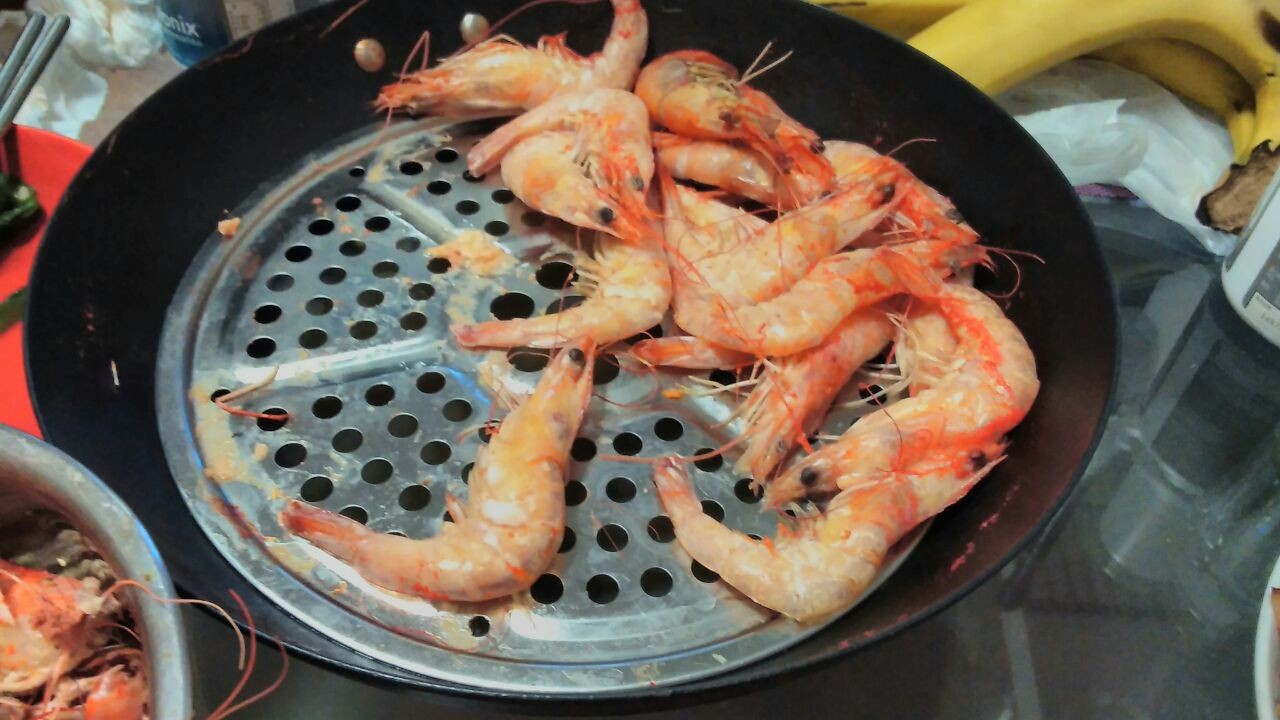 A Lotus Rock steamer rack is thick and strong enough to withstand the weight of one or more porcelain dishes on top of it, for steaming entrees, such as fish, which taste better if the juices can be used for a sauce. The stainless steel material is highly heat-proof, with excellent corrosion resistance. The holes in the rack are wide enough to create convection currents to circulate the steam around your food. However, they are also small enough to prevent food falling into the boiling water below. All Lotus Rock steamer racks are sold with a diameter which generally fits half way down the stir wok. This way there is enough space for the steam to circulate between the food and the lid, while at the same time ensuring there is enough distance between the rack and the boiling water to avoid water splattering and soaking the food.
Stainless Steel Glass Dome Lid
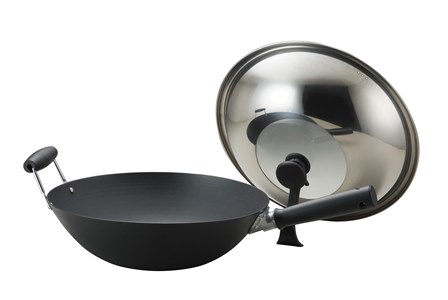 A tight-fitting dome-shaped lid is essential for steaming. In order to ensure that very little steam escapes from the wok during cooking all Lotus Rock lids are manufactured to fit the edges of the wok very tightly. The dome shape is important because it allows condensation to run down the sides of the lid, rather than dripping onto the food you are steaming. The rim and sides of a Lotus Rock stir wok lid are made of stainless steel, whose its strong construction can withstand the intense heat from the rising steam below it. To steam food well timing is all important (if you steam for too long then the food can be quite dry), so a glass centre allows the cook to monitor the progress of the cooking more easily and safely. Lastly, the lid has a clip-on knob design which allows the lid to be safely removed from the wok (especially useful after steaming as the temperature inside the wok can get very hot). After this the lid can then be placed upright on the kitchen worktop with the clip-on handle as support.