Lotus Rock & pre-heating
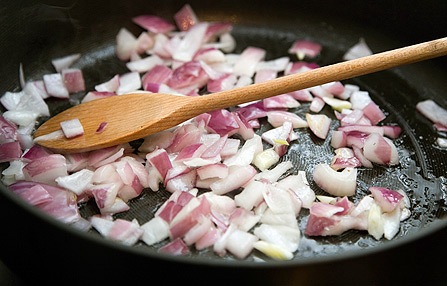
As many readers of this blog will already know, Lotus Rock cookware is excellent for high-heat cooking. Sautéing is one such commonly used high heat cooking method, popular in both domestic and professional kitchens. To sauté is to cook food quickly in a minimal amount of fat over relatively high heat. The word comes from the French verb sauter, which means “to jump,” and describes not only how food reacts when placed in a hot pan but also the method of tossing the food in the pan.
There are 3 things to keep in mind when sautéing:
i) The food should be cut into smaller, bite-sized pieces.
ii) A high heat and a good sizzle should generally be maintained at all times.
iii) The food should be tossed from time-to-time to ensure that it cooks evenly.
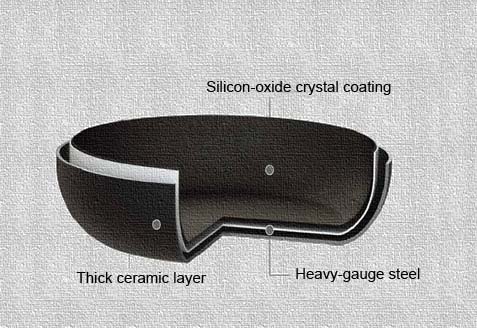
As has been explained here and here, a Lotus Rock pan has excellent thermal properties for high heat cooking, such as for sautéing. For a brief summary there are a few reasons for this. First, a Lotus Rock pan heats up very quickly because of the material properties of the carbon steel substrate within it. Secondly, its steel material gauge along with the ceramic layer coated around it is very thick. This high thickness ensures that heat is spread evenly around a Lotus Rock pan. Lastly, the high density of the steel along with the excellent insulation capability of the ceramic layer around it means that even when food is added for sautéing the temperature of the pan will not drop significantly. Thus, with a Lotus Rock pan a good sizzle can start immediately and be maintained without the food steaming in its own juices, for excellent browning and a succulent flavour.
However, even before the sautéing process can begin, it is important that the pan is pre-heated to a high temperature before adding oil or butter to it. If ingredients are added to a cold pan, with cold oil on it, and then slowly heated up this will result in food which is bone dry. The reason for this is related to moisture retention: if a piece of food is heated up slowly, the ingredients of the dish will gradually release moisture, gently simmering in their own fat. Instead for a better sautéing cooking result small cuts of meat and vegetables should be browned quickly at a high heat, which will at the same retain their moist and rich flavours.
A Lotus Rock pan is particularly suitable for being pre-heated to a high temperature for Sautéing. This is because the coating of Lotus Rock has a specially configured design which has very high heat resistance. The Lotus Rock silicon-oxide crystal coating is made up of inorganic substances: it is in the form of a thin crystal, which has no traces of carbon within it. Conversely, the type of ceramic material that the silicon-oxide crystal coating rests on can resist temperatures of up to 350 degrees centigrade. This is particularly advantageous for a high-heat cooking method such as sautéing which requires the pan to be preheated to a high enough temperature so browning can start immediately once the food is added to the pan.
In contrast to Lotus Rock, most general non-stick cookware is organic-bonded and so can easily break under a high temperature. If a non-stick coating is continually over-heated then it will either quickly start to degrade (such as peeling off or blistering), or if it contains PTFE for its non-stick release, a hazardous chemical smoke may appear which has been proven to be fatal to birds. So in general, non-stick pans are not suitable to be pre-heated to a high temperature for a cooking method such as sautéing. Instead they are more appropriate for cooking more delicate produce, such as tofu or fried eggs, which do not require a very high heat at the start of cooking.
In addition to Lotus Rock, another material for cookware which does have very high heat resistance is cast iron. Pans made of this material have an excellent intense and even heating effect and can maintain a good sizzle at all times during sautéing. However, as was noted in point 3, generally a good saute requires some tossing and because of the heavy weight of cast iron pans, for most people this would be quite troublesome. Also, with sautéing it is important not to overcook the food in order to avoid excess moisture loss. Cast iron cookware is very slow to cool down, so unless the food is taken out of the pan very quickly, many of the bite-sized pieces may well continue to sizzle too long and be browned too much.
Conclusion
Sauteing is a dry heat cooking method, and it is an ideal means for searing or browning food, a process that imparts significant flavor. To accomplish this, high heat is needed and food must not be introduced until the pan and the fat have been pre-heated first.
A Lotus Rock pan is ideal for sautéing because it can be pre-heated to a high enough temperature* to start browning and caramelizing meat and vegetables immediately, without damaging the pan’s non-stick performance or construction. A Lotus Rock pan’s heavy gauge carbon steel and thick ceramic coating has the necessary thermal properties to generate intense heat for a good sizzle, all of which is essential for sautéing. Conversely, a Lotus Rock pan is not so heavy that it cannot be tossed from time-to-time to ensure that the sautéed food cooks evenly.
Conversely, the thick gauge and density of the steel substrate, along with the excellent insulation properties of the ceramic layer coated around it, mean that even when food is added to a Lotus Rock pan only a limited amount of heat is lost from it. This means that when a cook wants to add some diced potatoes or chicken to saute it doesn’t have to readjust the heat setting to get the pan hot enough again at the optimum temperature for excellent browning and caramelizing.
*Important! Although a Lotus Rock pan does have excellent high heat resistance, its fast heating effect does mean that the pan should always be heated at a low-medium temperature. This way a Lotus Rock pan will build up heat within its highly dense structure more gradually and evenly than if it is heated on a high flame immediately. As explained above, when a pan has a lot of heat stored in it, the pan will brown, sauté, grill and stir fry food much better than if the food is added when the pan is still cold. If a Lotus Rock pan is heated up too quickly this may damage it through warping its base into either in a convex or concave shape, which could make the pan obsolete for use on a flat top cooking surface.
A popular Saute pan in the Lotus Rock cookware collection has a 28cm diameter and is attached with the Zurich forged stainless steel handle.
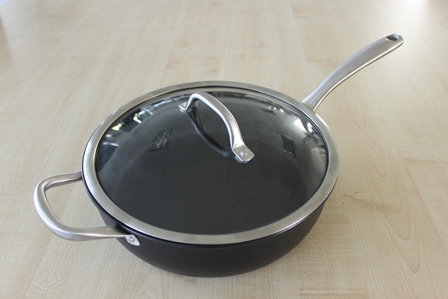
Product Features
- Rugged hard carbon steel construction offers optimum strength and durability
- Highly innovative, reinforced ceramic coating is metal utensil safe
- Engineered of virtually pure, heavy-gauge 2.0mm carbon steel for fast, even heating
- Ultra-durable thick ceramic exterior will not chip, stain or crack
- Silicon-oxide crystal cooking surface does not react with acidic foods
- Tempered, domed glass lid with wide stainless steel band seals in moisture and nutrients
- Cast, brushed stainless steel, double-riveted handle for stay-cool cooking
- Easy-grip helper handle ensures safe transfer of food
- Straight sides accommodate liquids; a lid locks in moisture for slow braising.
- Rims are shaped to allow for dripless pouring.
- Classic matte finish delivers elegant cooktop to tabletop presentation
- Safe for gas, ceramic, glass, electric, halogen and induction stove tops
- Oven and broiler safe to 450 F
- PFOA/PTFE-free