Lotus Rock Makiyakinabe
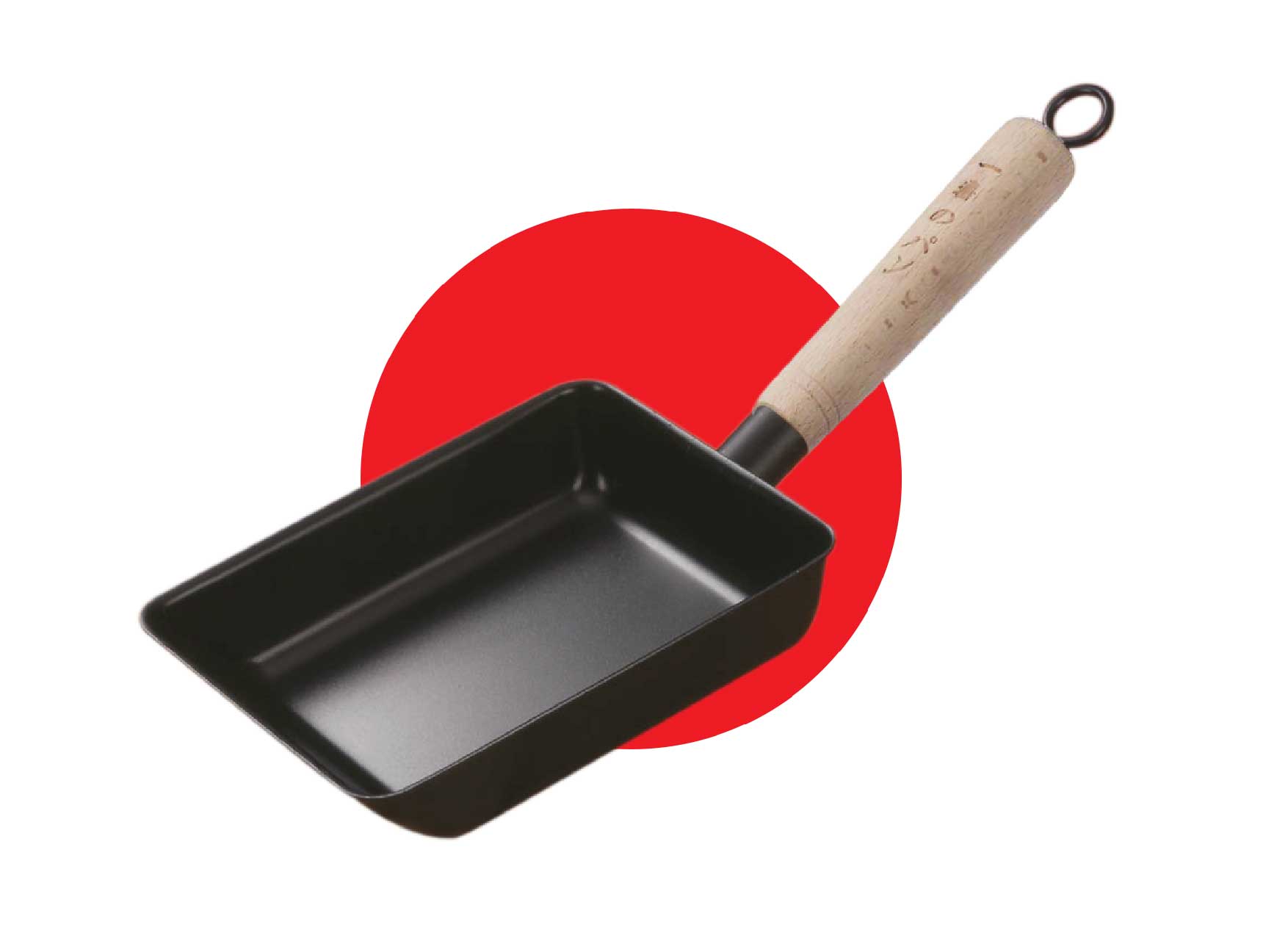
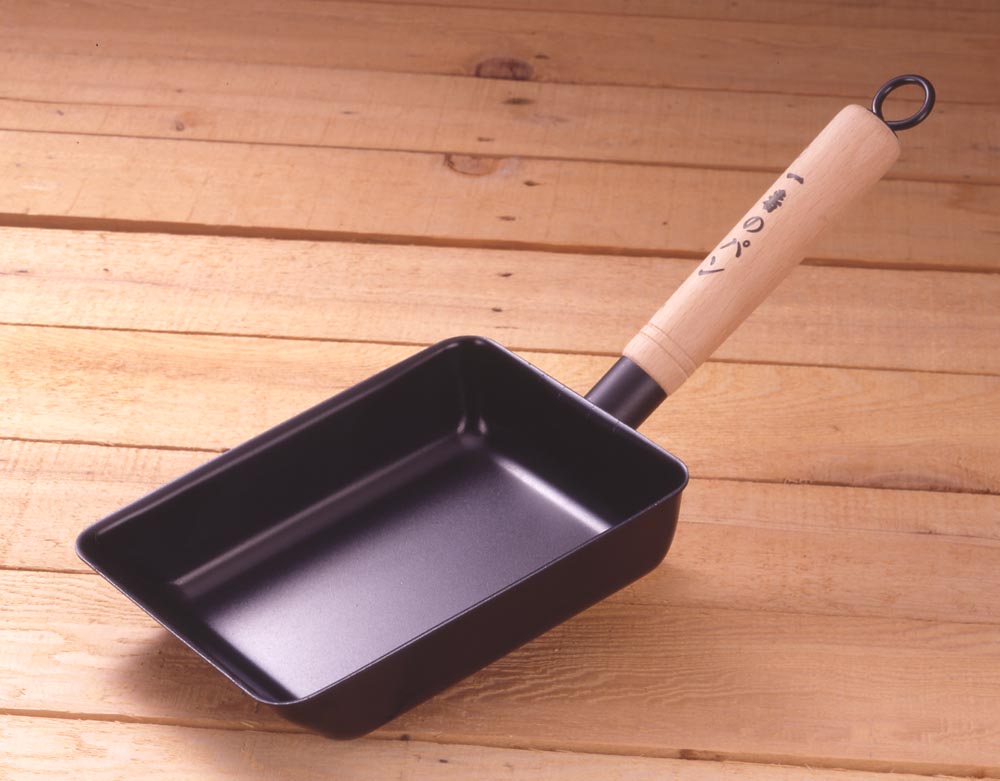
In Japanese cuisine rolled omelettes are made as rectangular thin omelettes and then rolled into a cylindrical or elongated cube shape using Japanese kitchen chopsticks. To obtain a roll with a constant diameter over the entire lengths, the thin omelette should be of rectangular shape. To obtain this shape a special rectangular frying pan is used. This type of pan shape for making Japanese-style rolled omelettes is generally called Makiyakinabe, but in other parts of Japan it is also known as tamagoyakiki.
In the market place today the Makiyakinabe pan is most often made of iron, with either a plastic or wooden handle. Since the main purpose of Makiyakinabe is to use a lot of eggs to make an omelette, a non-stick coating is applied to the pan to facilitate easy rolling of the omelette into an elongated cube shape.
Generally the ingredients for a Japenese-style rolled omelette with the Makiyakinabe pan are as follows:
- 4 eggs
- soy sauce
- mirin
- sugar
- salt
- cooking oil
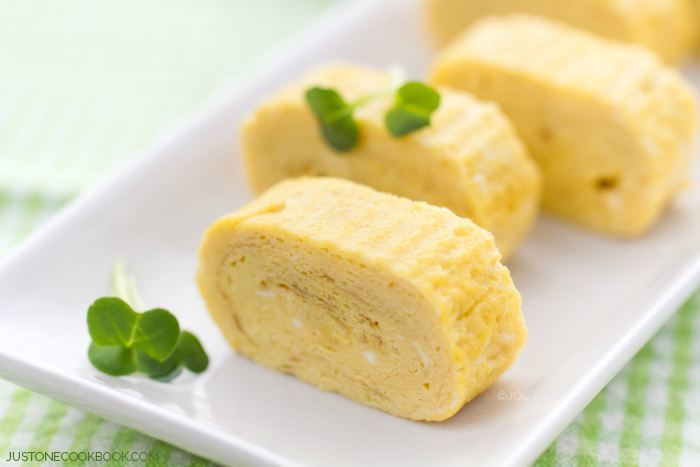 To prepare a Japanese-style rolled omelette the eggs need to be beaten in a bowl, with the soy sauce, mirin, sugar and salt added later to the mix. The Makiyakinabe pan should be brought up to a medium heat and then a small amount of cooking oil should be added. Next the egg mixture is poured into the pan and when it is slightly uncooked should be pushed to the side of the pan. After this another small amount of the egg mix should be added to the pan. Once this has cooked for a bit it can be rolled over the first bit of egg mixture that rolled up the pan earlier. Keep adding the egg in new layers until you have used it all up. Once this is done the omelette can be removed from the pan, and once it cooled can be sliced into thin pieces with a sharp knife.
As was explained above, most Makiyakinabe pans in the market today are made with iron and come with a general non-stick coating on them. However, if you read several reviews of these pans on Amazon you will note that some of these have received a number of negative comments. Some of these complaints include:
- Scratching, both on the interior and exterior of the pan.
- Rust, in some cases this has appeared after only a few uses.
- Uneven heating, the omelette would cook faster in one section of the pan.
- Poor non-stick release, eggs would stick quite easily even after just 3 times of use.
- Difficult to clean, eggs are difficult to remove from non-stick coating.
As shown in the video here, a Lotus Rock Makiyakinabe pan can cook a Japanese-style rolled omelette extremely well, with no sticking and to a perfect thin, crispy texture. There are a number of reasons for this, these are:
- Thickness. A number of the consumers on Amazon complained about both the thin metal base and non-stick coating. This particular pan did not heat evenly (or retain heat well), and the non-stick coating easily scratched, causing the iron surface below to rust quite easily. As previously explained here, Lotus Rock has both a heavy gauge carbon steel base, as well as a very thick ceramic layer around it (up to 100 microns). Therefore, not only does a Lotus Rock Makiyakinabe pan heat up evenly and quickly for an excellent heating effect, but the coating is extremely scratch resistant to use on the stove top or to whatever material it is being stored on in the kitchen. The thickness of the Lotus Rock ceramic layer also provides excellent corrosion resistance, so no rust spots should appear in spite of intensive, daily use.
- Non-stick release. One of the most common complaints about the pan reviewed on Amazon was that the non-stick effect wore off extremely quickly. In contrast, all Lotus Rock pans have a natural, highly durable non-stick release. As explained above, one of the cooking instructions for all Japanese-style rolled omelettes is that after the egg mixture is rolled up the pan cooking oil should be added again to make the next layer of the omelette. As the video above clearly demonstrates, no sticking occurred when the egg mixture was added to the Lotus Rock Makiyakinabe pan. The high durability of the Lotus Rock natural non-stick surface is perfect for a consumer who wants to use this type of pan on a daily basis for breakfast.
- Metal utensil safe. In order to cook a Japanese-style rolled omelette correctly, speed of movement is important. A tough and sharp utensil is needed to get quickly underneath the egg mixture to roll it over so it settles nicely at the top of the pan. For the pan reviewed on Amazon a fair number of consumers complained that they had to be careful which type of utensil they used, otherwise they might scratch and then impair the quality of the coating. On the other hand for a Lotus Rock Makiyankinabe pan, because the silicon-oxide crystal coating is extremely thin, no metal utensils can damage it or the thick ceramic layer it is coated on. Therefore, a consumer can use any type of utensil, such as a metal spatula, fork or chopsticks without any fear that using them might scratch the coating.
If you are a passionate lover of Japanese cuisine, and you would like to cook a delicious Japanese-style rolled omelette then perhaps you should consider to purchase a Lotus Rock Makiyakinabe pan. It can be used for your daily breakfast, over a long period of time without any worries over scratching or poor non-stick release.