March 24, 2016 / arnoldtnn / 0 Comments
One of the significant benefits of a Lotus Rock pan is its special suitability for high heat cooking. Unlike a general non-stick pan, a Lotus Rock pan is excellent for pan-frying, grilling, stir frying, and sautéing on a high heat to develop a delicious, brown crust on meat, fish and vegetables.
However, for some popular dishes such as scrambled eggs, the browning reaction is exactly what you do not want. If scrambled eggs are cooked this way then they will be tough and rubbery, rather than soft or fluffy. So since the Lotus Rock material construction is highly suitable for high heat cooking, does that make it impractical for the type of low temperature cooking that is needed for scrambled eggs?
The straight answer to this question is an emphatic no, but in order to cook soft and fluffy scrambled eggs with a Lotus Rock pan a different type of cooking approach is needed. In fact, it is necessary to think more like a professional chef. In a restaurant kitchen, time and efficiency are of the utmost importance. It is for this reason that professional chefs often develop cooking techniques that make it possible to create some popular, well-known dishes in half the normal time, yet which taste just as good or, because of higher moisture or vitamin retention, even more delicious or healthy.
Currently one of the most famous professional chefs around is Gordon Ramsey, the presenter of the popular television series Kitchen Nightmares. In this video clip Gordon decides to cook a delicious breakfast for his wife who is still in bed upstairs. However, just like all professional chefs, he wants to cook the scrambled eggs quickly, partly to save time, partly so it can be eaten while still warm with sautéed mushrooms, tomatoes, and toasted bread. So rather than just use the standard cooking technique for scrambled eggs, which would be to use an aluminum non-stick coated frying pan to cook the eggs slowly until they form curds, he develops a different approach. Not only does he use a different material for the pan, stainless steel, but instead of just leaving it on the stove, he continually moves the pan to the counter top and back to the heated stove, stirring the eggs thoroughly throughout. The advantage of not heating the eggs continually is that they do not get over-cooked and tough. At the same time the high heat retention of stainless steel means that the pan does not get too cold while it is on the counter top, and so there is a reduced chance that the eggs will uncurdle and break up.
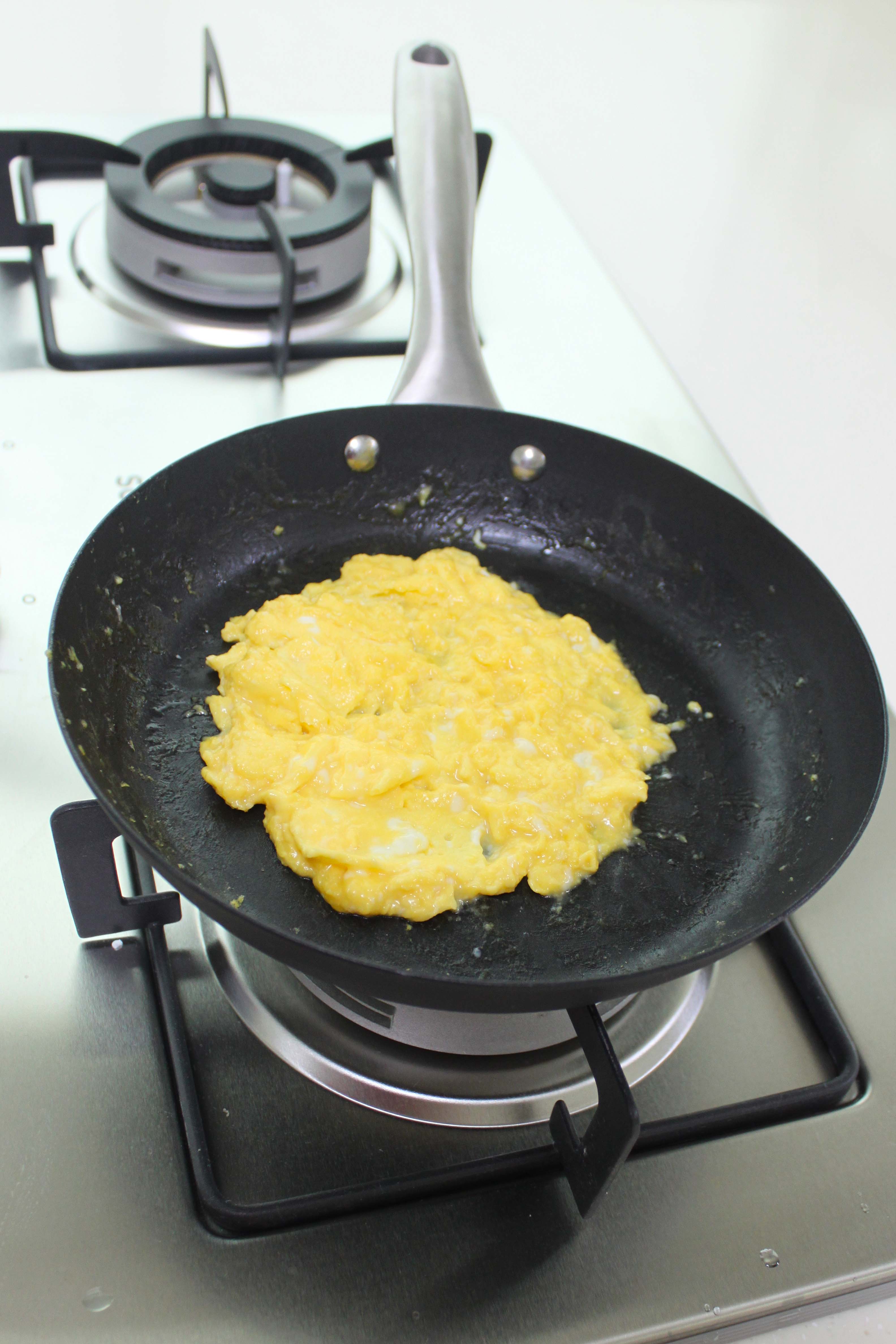
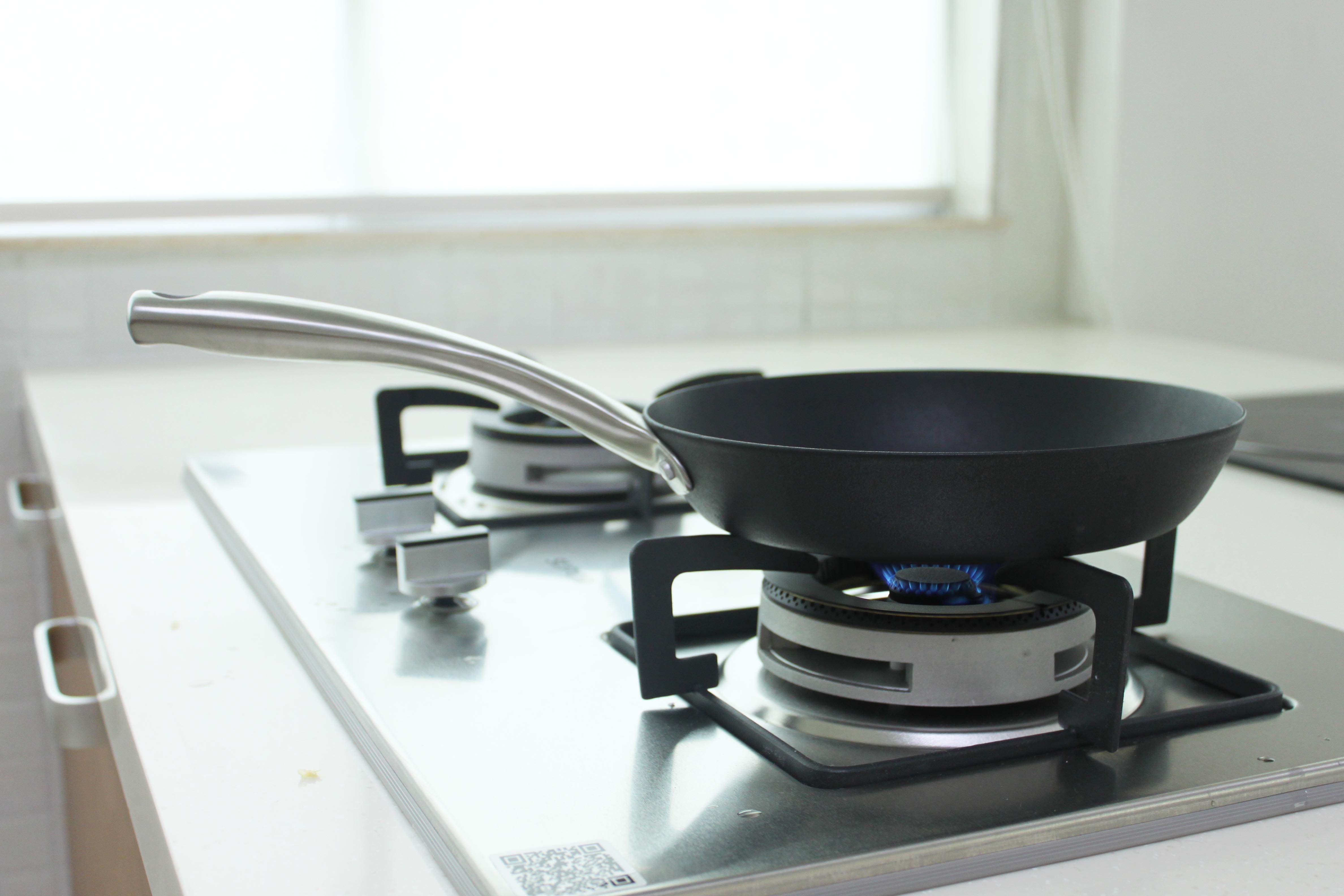 When cooking scrambled eggs with a Lotus Rock pan it would be advisable not to copy Gordon Ramsey’s cooking technique in its entirety because, although carbon steel, the substrate of all Lotus Rock pans, does have similar heat retention qualities to stainless steel, it also has a different rate of heat conductivity, which requires his technique to be modified slightly. Before adding any ingredients, pre-heat the pan at a very low temperature to allow the heat to be absorbed into its highly dense structure. Then turn the heat off and leave the pan to cool for about 10 seconds before adding the egg mixture, using a spatula to keep moving it from the outer part of the pan to the centre to allow as much of the mixture to cook evenly as possible. If during cooking you feel the pan has cooled down too much and the eggs are not coagulating as they should, return the pan to the stove to add some extra heat.
Another way to prevent overcooking is to add milk or sour cream to the eggs when whisking them together. Or alternatively, copy the Gordon Ramsey approach and add crème fraiche towards the end of the cooking to help cool the temperature of the eggs down.
So in conclusion, scrambled eggs can be cooked to perfection by removing a Lotus Rock pan from the heat source before adding the egg mixture, and by including another ingredient such as milk to slow the cooking process down. These soft and fluffy scrambled eggs can then be added to other ingredients for the perfect breakfast or entrée.
March 8, 2016 / arnoldtnn / 2 Comments
As was mentioned in the previous post, Lotus Rock is a highly distinctive and innovative cookware utensil, unlike other types of cookware sold in the market today. It has many benefits for use with cooking, including:
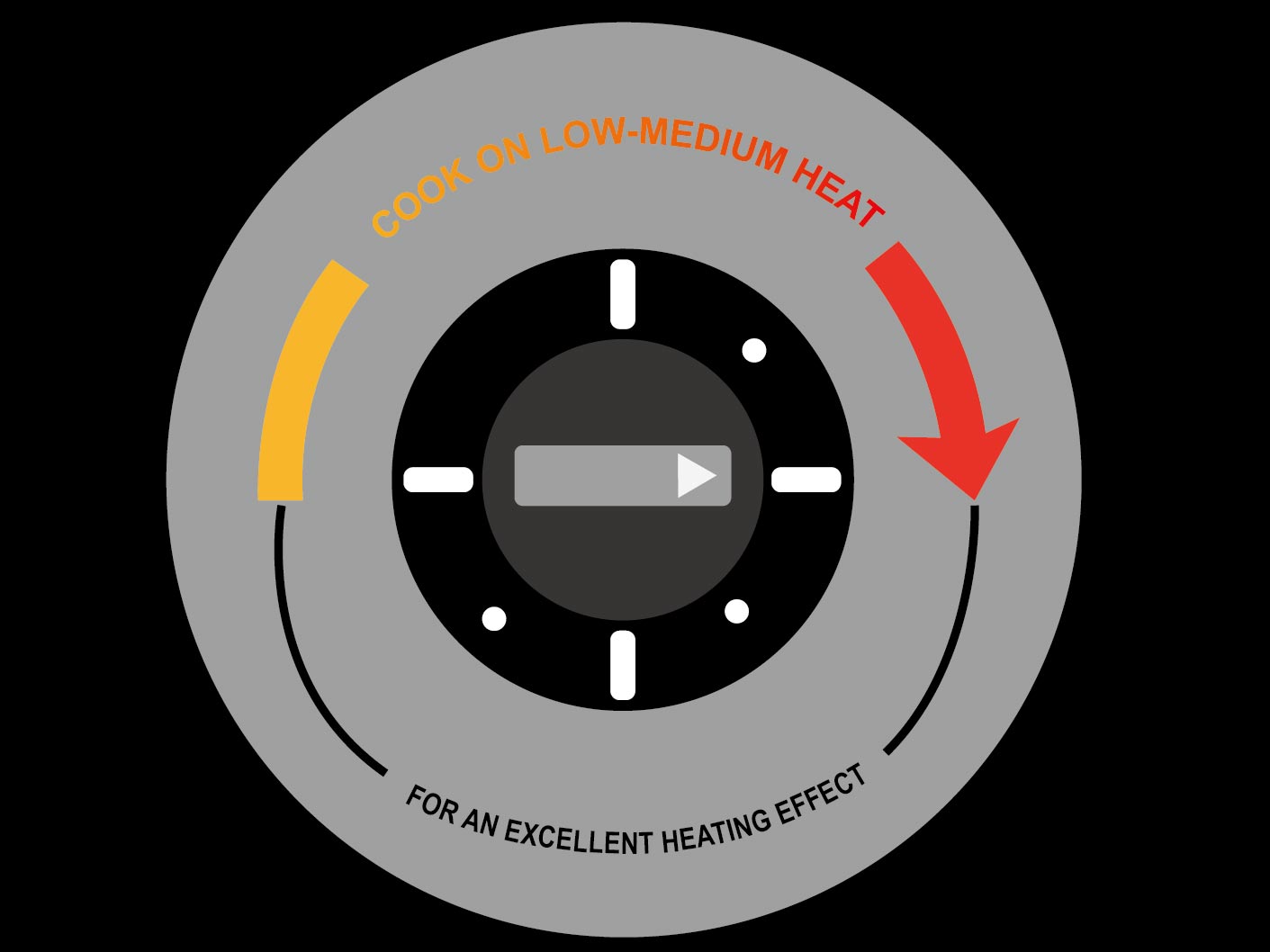
However, some of the benefits listed above require the ‘use and care‘ instructions for Lotus Rock to be followed – if not the pan will not perform to its optimum ability and performance. Without a doubt one of the most important instructions for using a Lotus Rock pan is to “Use a low-medium heat setting”.
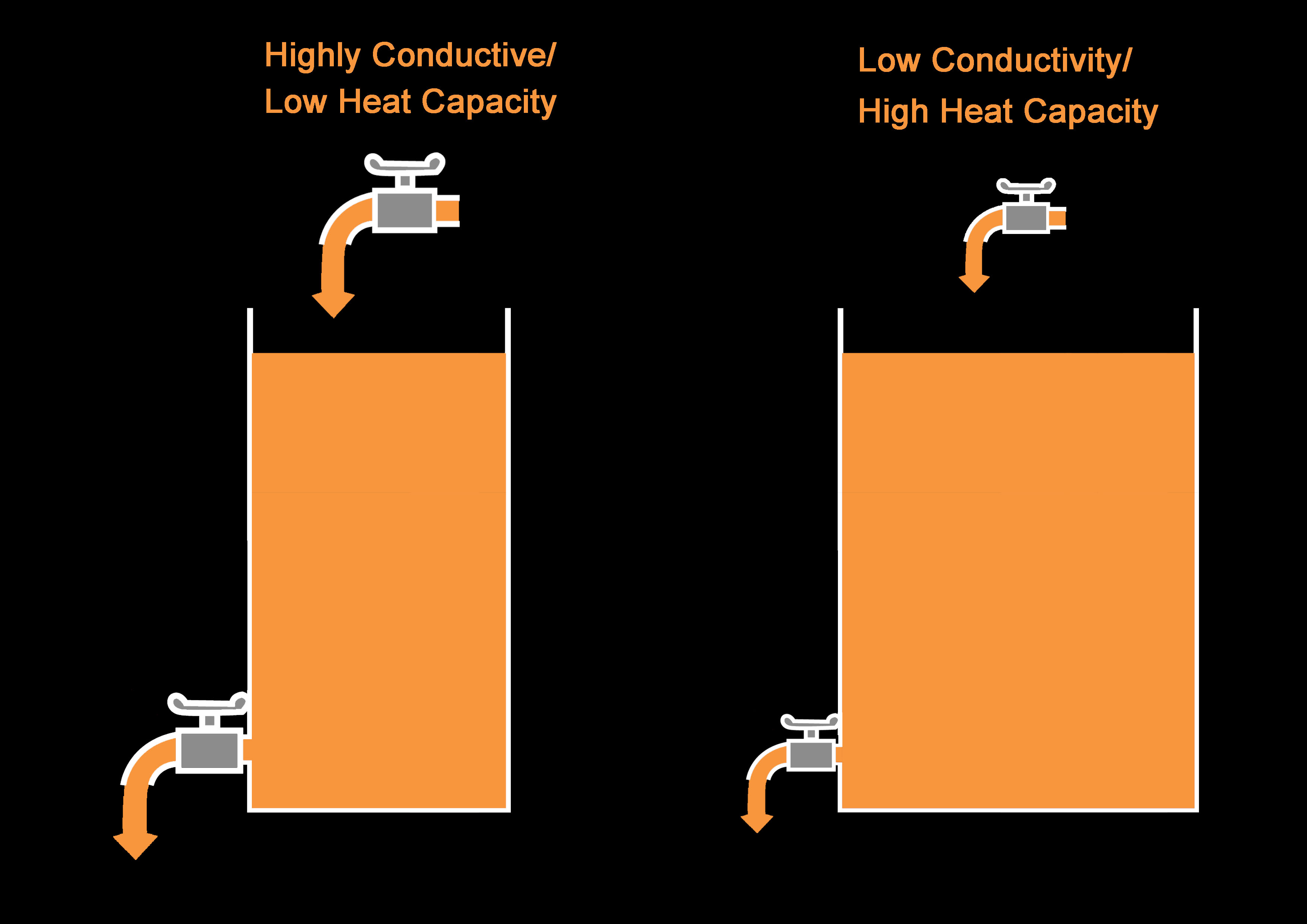
Many pots and pans produced in the market today are made with aluminum. One of the advantages of aluminum for cookware is that it conducts heat very evenly; however it is not generally used for professional-style cooking because it has very poor heat retention. Its efficient heat conduction, along with its low density, means that aluminum has a low heat capacity, i.e. it loses heat very quickly. Consequently a medium-high heat setting has to be used in order to keep aluminium pans as hot as possible during cooking.
Lotus Rock, on the other hand, has very different thermal qualities to aluminum. The metal substrate for all Lotus Rock pans is carbon steel, which conducts heat less evenly than aluminum. As explained in this blog post, if a carbon steel pan has a thin gauge then most of the heat will be distributed to the centre of the pan. However, a Lotus Rock pan has a very heavy gauge, along with the thick ceramic layer on both the interior and exterior of the pan, which causes the heat to be distributed more evenly.
Below are some reviews that consumers in the USA have written above the heating effect for Lotus Rock pans.
“Outstanding Christmas gift for my husband who loves to cook. The best pans we’ve ever owned. Cleans straight away and stacks nicely in the cupboard. The only con I would say is learning not to use a high temperature. The pan sits so flat that we’re not used to this high quality item and using the same temperature we used from our old pans took some getting used to. These pans brown better than anything we’ve used before including cast iron skillets!””
“I finally got tired of my cheap, wobbly pans and ordered this set. They are very heavy and I’ve noticed that I can cook at a lower heat with them. Love them, only regret not purchasing them sooner!”
“Right now, I would rate them at 4.5 stars. There is a learning curve in switching from aluminum-based to carbon steel pans in terms of heating rate, temperature control, etc., so I’m still learning.”
“It’s a great size, I will use it a great deal. One warning, it cooks Hot, so keep the temps on your range lower until you get used to it. Not a bad feature, but something you should know ahead of time.”
The thermal properties of aluminum and carbon steel can be imagined as a bucket of heat with faucets dumping heat into and draining heat out of the bucket. Aluminum with its high heat conductivity has large faucets letting a lot of heat into the bucket, but also a lot out of it. However, because it is not very dense it cannot hold much heat so the water travels through the bucket quite quickly. Carbon steel, on the other hand, has a lower heat conductivity and so has smaller faucets. But it does have a larger heat capacity so it can contain more water. Therefore the water, just like the heat going through the pan, takes longer to get through and out of the tank.
But even with its heavy gauge and thick, hard ceramic layer, if a Lotus Rock pan is put on a medium-high heat setting then it will not distribute heat as evenly as an aluminum pan. For a Lotus Rock pan to distribute heat evenly it needs to be put on a low-medium heat setting, so that the pan has the necessary time to build up and retain the heat inside it. It is true that even at a high heat setting a Lotus Rock pan will distribute heat around itself better than a pan with a thin gauge, but it will still be hotter at the centre than at the side of the pan.
Overheating a Lotus Rock pan has two other main disadvantages. First, there is a risk of warping the pan, causing it to spin motion on a flat top cooking surface, or, if, the centre of the pan will rises higher than the sides, preventing oil spreading evenly over its surface. The second disadvantage of over-heating is scorching. If the oil or other small ingredients are over-heated then they can cover the silicon-oxide crystal coating and cancel the non-stick effect.
Therefore, it is essential for a Lotus Rock pan to be used a low-medium heat setting, to allow a slow heat buildup into the pan’s highly dense structure. As explained above, unlike an aluminum pan, Lotus Rock has high heat retention even at a low heat setting. Heat from the stove top will not easily escape to the atmosphere or be drawn into ingredients on the pan’s surface. Therefore, for an excellent heating effect and to maintain the high quality of the Lotus Rock pan, it is essential to always pre-heat at a low-medium temperature. Remember: keep the heat down!
March 4, 2016 / arnoldtnn / 0 Comments
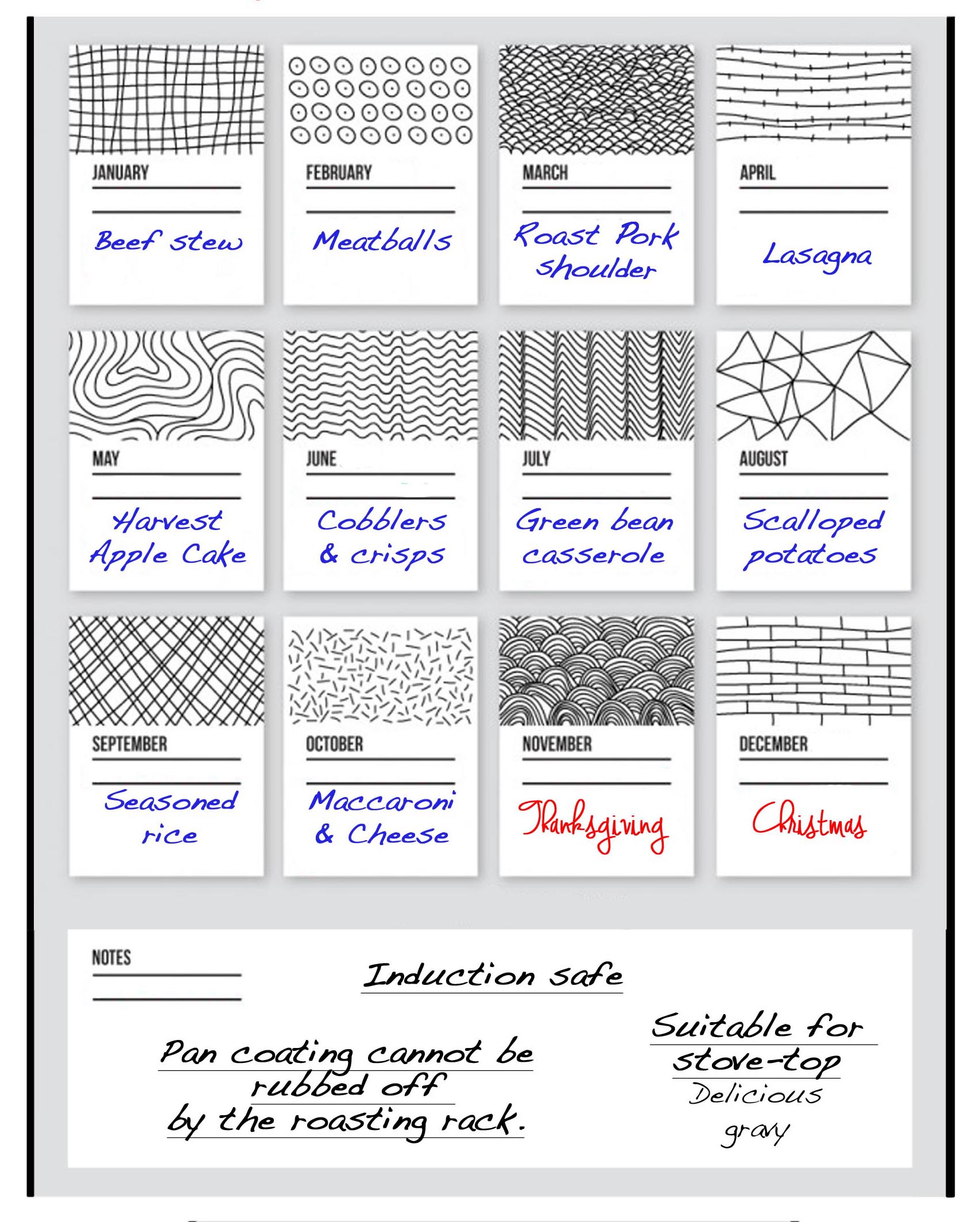 A Lotus Rock roasting pan is highly versatile and extremely durable. Instead of just using it twice a year for special occasions such as Christmas or Thanksgiving, a Lotus Rock roasting pan can be used to roast, bake and sear a variety of dishes all year round. Not only can it be used to bake kitchen favourites such as lasagna, and maccorini & cheese, but a Lotus Rock roasting pan can also be used to make delicious gravy on the stove top. Its versatility is such that you don’t even need to worry about which type of stove top you can use it on because Lotus Rock is compatible for induction and all other typs of cooking top surfaces. Lotus Rock’s heavy gauge steel construction, along with a highly thick interior and exterior coating make it a very durable pan, which is especially suitable to withstand the constant wear and tear of a roasting rack sliding back & forth in a highly grease stain environment. The thick, black matte construction of Lotus Rock also ensures the roasting pan heats evenly, with no hot spots, for an excellent heating effect for golden brown potatoes and much else. So the next time you consider to purchase a roasting pan, remember it doesn’t just have to be for Christmas, it can be a pan for life!
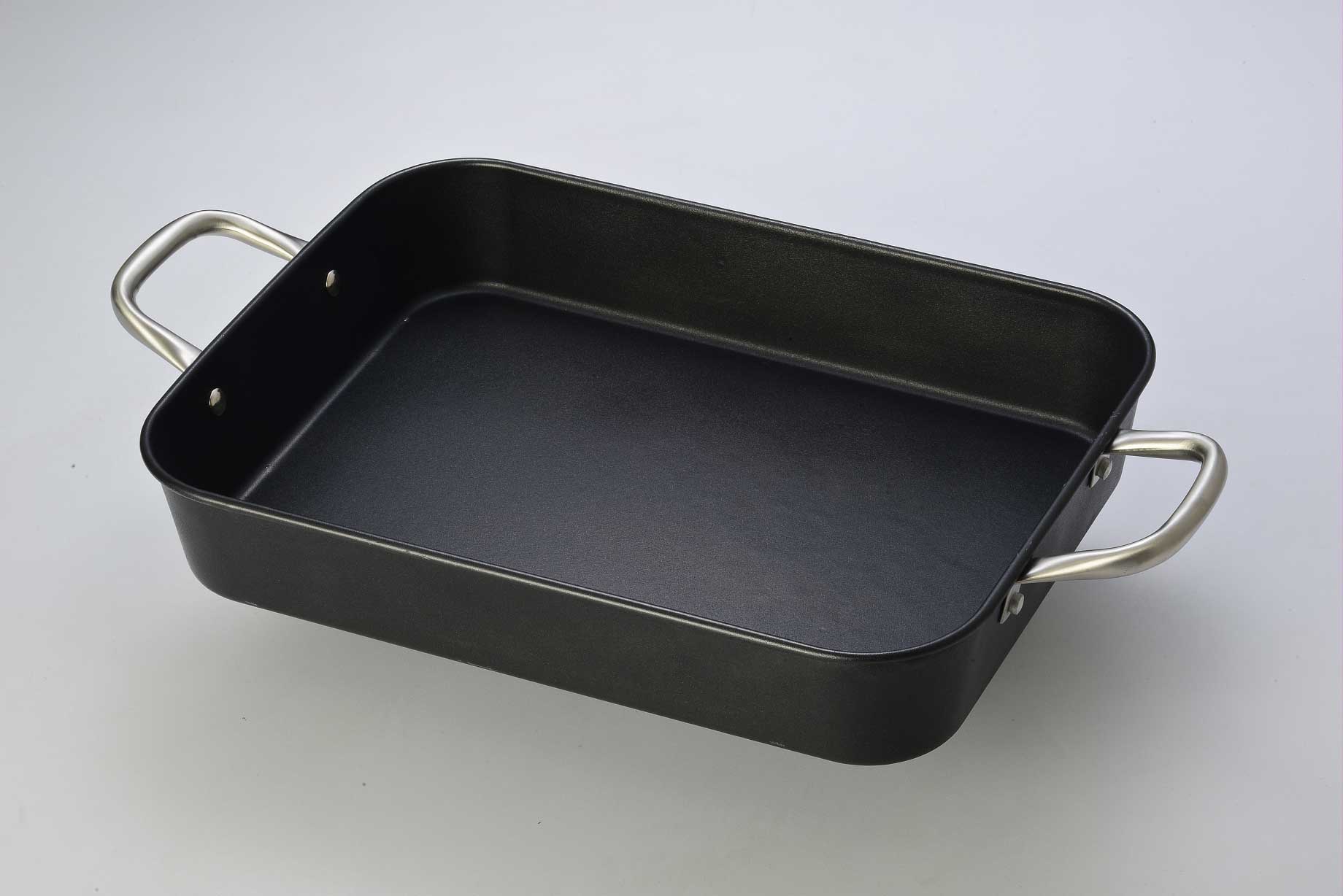
Product Specification
- Durable Lotus Rock construction stands up to the intense heat of your oven, stove-top or grill.
- Large stainless steel handles are easy to grasp even when wearing grilling mitts.
- Made with a durable, hard ceramic coating with a silicon-oxide crystal PFOA/PTFE-free, natural nonstick surface for easy food release and cleaning.
- Nonreactive cooking surface is ideal for deglazing pan and making gravies and sauces on the stovetop.
- Ideal for all types of cooktops, including induction