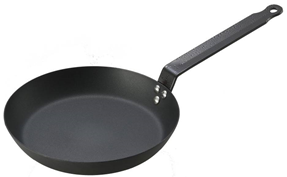
January 31, 2026 / arnoldtnn / 0 Comments
Lotus Rock’s high heat resistant coating and strongly constructed base make it ideal for smoking various types of popular dishes, such as salmon and chicken wings. Unlike with an outdoor grill or smoker, the heat under a Lotus Rock wok is much more adjustable than the blast you get from hot coals, which expands the possibilities when it comes to choosing ingredients to smoke with.All you need to smoke with a Lotus Rock wok are the correct ingredients, a rack and some tented aluminum foil.

January 31, 2026 / arnoldtnn / 0 Comments
A Lotus Rock paella pan is perfect for achieving Socarrat. This is because without oiling the surface of it rice can stick to the pan and then the delicious, caramelized crust can be formed. Non-stick pans on the other hand are not ideal because they don’t allow rice to stick to the bottom and for So carrat to form. The standard way to check if Socarrat has been formed or not is to inserta fork into the rice, if a slight resistance is felt just before the fork reaches the base of the pan then a layer of Socarrat exists. General non-stick pansmight be easily damaged while checking for Socarrat as the sharp edgesof a metal fork penetrates the bottom layer of the rice and scratches the coating. However, with a Lotus Rock paella pan this test can be done without fear because the highly durable, thick ceramic coating is metal utensil safe, with excellent scratch resistance.

January 30, 2026 / arnoldtnn / 4 Comments
Green vegetables, such as Broccoli, Asparagus, and Green Beans, contain the pigment Chlorophyll, which is very sensitive to heat. lf these vegetables are cooked for too long they will suffer major colour loss. The fast heating ating effect of a Lotus Rock Sauce pan or Casserole is the perfect utensil to preserve the pigment of green vegetables. A quick boiling in water not only maintains the flavour and colour of the vegetables, but also produces the desired texture too.

January 28, 2026 / arnoldtnn / 0 Comments
Getting the right oil temperature inside the wok is very important for good deep fat frying because if it is not hot enough, then the moisture inside the food will not dry out,and the trademark brown and crispy crust will not form. A Lotus Rock stir wok’s material composition and shape make it particularly suitable for deep frying. Fast heating effect can get the oil up to a high temperature quickly. The heavy gauge and density of the steel can maintain a high temperature even when food is being added.

January 14, 2026 / arnoldtnn / 0 Comments
Lotus Rock’s high heat resistant coating and strongly constructed base make it ideal for smoking various types of popular dishes, such as salmon and chicken wings. Unlike with an outdoor grill or smoker, the heat under a Lotus Rock wok is much more adjustable than the blast you get from hot coals, which expands the possibilities when it comes to choosing ingredients to smoke with. All you need to smoke with a Lotus Rock wok are the correct ingredients, a rack and some tented aluminum foil.
January 14, 2026 / arnoldtnn / 0 Comments
Getting the right oil temperature inside the wok is very important for good deep fat frying because if it is not hot enough, then the moisture inside the food will not dry out, and the trademark brown and crispy crust will not form. A Lotus Rock stir wok’s material cpmposition and shape make it particularly suitable for deep frying. Fast heating effect can get the oil up to a high temperature quickly. The heavy gauge and density of the steel can maintain a high temperature even when food is being added.

January 14, 2026 / arnoldtnn / 0 Comments
Combination Cooking involves both dry and moist-heat cooking. This type of cooking method requires long, gentle cooking to turn tougher cuts of meat into those fork-tender dishes that we often refer to as “comfort foods”.
A Lotus Rock Braiser is best used for recipes which require meats or vegetables that need to be seared quickly in the open pan and then covered with a lid to cook slowly in their liquid (either in the oven or over the stove). Popular combination cooking techniques used with this pan after searing include braiser, stewing, pot roasting and en cocotte.

January 14, 2026 / arnoldtnn / 0 Comments
Green vegetables, such as Broccoli, Asparagus, and Green Beans, contain the pigment Chlorophyll, which is very sensitive to heat. lf these vegetables are cooked for too long they will suffer major colour loss. The fast heating ating effect of a Lotus Rock Sauce pan or Casserole is the perfect utensil to preserve the pigment of green vegetables. A quick boiling in water not only maintains the flavour and colour of the vegetables, but also produces the desired texture too.
January 14, 2026 / arnoldtnn / 0 Comments
A Lotus Rock paella pan is perfect for achieving Socarrat. This is because without oiling the surface of it rice can stick to the pan and then the delicious, caramelized crust can be formed. Non-stick pans on the other hand are not ideal because they don’t allow rice to stick to the bottom and for So carrat to form. The standard way to check if Socarrat has been formed or not is to insert a fork into the rice, if a slight resistance is felt just before the fork reaches the base of the pan then a layer of Socarrat exists. General non-stick pan smight be easily damaged while checking for Socarrat as the sharp edgesof a metal fork penetrates the bottom layer of the rice and scratches the coating. However, with a Lotus Rock paella pan this test can be done without fear because the highly durable, thick ename coating is metal utensil safe, with excellent scratch resistance.

January 14, 2026 / arnoldtnn / 0 Comments
In addition to some vegetables, other types of food such as pasta also require water to be rapidly boiling while it is being cooked. This is so the pasta moves freely, cooks evenly, and so it doesn’t stick together. The fast heating effect of a Lotus Rock saucepan can ensure that the pasta is always cooked this way for a perfect al dente’ crunch.
January 14, 2026 / arnoldtnn / 0 Comments
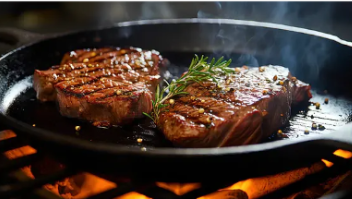
Lotus Rock grill pan has deep ridges for excellent grill marks, and high edges to keep more of the rising heat inside the pan to enhance the grilling process. Many grilling experts advise the use of a lid to protect your oven’s surface from grease and food splatters while you cook. However, the high edges of the Lotus Rock grill pan reduce the need for a lid, Lt also has a very strong construction, with 2.0mm gauge carbon steel and a thick coating for excellent heat retention and a fast but dispersed heating effect. Lastly, Lotus Rock’s Silion-Oxide Crystal coating makes the grill pan easier to clean, especially compared to cast iron gril pans. Moreover, the lipophilic surface enables the cooking oil to permeate the surface and create a durable non-stick release which will not wear off prematurely because of prolonged use or over-heating.


January 13, 2026 / arnoldtnn / 0 Comments
Steaming with a wok involves palcing food, such as pastry-based foods, green vegetables or sea food, on a perforated steel rack above a small amount of simmering water and covering it all with a lid. As the water evaporates itcreates steam which transfers the heat engry to the food and cooks it. A Lotus Rock stir wok is highly suited to steaming as it has a non-reactive surface which is suitable for boiling water. Moreover, the Lotus Rock coating is made up of inorganic substances which has very high heat resistance and withstand the harsh intensity of steam-ing.Other non-stick coated woks will either break up or dry out in such ho and moist conditions.

January 7, 2026 / arnoldtnn / 0 Comments
Is perfect for both searing meat to produce a crispy, well-browned crust, and for deglazing afterwards to create a delicious sauce. The heavy gauge steel construction and thick enamel interior mean a Lotus Rock pan can sear or saute a piece of meat quickly and evenly for excellent browning, with an abundance of brown bits fond then can be used with an aromatic, a liquid and a thickener, for example an onion, wine and butter,to create an intensely flavorful sauce with a lot of body.
September 16, 2025 / arnoldtnn / 0 Comments
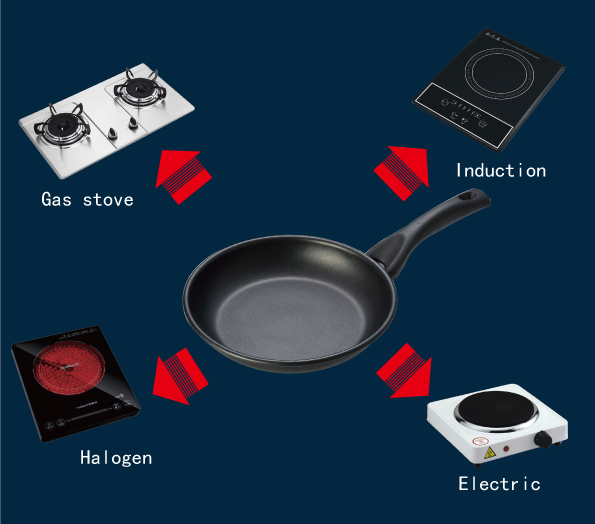
Making dinner with an electromagnet may seem improbable to cooks who have grown up with traditional natural gas and electric cooktops, but in recent year’s induction cooking tops have become increasingly popular. Initially they were mainly used in Asia and Europe, but now they have become more widespread in North American kitchens as well.
Advantages of Induction cooking top surfaces include:
- Safe. When the coil is turned on it generates a magnetic field that will only heat up the cookware. It doesn’t heat up the cooking surface. So unlike electric or halogen cooking tops there is no danger of accidentally burning yourself by touching the surface.
- Efficient and fast. Induction cooking tops bring water to boil faster than gas or electric cooktops, and it’s incredibly energy efficient. In fact, 90% of the energy used is transferred directly to the pan for cooking, versus only about 40% for gas stoves.
- Easier to clean. As mentioned above, because an induction cooking top surface is not magnetic, it stays cool throughout the cooking process – this means that accidental spills aren’t burned on and hard to clean.
One of the many significant benefits of Lotus Rock cookware is that it is induction safe; unlike aluminum or copper pans, which are not permitted for use on on this type of cooking top surface. Aluminum or copper pans can be used on induction if they have a special plated bottom attached to them, but because Lotus Rock pans are produced with a thick 2.0mm carbon steel gauge they are already induction safe and this type of plated bottom is not needed.
The fact that Lotus Rock cookware doesn’t need a plated bottom also has some other advantages. First, by having no steel plate at the bottom of the pan the appearance of Lotus Rock cookware is not impaired; all pans have the same tough, glossy black look on both their interior and exterior. Second, although some aluminum and copper pans may have a plated bottom to make them induction safe, if these are not applied properly then either the pan will make a bothersome noise or they will not conduct heat effectively to the pan’s surface. Lotus Rock’s heavy gauge carbon steel substrate along with its thick ceramic interior and exterior means that on an induction cooking heat is spread evenly and quickly around the surface of the pan for an excellent heating effect.
Lotus Rock pans can be improved for use on induction cooking tops with the addition of the Stable Concave design.
September 14, 2025 / arnoldtnn / 3 Comments
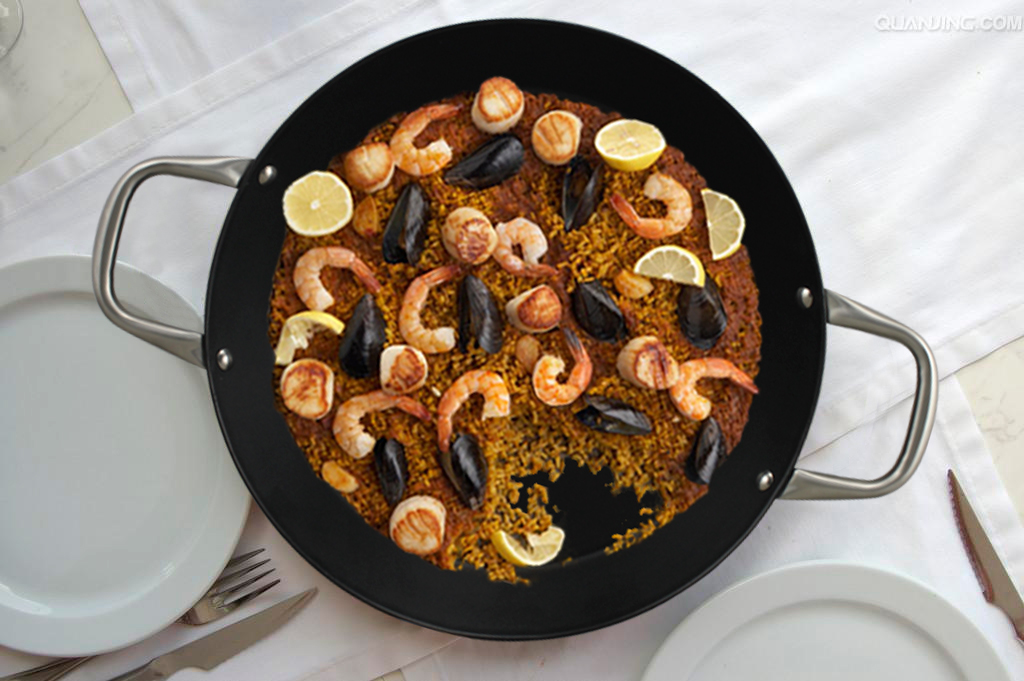 Well-designed paella pans encourage the formation of a light crust of rice on the bottom of the pan. In Spanish this is known as Socarrat which means lightly toasted. This is the most prized part of a Spanish paella and can only be achieved with a paella pan. The secret is to increase the heat during the last 3 minutes or so of cooking. If you listen carefully the rice will begin to crackle slightly. Take the paella off the heat when this happens in case it begins to burn. The objective is to get toasted rice on the base (which has a nutty aroma) rather than burnt rice.
A Lotus Rock paella pan is perfect for achieving Socarrat. This is because without oiling the surface of it rice can stick to the pan and then the delicious, caramelized crust can be formed. Non-stick pans on the other hand are not ideal because they don’t allow rice to stick to the bottom and for Socarrat to form.
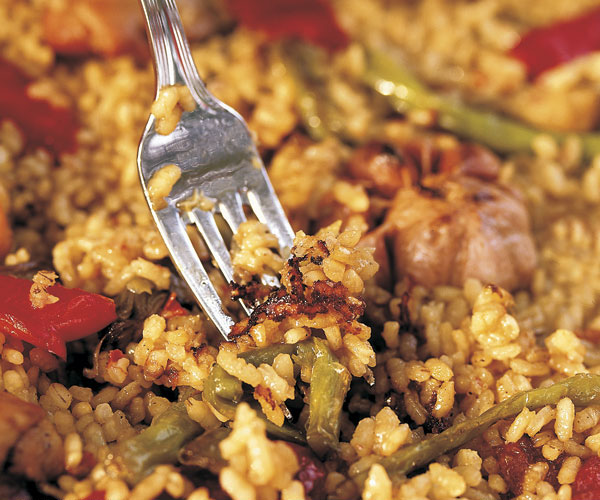 The standard way to check if Socarrat has been formed or not is to insert a fork into the rice, if a slight resistance is felt just before the fork reaches the base of the pan then a layer of Socarrat exists. General non-stick pans might be easily damaged while checking for Socarrat as the sharp edges of a metal fork penetrates the bottom layer of the rice and scratches the coating. However, with a Lotus Rock paella pan this test can be done without fear because the highly durable, thick ceramic coating is metal utensil safe, with excellent scratch resistance.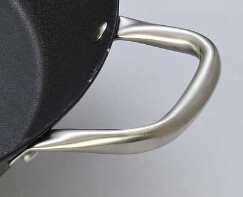
A significant benefit of using dual sided steel handles with the Lotus Rock paella pan is is to increase its versatility: for use not only on the stove, but also for over the grill and in the oven, with an oven-safe temperature to 650 F. Restaurant chefs quick sear ingredients with carbon steel pans to develop a brown crust, and then slide them into the oven to cook through the interior for a moist, juicy finish. With a Lotus Rock paella pan, so can you!
Product Features
- Heavy weight 2.0mm steel gauge transfers and retains heat evenly.
- Thick enamel coating is metal utensil safe.
- Resistant to rust, chipping and cracking, the lipophilic coating only needs cooking oil for non-stick release when the recipe requires it.
- Specially formulated black matte interior has high heat resistance (650 degrees Fahrenheit) and a rougher surface for better browning.
- Smooth base compatible with all cooktops, including induction.
- Double-riveted stainless-steel handles for comfortable grip and long-life durability.
- Ideal shape and size to use as a paella pan, skillet, saute pan and grill pan.
September 9, 2025 / arnoldtnn / 0 Comments

The very best stir-fries will have a hint of what is called Wok Hei, or the “breath of the wok“. This is a complex smoky flavour that is only achieved by cooking fresh ingredients over extreme heat, meaning that the flavour develops while simultaneously retaining the textural crunch. Lotus Rock’s construction and coating configuration is ideally suited for a stir wok to impart the types of flavours and tastes associated with Wok Hei.
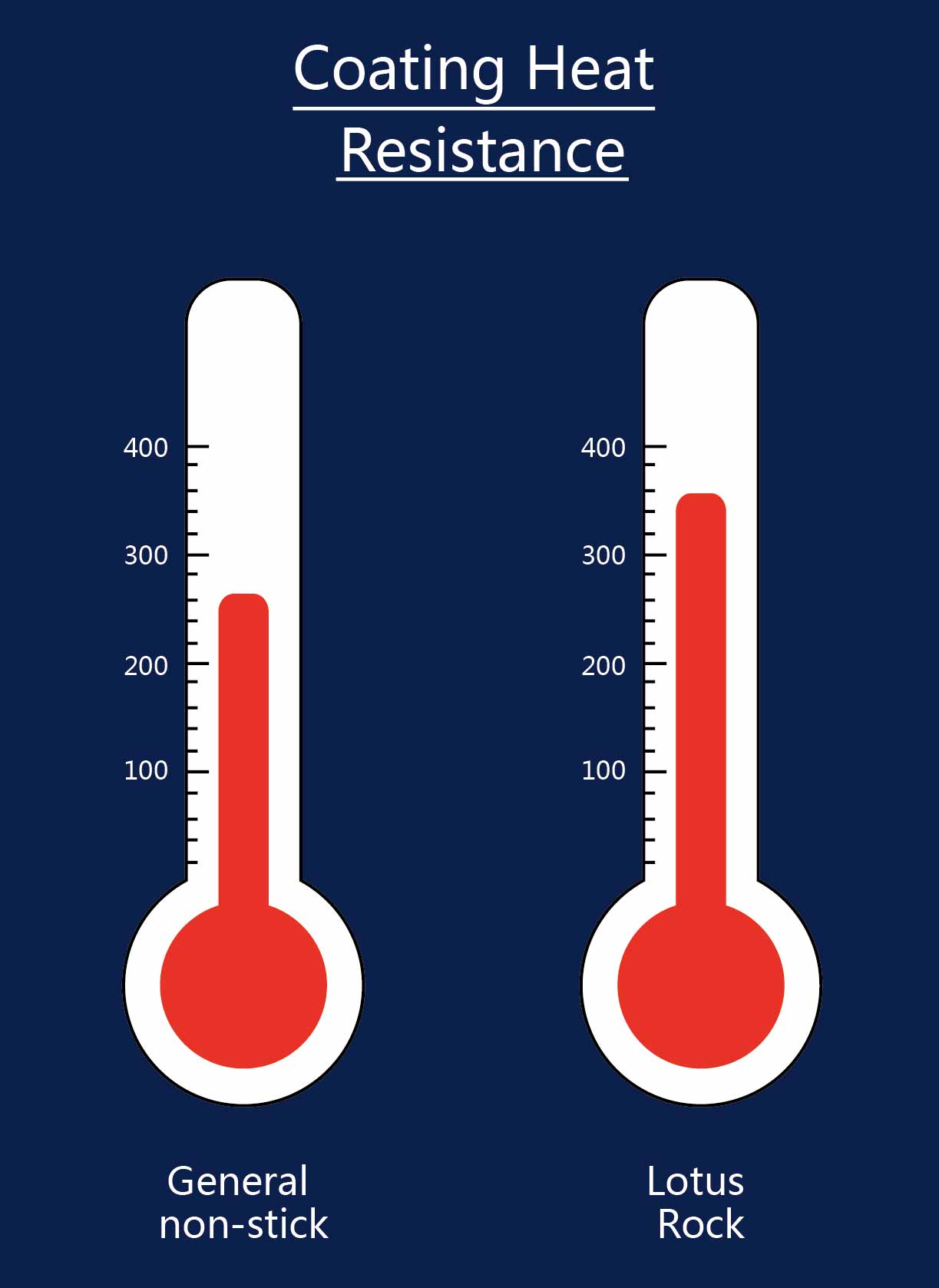
Unlike non-stick coated stir woks, a Lotus Rock stir wok has very high heat resistance (it can reach temperatures of 350 degrees centigrate, in contrast a non-stick coating generally starts to expire around 260 degrees centigrade). For excellent stir frying a wok should be heated gradually so that it reaches a very high temperature just before the oil, raw vegetables and meat are added. It is only with a hot wok that the flavour and tastes of Wok Hei can be imparted on food during stir frying.
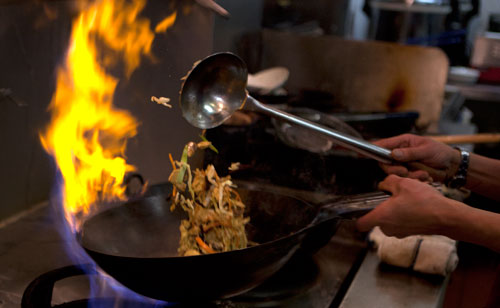
Easy and safe handling is essential for proper stir frying, especially when cooking over a very high heat to create the flavours associated with Wok Hei. While a cast iron wok can be cumbersome and difficult to lift, a Lotus Rock wok is thick enough not to warp easily under high heat but is still not so heavy that the wok can be lifted to toss ingredients quickly.
For an excellent stir fry, to impart delicious flavours such as Wok Hei, the wok must maintain a high heat at all times. The various different ingredients for the stir fry, whether it is a protein, vegetable or aromatic should never stream in their own juices, but instead be seared to impart a special caramelized and smoky flavor. In contrast to stainless steel, which takes a long time to heat up and cool down, all Lotus Rock woks are made with heavy gauge carbon steel, which is excellent at absorbing and retaining heat for an all-round excellent, stir-fry Wok Hei effect.
August 18, 2025 / arnoldtnn / 0 Comments
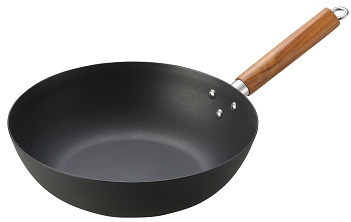
 In association with the Davis & Waddell Asia One range, Lotus Rock stir woks are now sold throughout Australia in a number of store outlets, such as Kitchen Warehouse. Currently these stir woks are sold in two different sizes, 12″ and 14″, both of which have the Acacia square wooden handle.
A Lotus Rock wok is a highly versatile cooking utensil. In addition to being excellent for stir frying, a Lotus Rock wok can also be used for a number of other cooking techniques, these include steaming, smoking and deep fat frying.
July 20, 2025 / arnoldtnn / 0 Comments
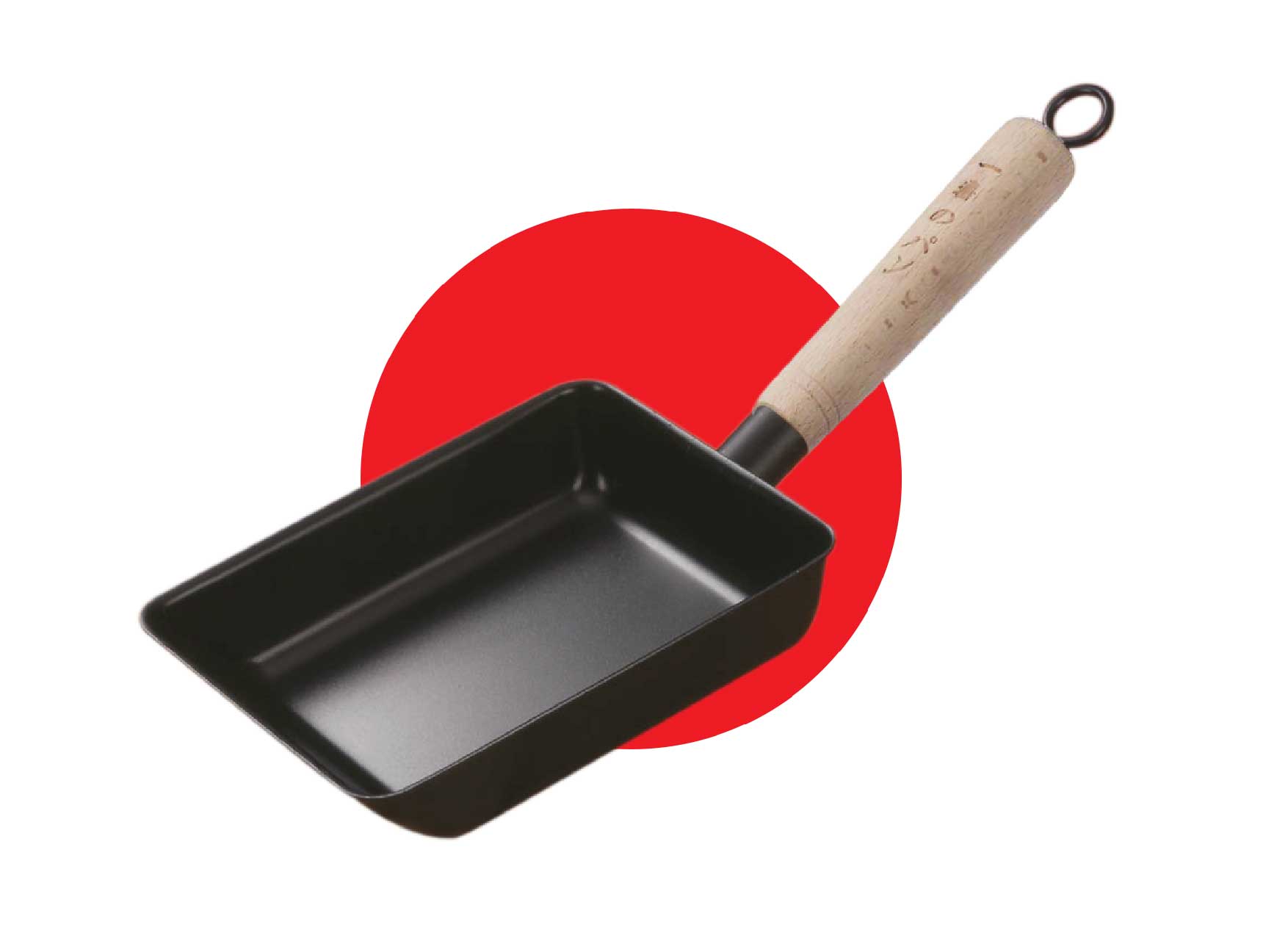
In Japanese cuisine rolled omelettes are made as rectangular thin omelettes and then rolled into a cylindrical or elongated cube shape using Japanese kitchen chopsticks. To obtain a roll with a constant diameter over the entire lengths, the thin omelette should be of rectangular shape. To obtain this shape a special rectangular frying pan is used. This type of pan shape for making Japanese-style rolled omelettes is generally called Makiyakinabe, but in other parts of Japan it is also known as tamagoyakiki.
In the market place today the Makiyakinabe pan is most often made of iron, with either a plastic or wooden handle. Since the main purpose of Makiyakinabe is to use a lot of eggs to make an omelette, a non-stick coating is applied to the pan to facilitate easy rolling of the omelette into an elongated cube shape.
Generally the ingredients for a Japenese-style rolled omelette with the Makiyakinabe pan are as follows:
- 4 eggs
- soy sauce
- mirin
- sugar
- salt
- cooking oil
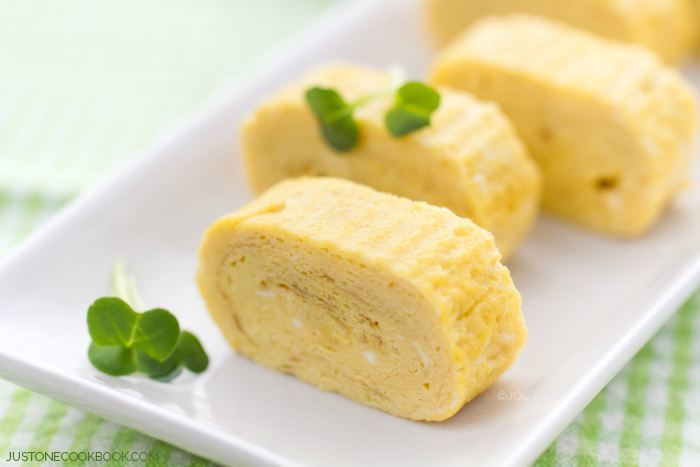 To prepare a Japanese-style rolled omelette the eggs need to be beaten in a bowl, with the soy sauce, mirin, sugar and salt added later to the mix. The Makiyakinabe pan should be brought up to a medium heat and then a small amount of cooking oil should be added. Next the egg mixture is poured into the pan and when it is slightly uncooked should be pushed to the side of the pan. After this another small amount of the egg mix should be added to the pan. Once this has cooked for a bit it can be rolled over the first bit of egg mixture that rolled up the pan earlier. Keep adding the egg in new layers until you have used it all up. Once this is done the omelette can be removed from the pan, and once it cooled can be sliced into thin pieces with a sharp knife.
As was explained above, most Makiyakinabe pans in the market today are made with iron and come with a general non-stick coating on them. However, if you read several reviews of these pans on Amazon you will note that some of these have received a number of negative comments. Some of these complaints include:
- Scratching, both on the interior and exterior of the pan.
- Rust, in some cases this has appeared after only a few uses.
- Uneven heating, the omelette would cook faster in one section of the pan.
- Poor non-stick release, eggs would stick quite easily even after just 3 times of use.
- Difficult to clean, eggs are difficult to remove from non-stick coating.
As shown in the video here, a Lotus Rock Makiyakinabe pan can cook a Japanese-style rolled omelette extremely well, with no sticking and to a perfect thin, crispy texture. There are a number of reasons for this, these are:
- Thickness. A number of the consumers on Amazon complained about both the thin metal base and non-stick coating. This particular pan did not heat evenly (or retain heat well), and the non-stick coating easily scratched, causing the iron surface below to rust quite easily. As previously explained here, Lotus Rock has both a heavy gauge carbon steel base, as well as a very thick ceramic layer around it (up to 100 microns). Therefore, not only does a Lotus Rock Makiyakinabe pan heat up evenly and quickly for an excellent heating effect, but the coating is extremely scratch resistant to use on the stove top or to whatever material it is being stored on in the kitchen. The thickness of the Lotus Rock ceramic layer also provides excellent corrosion resistance, so no rust spots should appear in spite of intensive, daily use.
- Non-stick release. One of the most common complaints about the pan reviewed on Amazon was that the non-stick effect wore off extremely quickly. In contrast, all Lotus Rock pans have a natural, highly durable non-stick release. As explained above, one of the cooking instructions for all Japanese-style rolled omelettes is that after the egg mixture is rolled up the pan cooking oil should be added again to make the next layer of the omelette. As the video above clearly demonstrates, no sticking occurred when the egg mixture was added to the Lotus Rock Makiyakinabe pan. The high durability of the Lotus Rock natural non-stick surface is perfect for a consumer who wants to use this type of pan on a daily basis for breakfast.
- Metal utensil safe. In order to cook a Japanese-style rolled omelette correctly, speed of movement is important. A tough and sharp utensil is needed to get quickly underneath the egg mixture to roll it over so it settles nicely at the top of the pan. For the pan reviewed on Amazon a fair number of consumers complained that they had to be careful which type of utensil they used, otherwise they might scratch and then impair the quality of the coating. On the other hand for a Lotus Rock Makiyankinabe pan, because the silicon-oxide crystal coating is extremely thin, no metal utensils can damage it or the thick ceramic layer it is coated on. Therefore, a consumer can use any type of utensil, such as a metal spatula, fork or chopsticks without any fear that using them might scratch the coating.
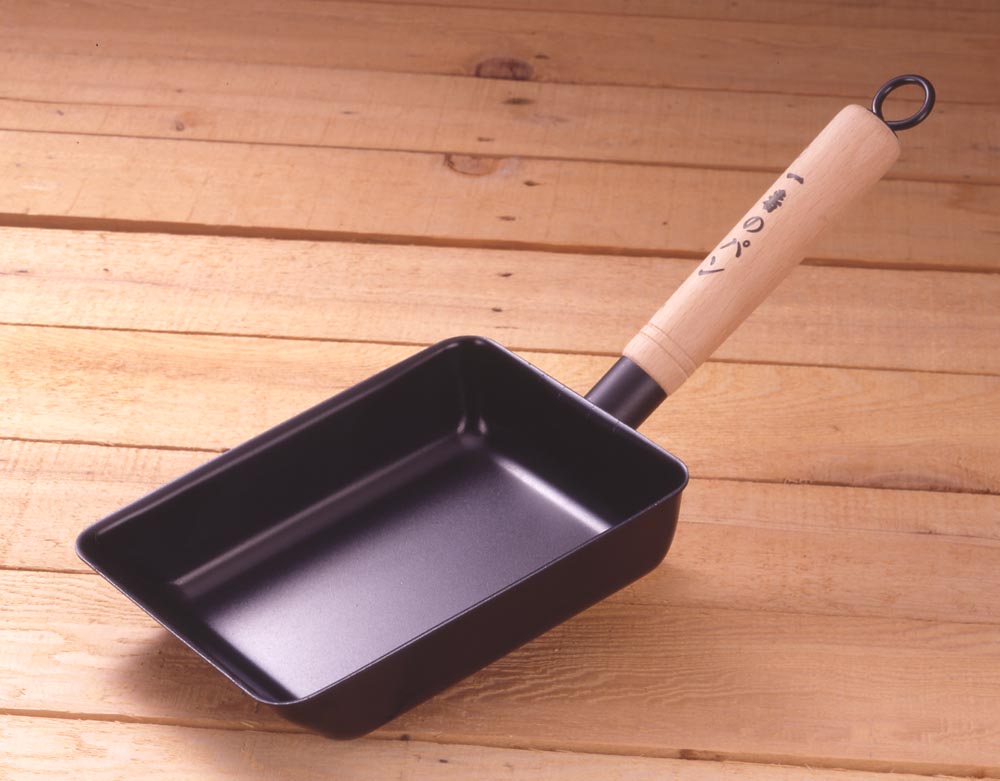
If you are a passionate lover of Japanese cuisine, and you would like to cook a delicious Japanese-style rolled omelette then perhaps you should consider to purchase a Lotus Rock Makiyakinabe pan. It can be used for your daily breakfast, over a long period of time without any worries over scratching or poor non-stick release.
July 13, 2025 / arnoldtnn / 2 Comments
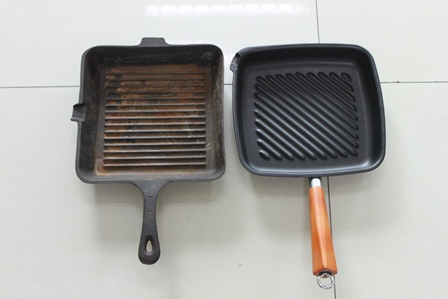
When a consumer is searching for a cooking utensil to buy, one of the many questions they might ask themselves is ‘What kind of cooking task do I want to do?’ Naturally their first consideration would be the pan shape, for example a sauté pan, with its high, straight sides has quite an advantageous shape for high heat searing and then for braising afterwards. The consumer might then consider the thermal properties of the material in the pan (as discussed previously here). Once both of these have been fully evaluated, a fairly experienced chef might also look into the reactivity of the pan’s surface.
The terms “reactive” and “non-reactive” refer to the type of metal from which the cooking utensil is made. Generally speaking, aluminum, cast iron, and copper are all “reactive.” Stainless steel, ceramic, glass and metal cookware with enamel coating are all “non-reactive.” Those metals listed as “reactive” will all generally react with acidic and alkaline foods, but they are all a good choice for boiling water, sautéing vegetables, or searing meat. Acidic ingredients that metals such as aluminum will react with include tomatoes or lemon juice, which give your food a metallic flavor, especially if the cooking time is very long. In addition, with a reactive cooking surface cooking with acidic ingredients might also produce undesirable colours and/or flavours.
Reactive cookware
Aluminum
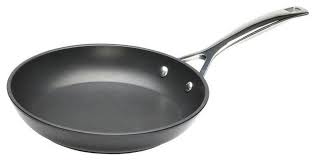 Tomato sauce and other tomato products react with aluminum because of their acidity, and acids don’t mix well with aluminum. Highly acidic foods cause oxidation, which can darken the aluminum pan and alter the taste of the food. A special case is anodized aluminum, which is aluminum that has been treated with an electrolytic process to create a harder surface that is still somewhat reactive, but significantly less so than untreated aluminum.
Cast Iron
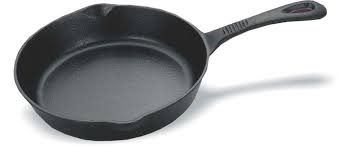 If food is cooked with this type of cookware then it may pick up chemical elements from the surface. However, ingesting iron is not a health concern as the human body can process iron relatively easy. When properly seasoned a cast iron pan’s surface becomes less reactive and some acidic ingredients can be used for a short period of time. However, these pans must be continually re-seasoned otherwise the surface will become more reactive and begin to discolour and pit when used with acidic ingredients.
Copper
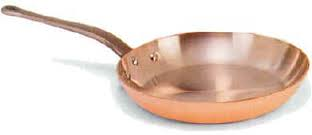 An uncoated copper surface is actually beneficial for some cooking techniques, such as whipping egg whites (makes the whites more stable). However, unlike iron, the human body has a much harder time eliminating copper after ingesting it, so a cookware utensil with this type of surface should be used sparingly. Other problems with copper cookware include discoloring and scratching.
Non-reactive cookware
Non-Stick coating
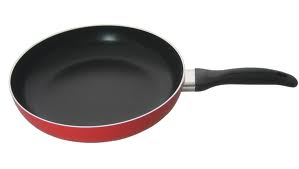 One significant benefit of a non-stick coating on, for example, an aluminum pan, is that it provides a complete non-reactive surface for cooking. Whether the coating contains PTFE or silicone oil for its non-stick release, acidic or alkali ingredients will not react with either the inert coating or the surface metal below it. However, there is one major disadvantage with the non-reactive surface of a non-stick coating: it is not suitable for deglazing. First and foremost, non-stick coatings are not appropriate to use for high heat cooking, which is important for browning meat and vegetables. However, even if a non-stick coating was used for searing large cuts of meat with a brown crust on them, de-glazing can still not be done because these little brown bits formed after the meat is seared will not stick to the pan during cooking. It is these leftover bits on the pan (the fond) which are an essential ingredient for de-glazing, to create a delicious sauce which can then be poured over the just seared meat.
Lotus Rock
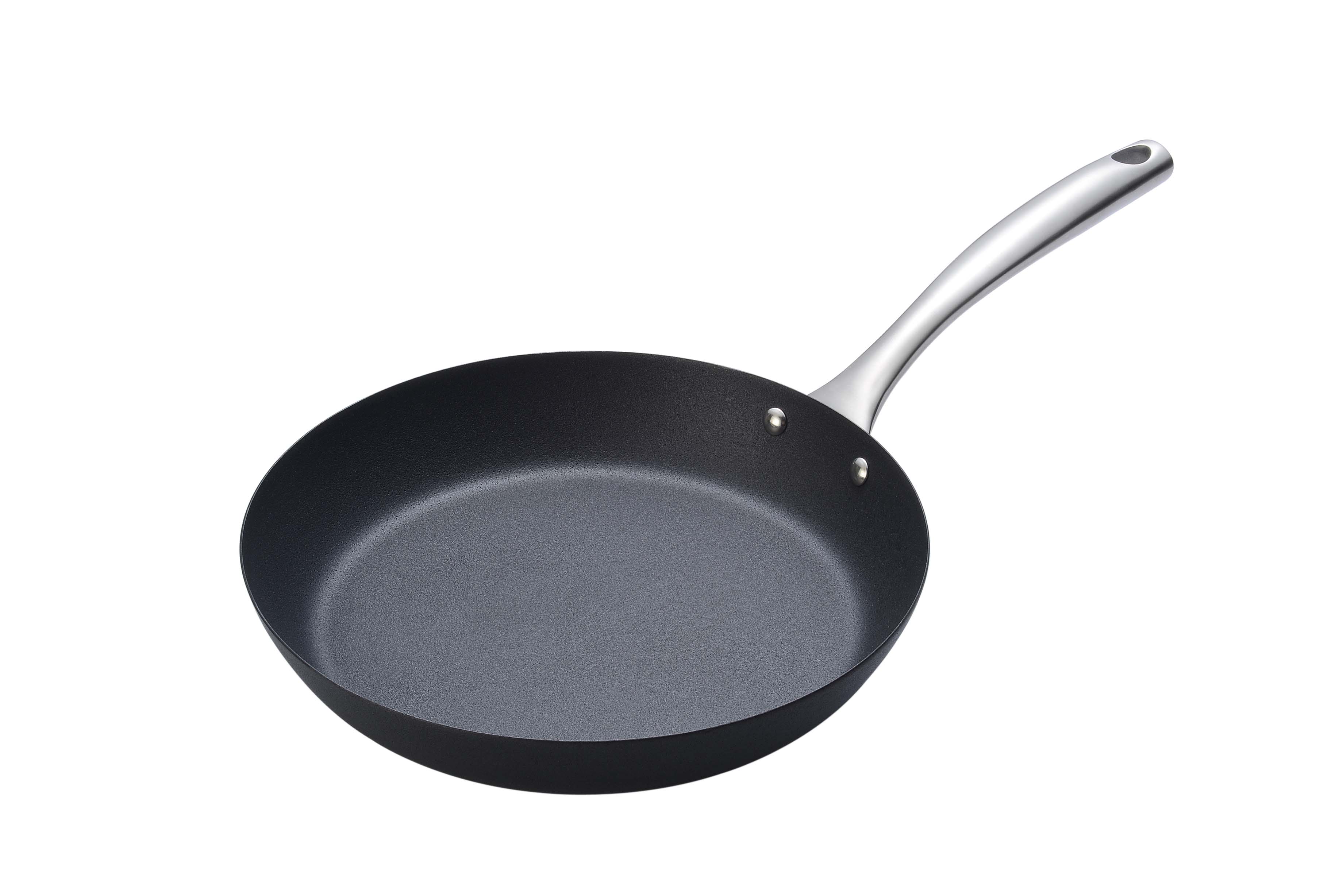 All Lotus Rock pans come with a non-reactive surface. This means that during cooking certain ingredients, usually acidic ones, will not chemically combine and alter the flavor and colour of the finished palette. For example, tomato juice can be used for a Bolognese sauce and lemon juice can be added where necessary to give a dish extra flavor. These sauces can then be cleaned from the pan after cooking without any colour staining or visible scarring on the coating’s surface. Unlike cast iron, a Lotus Rock pan does not need to be continually re-seasoned to make it less reactive to acidic ingredients. Likewise, unlike a copper pan, Lotus Rock can be used on a regular basis without heavy metals being absorbed into the cooked food. Lastly, because of its non-reactive surface, a Lotus Rock pan is highly appropriate for de-glazing after meat has been seared at a high temperature. The residue of the Fond can be made to form part of a delicious sauce through the addition of some kind of acidic solution, such as a broth or cup of wine.
June 3, 2025 / arnoldtnn / 0 Comments
Quite often when a consumer considers the features of the coating for a Lotus Rock pan they might be impressed that it is metal utensil safe, or alternatively that it has very high heat and abrasion resistance. What they may not appreciate as much is the actual thickness of the Lotus Rock coating and the advantages that come with it. As you can see in the chart below, when compared to other commonly used non-stick coatings, Lotus Rock’s hard ceramic coating is quite considerably thicker. Even compared to a sol-gel enamel coating, which is often advertised on the market for its strong, thick construction, the Lotus Rock coating is more than twice as thick.
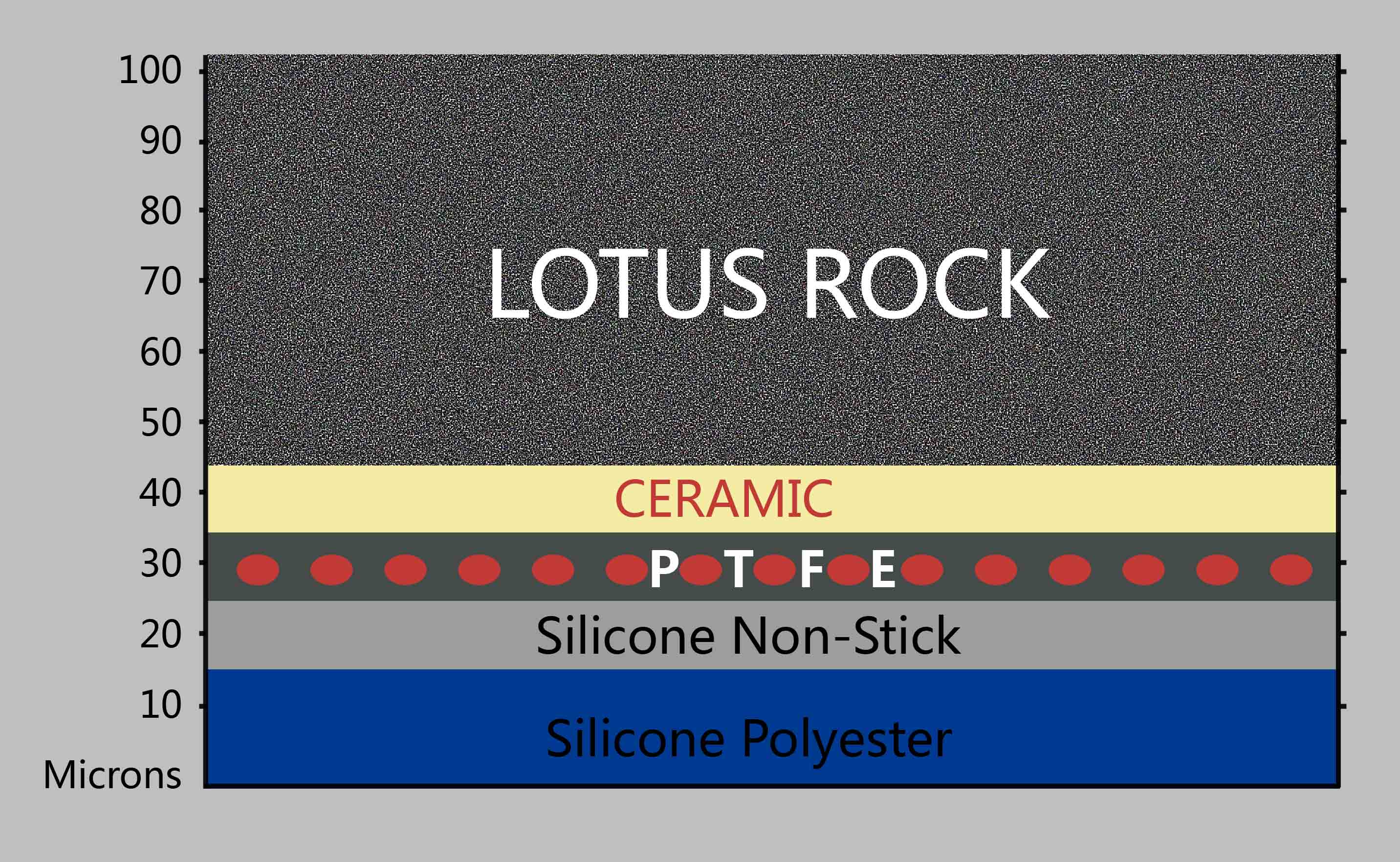
There are a number of significant advantages to a cookware utensil having a thick coating. First, it improves the heating effect of the pan. Most pots and pans on the market are either just a metal such as cast iron or stainless steel, or they have a metal substrate with a coating. For a cookware utensil the metal’s main purpose is for heat conduction; when the pan is heated the atoms within the metal lattice structure bounce into each other and thus pass on energy from the stove directly to the food. The two main benefits of a coating is to protect the pan from oxidation, and provide some non-stick release for easier cooking and cleaning. However, whether they are coated or not coated what a lot of these pans lack is the ability to retain heat within the pan. One way to improve the heat retention of a cookware utensil is increase the thickness of the metal, for instance, as explained here, Lotus Rock is made of heavy gauge 2.0mm steel, which with is highly dense carbon steel structure is much better than a metal such as aluminum at holding on to heat. But yet, with a Lotus Rock pan, its heat retention is further improved because of the highly thick ceramic layer of 100 microns on it. The thick ceramic layer acts as an insulator around the pan, which is highly beneficial for high heat cooking techniques such searing, sautéing, stir frying, barbecuing, and grilling that require a hot pan, which doesn’t suddenly drop in temperature when the food is added.
Another important consideration which is often overlooked when considering the thickness of a coating for a pan is the exterior coating. A lot of cookware manufacturers, when they label that their pan has a coating thickness of 45 microns, often neglect to mention that this is only for the interior of the pan. Most often in order to save on cost, the exterior of cookware is sprayed with a silicone polyester coating, which is rarely thicker than 15 microns. This has very little effect on heat dispersion or retention for a pan and is purely there just to protect the pan from the atmosphere around it. With a Lotus Rock pan on the other hand, it has the same thickness on the interior and exterior of the pan. So quite often a general non-stick pan, when you add together both the interior and exterior coating, does not exceed a thickness of 50 microns. Whereas a Lotus Rock pan always has a thickness of around 200 microns, which is four times thicker than the average non-stick pan.
In addition to heat retention, a thicker coating is also advantageous for use with induction cooking top surfaces. This is because the main difficulty a lot of pans have with this type of cooking top surface is over-heating. Induction transmits heat incredibly efficiently, which for many pans can cause the metal to over-heat and deform. Or alternatively, the over-heating can cause burnt marks on the outside of the pan, or scorch the oil or food on the interior. In contrast, the thick exterior coating on a Lotus Rock pan can, because of its poorer electrical conductivity compared to a metal, slow down and disperse the heat travelling through the pan.
Lastly, a thick exterior coating of Lotus Rock protects the pan from general cooking use much better than a pan with a silicone polyester coating. Whether from scratch marks during use on the sharp edges of a gas stove, or just general abrasion that might occur over time and thus erode the coating, a thicker coating will protect the metal substrate from exposure to the atmosphere for a longer period of time.
June 1, 2025 / arnoldtnn / 0 Comments
While shopping in a department store, the average consumer may not consider the base concavity of a cooking utensil their most important consideration when they are making a purchasing decision. More likely the price of the item, the look and feel of the surface coating, and perhaps the pan’s weight and appearance are all reasons which a consumer might decide are most important before they buy a cooking utensil, such as a stir wok.
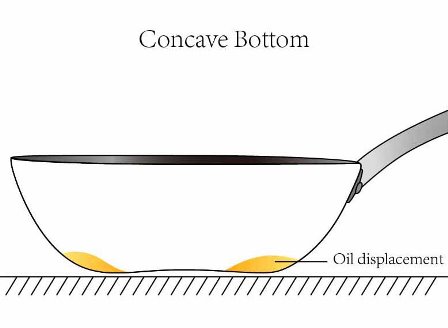 However, if the base of a pan is not made according to the correct specifications then it could become obsolete for cooking use quite quickly, thus negating any benefits that the pan might have had because of its price, material quality or attractive appearance. For example, if the concavity of the pan is set too high then the heat source, from a cooking top surface such as a gas or electric stove, could force the centre of the pan to rise upwards to quite a large extent. Consequently, the pan would then have a bump in the centre which would cause cooking oil and sauces to slide to the edge of the pan.
Alternatively, another difficulty may arise if the pan concavity is too shallow. This would mean that heat from the stove top would have a stronger effect towards the side of the pan and push the edges of the bottom upwards, which would then create a convex shape at the bottom of the pan. This would not only cause cooking ingredients to congregate in the centre of the pan, and so reduce cooking space, but it would also create a safety hazard as the pan would spin around during cooking.
So, for the reasons stated above, it is essential for the durability of all pots and pans that they have the correct bottom concavity height. If they do not, then whether the pan is made with high quality material or the non-stick coating is excellent becomes irrelevant because either a spinning motion or highly concave pan will develop on the bottom.
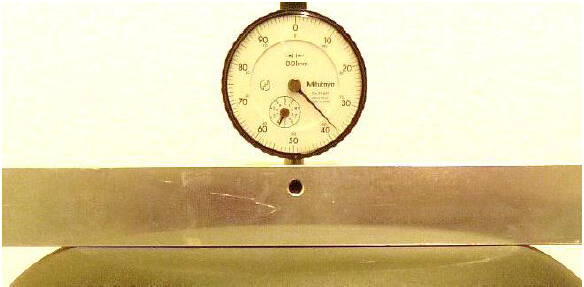 There is a commonly used test in the kitchenware industry to demonstrate whether the concavity of a cookware utensil is correct or not. This test involves turning a pan upside down and placing a specially designed, straight edged measuring instrument across the bottom of the pan. This test requires that the pan’s concavity is measured both before and after it has been heated. The cold condition (room temperature) test stipulates that the pan must have a concavity of between 0.3% – 0.6%. The warm condition test (200 degrees +/- 5 degrees dry heating) specifies that after the pan is heated the bottom must not have a concavity of more than 0.3%.
The Lotus Rock standard concave required range is between 0.003 – 0.006 thousandths. With a concave base set between these parameters the pan should neither expand too much through the centre, which if it did would cause oil or sauces to settle at the edges of the pan, but neither should a convex shape develop at the bottom, which if it did would create a spinning motion on a flat top cooking surface.
So along with a metal utensil safe surface, a heavy gauge steel substrate, and a PTFE-free lipophilic coating, a Lotus Rock pan will, with the correct base concavity, be a cookware utensil that can be used for a long period of time.
May 21, 2025 / arnoldtnn / 0 Comments
 As explained in the previous blog post, Lotus Rock has designed and patented a number of highly eye-catching, ergonomic handles for its various cookware and BBQ items. Handle materials can vary from forged steel, to a natural wood such as acacia or beech, to bakelite with soft-touch coating, and so on a silicone material, molded into a variety of different shapes, such as a lollipop.
However, for cookware usage a good handle should not just have an attractive appearance or a comfortable, stay-cool grip, it should also be safe to use as well. One particularly important feature for a handle with a Lotus Rock pan is its strength and secure attachment to the pan’s body. All Lotus Rock pans come with a very heavy carbon steel substrate of 2.0mm in thickness. Although not nearly as heavy as cast iron a Lotus Rock pan is still quite a heavy weight for certain types of cooking utensils, such as a 12” stir wok or a 28cm frying pan. Therefore, a strong, well-designed handle is especially important for a safe cooking experience with a Lotus Rock pan.
The kitchenware industry commonly uses a bending strength test, from testing standard BS EN 12983/ 7.5, to assess whether a handle is sturdy and strongly attached enough to a pot or pan.
BS EN 12983/ 7.5 Bending Strength Test Procedure
The BS EN 12983/ 7.5 procedure for the Bending Strength Test is as follows:
Lotus Rock Kyoto handle

Lotus Rock Zurich Handle
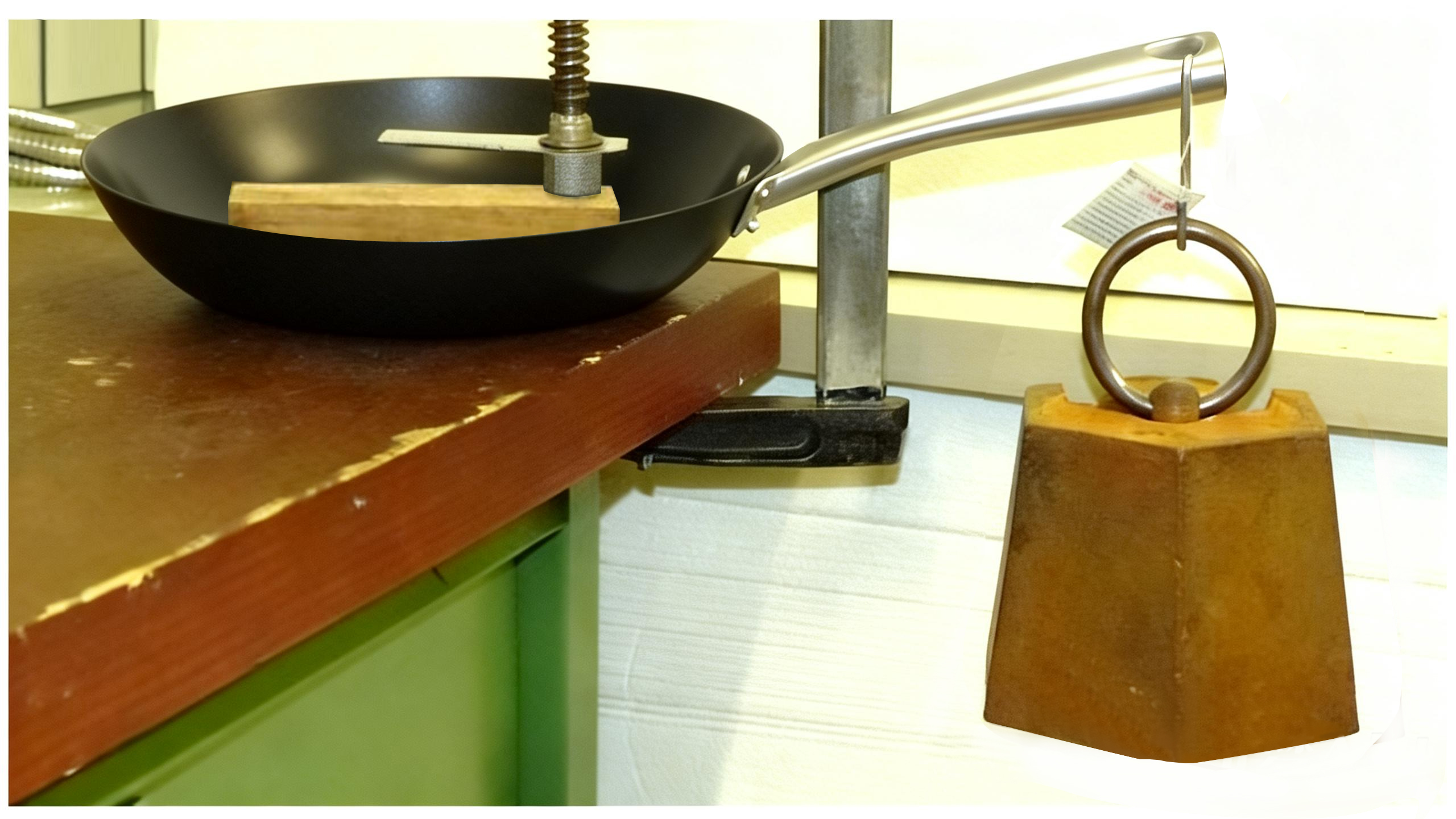
Since Lotus Rock’s was introduced into the market, a number of different types of handles for Lotus Rock pans have been tested according to the BS EN 12983/ 7.5 bending strength test. As shown in the photos above both the Zurich square wooden handle, which uses a riveted attachment method, and the bakelite handle, which uses a welding attachment method, has been stress tested with a 10kg weight attached firmly to the end of the handle. Both of these handles passed without any recorded major failure at a SQTS (Swiss Quality Testing Services) testing lab.
May 14, 2025 / arnoldtnn / 0 Comments
The previous blog post described how a migration test can be done to test the surface reactivity of a cookware pan. The benefit of a non-stick coating on a pan is that it provides a non-reactive surface whereby all kinds of ingredients, whether they are highly acidic or not, can be used for cooking without creating any undesirable colors and/ or flavors. Generally speaking, most non-stick coatings contain a substance called PTFE. This gives the coating its non-stick release and has been proven to have the lowest coefficient of friction (CoF) of any known solid. In other words, the majority of materials do not stick to a PTFE-based non-stick coating. Therefore, because of its excellent non-stick release and non-reactive surface, a PTFE-based non-stick coating should pass a standard BS EN 1186-1: 2002 migration test quite easily.
However, although PTFE- based coatings do undoubtedly provide a highly non-reactive surface for a cookware utensil, they also have some significant disadvantages; one of these is a tendency of PTFE-based non-stick coatings to peel off. Within a non-stick coating PTFE does not bond well to itself, and so by and large it doesn’t have a very stable construction. This weak coating structure is degraded through general scratching with a utensil, and also by rubbing it with a standard abrasive cleaning pad. Moreover, PTFE based coatings are generally quite thin, roughly 15-20 microns in thickness. This thinness makes PTFE-based coatings quite liable to break up and expose the substrate below it, such as aluminum or steel, to foodstuffs or oxygen which could produce some undesirable reactions and damage the quality of the cookware utensil.
Lotus Rock, on the other hand, contains no PTFE or any other non-stick chemical within its coating. On both the interior and exterior of all Lotus Rock pans is a thick ceramic layer, which is up to 100 microns thick. This not only provides excellent protection to the steel substrate below it, but the strongly bonded construction of the ceramic layer also ensures that all Lotus Rock pans have outstanding scratch and abrasion resistance.
There are two well-known tests within the kitchenware industry, from the BS 7069 : 1988 British Standard Specification for Cookware, which can demonstrate whether or not a cookware utensil has excellent scratch and abrasion resistance. Both of these tests have been used on a Lotus Rock frying pan.
1. BS 7069 Abrasion Resistance Test Procedure
Mount the item of cookware under test rigidity on the reciprocating support and apply the loaded abrasive pad to the non-stick surface, lubricate the surface by the addition of domestic washing-up liquid. Keeping the loaded abrasive pad stationary, move the reciprocating support backwards and forwards over a distance 50mm+2.5mm. Continue for 250 cycles. Renew the abrasive pad at 50 cycle intervals.
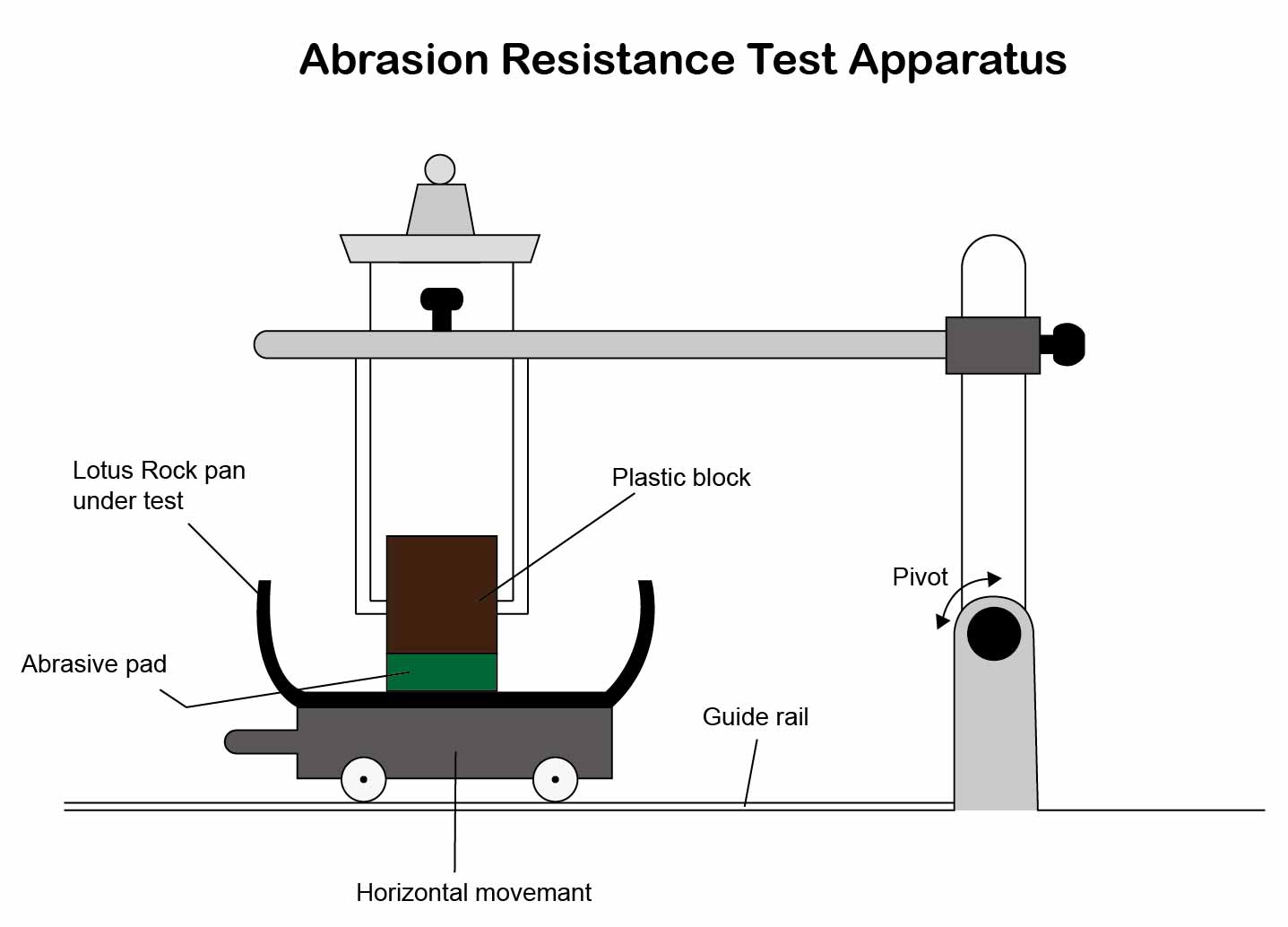
SGS test result for Lotus Rock pan = Pass. “No visible damage was found on the non-stick surface after testing.”
2. BS 7069 Scratch Resistance Test Procedure
Place a quantity of corn oil, sufficient to just cover the base of the article into it. Heat the vessel to a temperature of 220+5C and apply the loaded stylus to the heated surface. Move the loaded stylus across the surface for a distance of not less than 80mm in 1+0.1s.
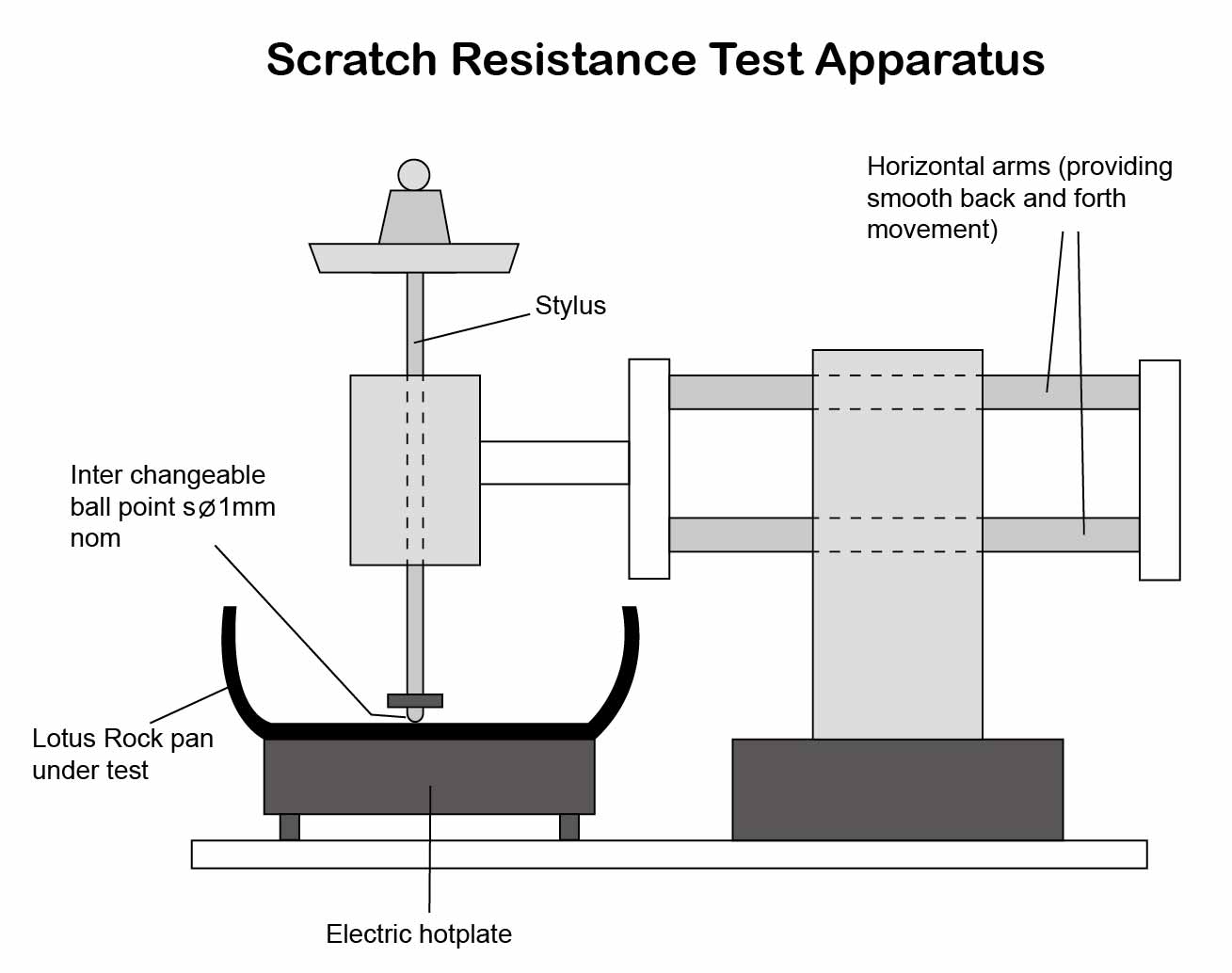
SGS test result for Lotus Rock pan = Pass. “No visible damage was found on the non-stick surface after testing.”
One of the significant benefits of a Lotus Rock pan is the high durability of the pan’s surface. Unlike general non-stick PTFE-coated pans, Lotus Rock is metal utensil safe, which means a stainless steel spatula or knife and fork can be used on the surface without any concern that the quality of the coating will be impaired or the non-stick release ruined through scratching. Moreover, for cleaning purposes a Lotus Rock pan can, unlike with a general PTFE non-stick coated pan, be scrubbed and washed vigorously with a standard abrasive cleaning pad without causing the coating to peel off.
May 11, 2025 / arnoldtnn / 0 Comments
The introduction of a new, highly innovative product into the market often generates considerable excitement and interest. However, at the same time, there is naturally also some concern as to whether this new product is safe to use and not hazardous to human health. 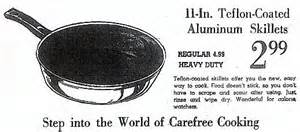 A famous example of this was when PTFE-coated cookware was first introduced in the 1960’s. This new, technological breakthrough in non-stick coating for cookware was a huge hit among consumers who wanted an easier, and more hassle-free way to cook daily staples, such as eggs. But in the late 90’s it was found that the emulsifier used to spread the PTFE coating evenly around the pan, called PFOA, caused birth defects in laboratory animals. This substance was subsequently banned by the Food & Drug Administration (FDA) of USA, and by government departments in many other countries.
Since its creation a number of years ago, Lotus Rock cookware and bakeware has been sold throughout the world, in countries such as USA, Australia, Israel, Turkey, South Africa and India. Part of the reason why so many retailers and wholesalers in these countries have enthusiastically sold and recommended Lotus Rock has been the numerous testing reports, produced by reputable companies such as SGS and TUV, which have demonstrated Lotus Rock’s safety for use in the kitchen.
The kitchenware industry commonly uses a migration test to assess the reactivity of a product’s surface. Cookware materials that are highly reactive are those which tend to have chemical reactions with other substances around them. Highly reactive materials include iron, copper, aluminum and carbon steel. Highly reactive cooking surfaces are disadvantageous for certain ingredients and ways of cooking because the reactions can produce undesirable colors and/or flavors. No Lotus Rock pans are highly reactive with any ingredients because they have a thick non-reactive ceramic layer on both the interior and exterior of the 2.0mm carbon steel substrate. Further, the interior of all Lotus Rock pans has an additional top coating of silicon-oxide crystal, which is permeable to cooking oil but impervious to other substances. Thus, highly reactive ingredients such as tomatoes, spinach, wine and lemon juice can be used on Lotus Rock pans without creating any chemical reactions.
The most commonly used migration test to demonstrate whether or not the surface of a cookware utensil is reactive to different ingredients, set up in accordance with British and European standards, is BS EN 1186-1.2 2002. This test involves heating four different simulants on a cookware item, at different temperatures and for different periods of time, before determining whether any part of the surface of the cookware has reacted with the simulant. These four simulants are:
- Distilled Water, to simulant boiling or simmering;
- 3% Acetic Acid in an aqueous solution, to simulate the use of citric juices such as lemon for flavor, or tomatoes for a sauce (such as Bolognese);
- 10% ethanol in aqueous solution, to simulate for example the use of alcohol for deglazing a pan to made a sauce;
- Rectified olive oil, for general high heat cooking methods, such as frying, sautéing, stir frying, browning and grilling.
The table below is the result of just such a BS EN 1186-1.2 2002 test, one which was performed on a Lotus Rock frying pan, grill pan and saucepan.
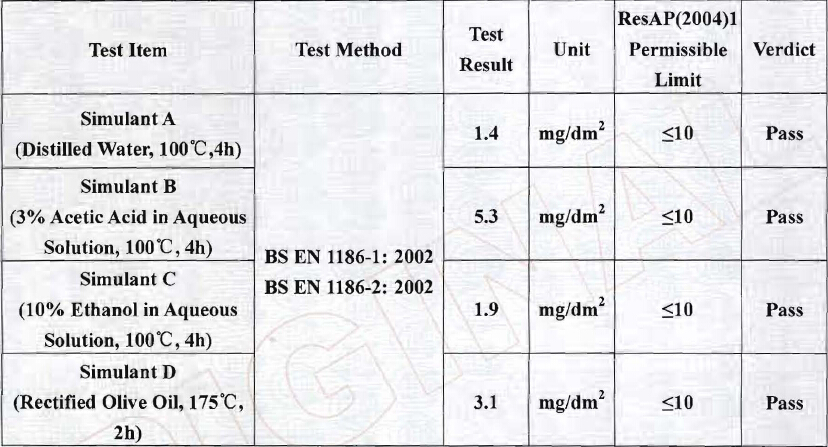
The testing standard for each simulant is expressed in milligrams of extracted of deposited material per decimeter squared. As is clearly demonstrated above, each simulant recorded an extracted quantity well below the permissible limit of 10 milligrams per decimeter squared.
The above BS EN 1186-1: 2002 migration test clearly proves that a Lotus Rock pan can be used for a variety of cooking methods, such as boiling, frying and deglazing, and can be cooked with a variety of different ingredients, without any concern that the an unwanted reaction might take place with the pan’s surface.
May 9, 2025 / arnoldtnn / 0 Comments
So far on this blog we have explained the various tests that are conducted to ensure that a Lotus Rock pan is safe and fit for purpose in a variety of domestic kitchens all over the world. Some of these tests are for the coating surface, some are for handles, and some are to check that the material composition of the pans contain no harmful substances or metals.
However, in spite of all these tests there might still be some issues with a product which all of these tests cannot safeguard against. In fact, some problems can only be experienced and then later resolved once the product has actually been used by the consumer.
One such issue, which some consumers of a Lotus Rock pan have mentioned, is staining on the coating surface. The reason this problem occurs on a Lotus Rock pan more often than, say, on either a non-stick or stainless steel pan, is that the coating surface of Lotus Rock is rougher and more uneven. As explained previously, these ‘valleys’ on a Lotus Rock pan surface are actually there for a very specific reason: to create a natural, durable non-stick surface. The silicon-oxide crystal coating is permeable to oil and rests in between these ‘valleys’. So the consumer can maintain the non-stick release of the pan regularly by wiping a small amount of oil on a Lotus Rock pan, just like they would do if they added oil to an uncoated steel or cast iron pan to season it.
However, when consumers cook with a Lotus Rock pan occasionally other ingredients might intrude into these ‘valleys’. Or alternatively the consumer might use too much oil on the pan and the surface might then become too sticky.
One particular advantage of a Lotus Rock pan which many consumers don’t fully appreciate is that it does have excellent abrasion and scratch resistance. Since the 1960’s when PTFE non-stick pans were first introduced, consumers have become accustomed to being careful about how they use and clean their non-stick pan for fear of damaging the non-stick surface. They will, for example, always use the yellow sponge side of a cleaning pad, and not the more abrasive green side.
As explained, one of the significant advantages of a Lotus Rock pan is that it can be scrubbed and cleaned in a much more thorough and robust way than a general non-stick pan. Below is an example of a Lotus Rock which has some staining on the coating surface.
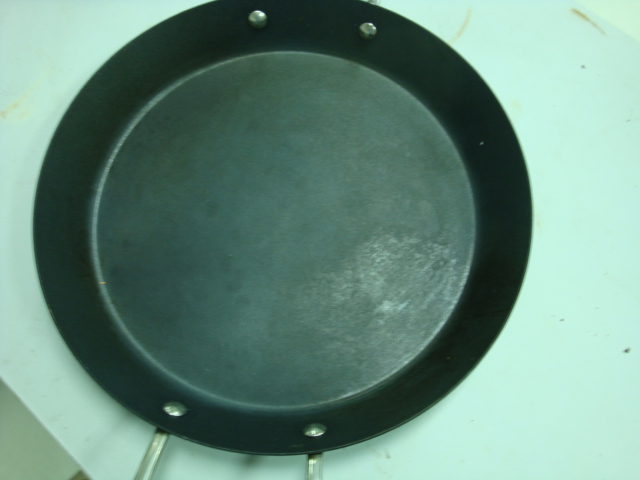
Generally, a consumer has two cleaning methods to clean this pan:
1. Boil vinegar in the pan
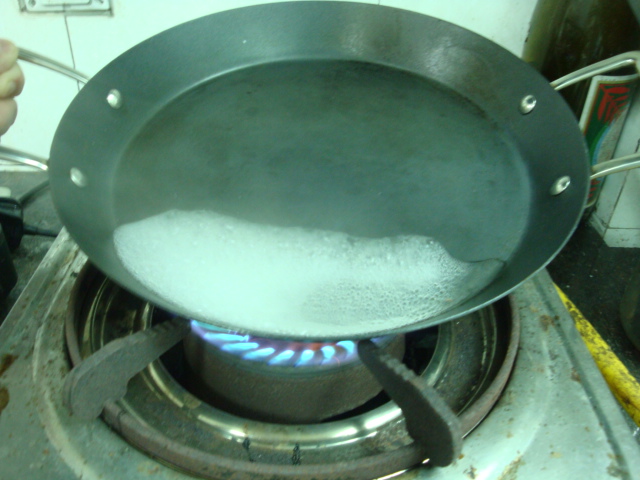
2. Scrub the pan surface with washing-up detergent and hot water
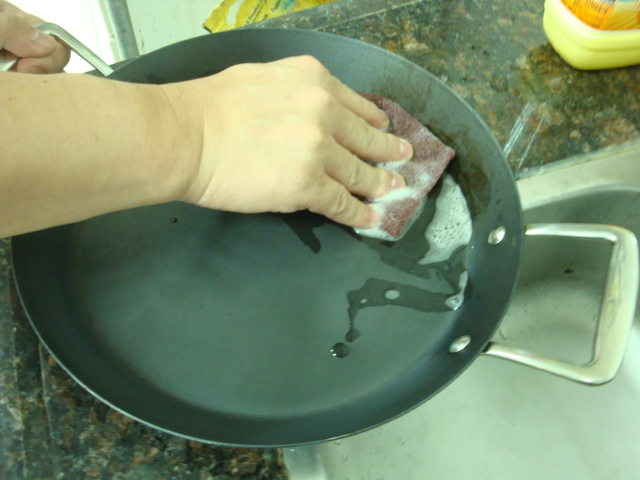
If either of the above two methods were used to clean a general non-stick coated pan then the pan could be made obsolete for further use: the coating could either peel off or crack.
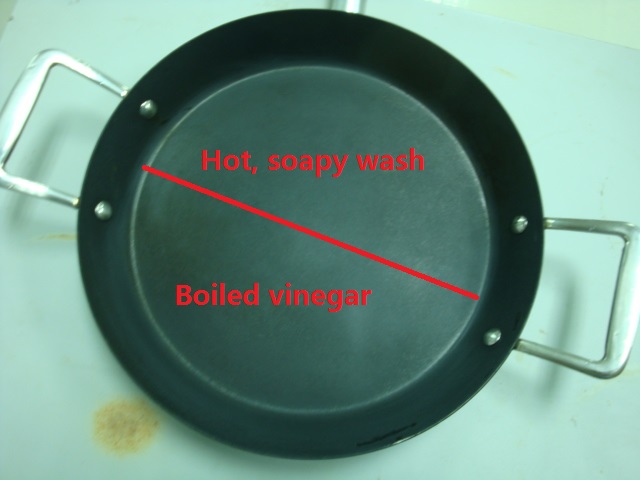
As you can see from the photo above, both methods cleaned this 34cm Lotus Rock paella pan with similar success. Although boiling vinegar over the pan did remove the staining, we would in most cases recommend just cleaning the pan with hot, soapy water and a general abrasive pad. If this does not remove all the staining, then the other option of boiling vinegar can be used.
May 4, 2025 / arnoldtnn / 0 Comments

If there is one word that has been over-used for marketing purposes in the last decade it is “green”. Within society increasing concerns about climate change, and whether economic growth is compatible with environmental protection, has led companies all over the world to market their products as eco-friendly and “green”. However, it has now reached the point where the inclusion of any recycled or natural resource in a product, no matter how small a part it forms of the whole, is used to justify the label “green”. This term for eco-friendly products has been used so frequently over the years that its meaning to most consumers has become quite vague and ambiguous. One way to consider whether a product is eco-green would not be so much its composition, but instead how durable it is. An item which needs to be replaced every year consumes five times as many resources as an item which lasts for five years. It is for this reason, its durability, that a cooking utensil such as a frying pan can be labelled and marketed as ‘eco-green’. All Lotus Rock pans are suitable for long-term use and for this reason are labelled as ‘eco-green’. Lotus Rock is highly durable for a number of reasons:
- Strong construction. With a heavy-gauge carbon steel substrate and a thick layer of enamel on both the interior and exterior of all pans, Lotus Rock pans will not warp or disfigure easily. Carbon steel is a very dense material, and the 2.0mm gauge used in all Lotus Rock pans makes them strong and long-lasting, unlike pans made with aluminum, a material with a very low density, which can be dented and disfigured quite easily, for example, if accidently dropped on the kitchen floor.
- Abrasion resistance. A common complaint about non-stick pans is that the coating often peels off quite easily, making the pan unusable and requiring its replacement. A Lotus Rock pan, in contrast, is metal utensil-safe. The coating is extremely hard and can withstand scrubbing with a 3M pad for a long period of time.
- Natural non-stick release. A non-stick coating with either PTFE or ceramic sol-gel technology will, depending on its quality, eventually become a ‘stick’ pan. Once the non-stick release has worn out the pan will become difficult to clean, and the consumer will most likely discard it. In contrast the natural non-stick coating on a Lotus Rock can be renewed by simply wiping oil onto the surface before each use. This method gives the pan a much longer lifetime than a general non-stick pan.
If the Stable Concave design is included a Lotus Rock pan’s lifetime is extended even further In addition to its durablity, a Lotus Rock pan can also because of its fast heating effect be labelled eco-green. Many professional chefs prefer carbon steel for cooking utensils such as stir woks, crepe pans, paella pans and frying pans because it heats up very quickly. This is especially so compared to other commonly used metal substrates such as aluminum or stainless steel. If the steel for a pan is produced at a thick gauge then it can heat up quickly, but also evenly across the pan’s surface. The main environmental benefit of a faster heating effect is that it saves energy from the stove top burner, thus reducing CO2 emissions. .
April 29, 2025 / arnoldtnn / 0 Comments
As many consumers have written in their reviews here, Lotus Rock has a number of significant benefits for cooking in a domestic kitchen. Some of these consumers mention about Lotus Rock’s excellent heating effect for pan frying, such as for chops, steak and frittatas; some like the weight of the pans – that they are heavy but not nearly as much as a cast iron pan; others love that they can use metal utensils without chipping off the surface; and some really appreciate that all Lotus Rock pans are induction safe. These are to name but a few of the benefits that come with using a Lotus Rock cookware utensil.
However, it is highly probable that a number of these consumers enjoyed using their Lotus Rock pan because they had in fact done what many of us just don’t want to do and……..read the instructions first before use.
On all Lotus Rock packaging sold around the world, the wording may vary slightly, but there are 5 basic use and care instructions, there are:
1. Hand wash in hot soapy water with a scouring pad. Put the pan on a medium heat setting and wait for all the moisture to evaporate. Once the pan is completely dry apply oil around the interior surface.
For more information about this procedure please read here.
2. Transfers heat very fast. Pre-heat the pan on a medium-low setting, a little later add oil to the pan, and when it appears to be hot enough add the ingredients for cooking.
For more information about this please read here.
3. Never leave your pan unattended while cooking.
As the 2nd instruction states, a Lotus Rock pan heats up very quickly, much faster than most other standard materials used for cookware, so a pan should always be supervised while it is being heated on the stove. Quite often if this is not done then a white mark will appear on the pan. A Lotus Rock pan can still be used after this has happened, however some of the non-stick function from the silicone-oxide crystal coating would have been impaired beyond repair.
4. Always keep your pan dry when not in use.
Primarily because of its extremely thick and strongly bonded coating, a Lotus Rock pan does have much better corrosion resistance than other coated carbon steel pans sold in the market today. However, if a Lotus Rock pan is stored in a very moist condition, or if it is left to soak in a sink for an extended period of time, then the likelihood of rust developing is much more likely.
5. Hand wash recommended.
In fact, a Lotus Rock can technically be used in a dishwasher, but it is not recommend for two reasons. Firstly, as pointed out in the 4th instruction, although a Lotus Rock pan does have a very thick coating, the intensity and duration of a wash in a dishwasher will increase the likelihood of rust (especially along the edges of a pan). Second, dishwasher use may gradually impair the quality of the silicon-oxide crystal coating, which is an essential component for the non-stick release of a Lotus Rock pan.
There is another very useful use and care instruction for a Lotus Rock pan which is not often included on the packaging because of its complexity and the lack of space available: this is to re-new the non-stick effect of the pan. For information about this please read here.
April 20, 2025 / arnoldtnn / 0 Comments
As noted previously here, all Lotus Rock pans have an excellent high heating effect, a desirable quality which helps produce delicious tasty food. What thermal properties give a cooking utensil an excellent heating effect? Well, first, the pan must heat up quickly when placed on the heat sources; second, it has to be thick enough to heat up evenly across its surface; and third, it needs a large enough thermal capacity to minimise loss of heat when food is added to the pan.
Let’s start with the Lotus Rock pan’s prompt response to heat. Although carbon steel does not heat as evenly as aluminum, it does heat up much more quickly. Some methods of cooking require the pan to have reached a certain temperature before it is used; for example, browning, which is best done on a pan with a temperature of 180 degrees (this is the temperature when the Maillard Reaction begins to take effect). If an impatient cook starts before the pan reaches this temperature then the meat or vegetables being seared might still be browned but will have lost a large amount of moisture, making it dry and un-appetizing.
However, although carbon steel heats up quickly, a thin gauge of steel will do so unevenly, heating up most quickly in the centre of the pan. This not only creates a hot spot, causing uneven cooking, but will eventually warp the pan and give it a convex shape, causing oil and other liquids to slide to the edges. In order to disperse the heat more evenly around the pan all Lotus Rock pans are made with 2.0mm gauge steel. As is shown in the diagram below, a thicker gauge broadens the area at which the heat reaches the surface of the pan. 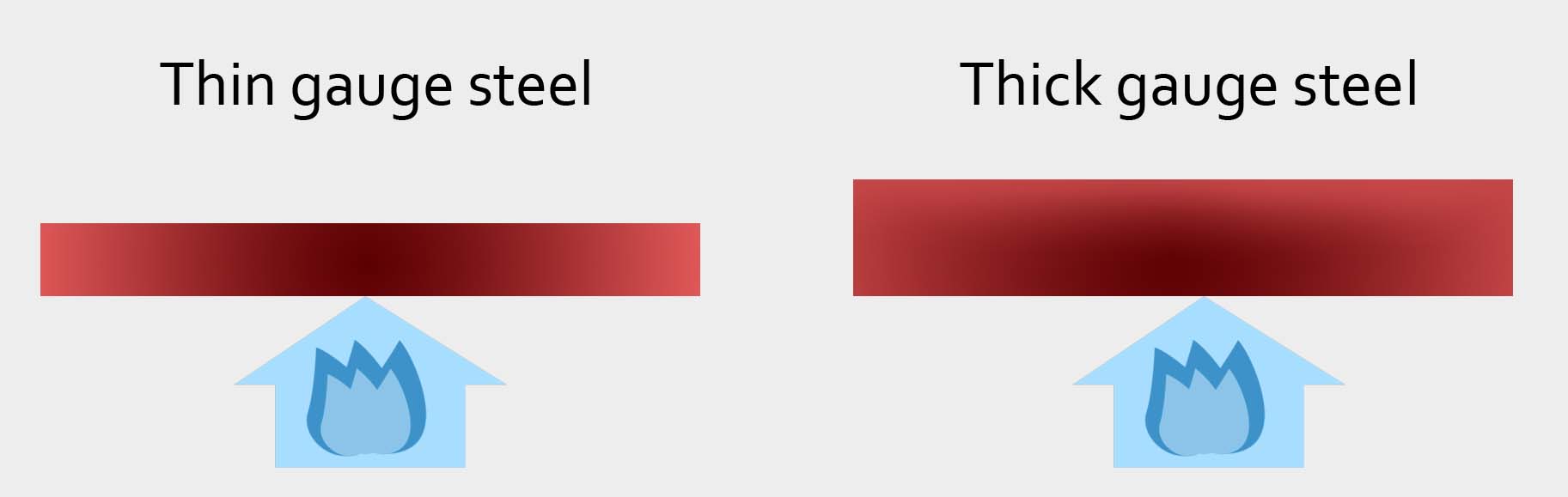 So with carbon steel as its substrate Lotus Rock pans can not only heat up very quickly but can also, due to the steel’s thick 2.0 gauge, provide a more dispersed heating effect so that the food is cooked evenly. It thus meets the first and second criteria for an excellent high heating effect. What about the third criterion? What happens to the heating effect of a Lotus Rock pan when food is added?
If you were to compare all the main metals for cookware usage, you would find that carbon steel is among the most dense (three times more dense than aluminum, for example), and as we know, Lotus Rock has a very heavy carbon steel gauge. This extra mass and space in its substrate means a Lotus Rock pan has a high heat storage capability, an essential component for an excellent heating effect. When a steak is placed on a grill pan to impart that smoky, chargrilled aroma, or a large quantity of vegetables are quickly added to a stir wok, the high thickness and density of a Lotus Rock pan will minimiss heat loss. So instead of steaming in their own juices, the steak and vegetables will sizzle and heat up quickly and evenly for a delicious and crispy taste.
A second factor facillitating heat retention is the thick layer of ceramic on both the interior and exterior of all Lotus Rock pans. Most coatings on cookware sold throughout the world today have a thickness between 15-30 microns; the ceramic layer on Lotus Rock pans is in contrast around 100 microns thick. This thick coating increases the heat retention capability of all Lotus Rock pans due both to its extra mass and poor heat conductivity. Ceramic does not conduct heat very well, but it is good at storing heat – this is why it is often used for oven dishes. 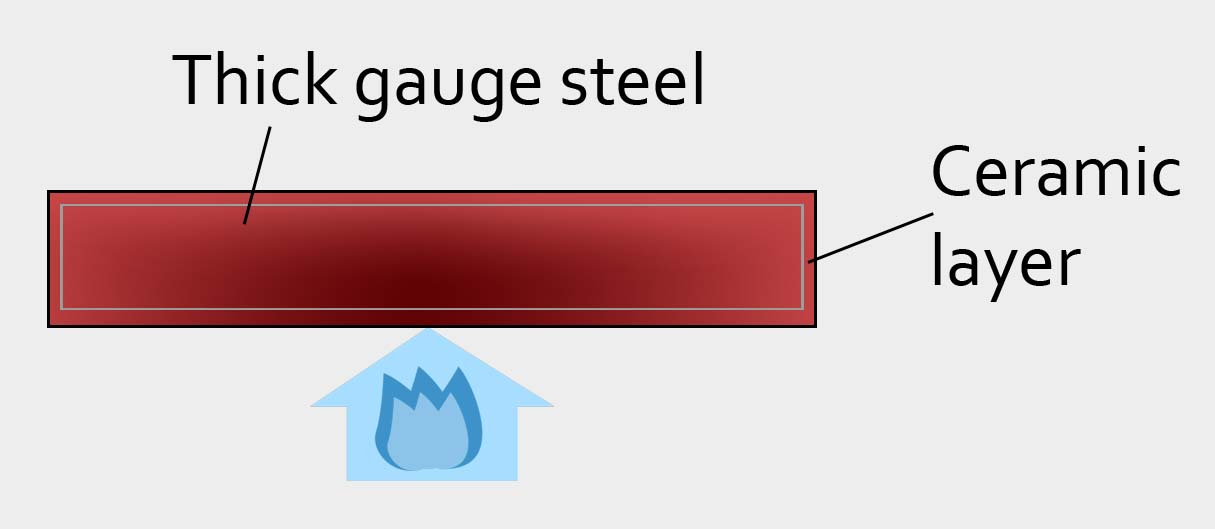 So when food is added to an already well heated Lotus Rock pan the temperature should not drop significantly, in part because of the heavy gauge carbon steel substrate but also because of the thick ceramic layer on both the interior and exterior of the pans. Thus the very thick material of a Lotus Rock pan is perfect for high heat cooking methods, such as for sautéing, searing, grilling and stir frying.
April 11, 2025 / arnoldtnn / 0 Comments
Crepes are a famous French delicatessen which is extremely versatile, perfect for brunch, lunch, a light supper — and definitely dessert. Crepes are served with a variety of fillings, from the most simple with only sugar to flambéed crepes Suzette or elaborate
savoury galettes.

A Lotus Rock pan is perfect for cooking crepes for the following reasons:
Fast heating effect. For a delicious, tasty crepe the whole cooking process should not take any longer than 80 seconds; 60 seconds at first, and then 20 seconds after the crepe has been flipped over. In order for this to happen most effectively the crepe needs to be on a pan that heats up quickly – carbon steel, the substrate for all Lotus Rock pans, is ideal for this. None of the other commonly used substrates, such as aluminum*, stainless steel, cast iron and copper, heats up as quickly as carbon steel.
*A big disadvantage about aluminum is that even though it does spread heat evenly around a pan extremely well (only copper is better at doing this), it heats up much slower than carbon steel. This means the crepe will not be as crispy and tasty as it could be if it is cooked on a Lotus Rock pan. In fact, a crepe cooked on an aluminum pan could easily be overcooked or become rubbery.
Heat dispersion. Although carbon steel does heat up quickly, it does so in the centre of the pan. If the gauge of the carbon steel crepe pan is too thin then the outer edges of the crepe pan will cook much slowly than the centre, meaning either the centre is burned or the edge of the crepe is undercooked. Because Lotus Rock has a thick 2.0mm carbon steel gauge and a thick coating on top of that, the pan heats up quickly but also evenly. This creates the perfect heating effect for a delicious, appetizing crepe.
Heat retention. Although crepes, because of their thin nature, should not have too much of a thermal load, and thus not reduce the temperature of the pan much, a good crepe pan should still retain as much heat* as possible while cooking. If it does then by the 2nd or 3rd crepe the pan should reach a suitable and stable temperature to transmit heat effectively to the batter to create a better tasting crepe.
*The only other metal substrate which retains heat better than carbon steel is cast iron. However, cast iron is extremely heavy, so some people will find flipping more than a few crepes a bit troublesome.
Easy clean-up. A lot of crepe pans in the market today are produced with carbon steel or cast iron but are uncoated. This means that the customer has continually to re-season the pan which some cooks find time-consuming and complicated. Moreover, consumers cannot use washing-up detergent or scrub too hard on the pan’s surface, because that might remove the natural non-stick patina that forms on crepe pans after some use. On the other hand Lotus Rock hydrophobic nano-silica coating is extremely easy-to-clean, with any type of washing-up liquid or abrasive pad.
Other benefits of a Lotus Rock crepe pan include:
- Induction safe. This type of cooking top surface is particularly suitable for cooking crepes, which need to be cooked quickly, because induction stove tops transmit heat much faster than either gas or electric.
- Metal utensil safe. A metal spatula can be used for flipping the crepe without damaging the coating.
- Low sides. This is especially useful for easy removal of crepes.
- Other uses. Lotus Rock crepe pan is also ideal for heating up tortillas, acting as a griddle for pancakes, and for making other delicious items such as Indian flatbread and Omelets.
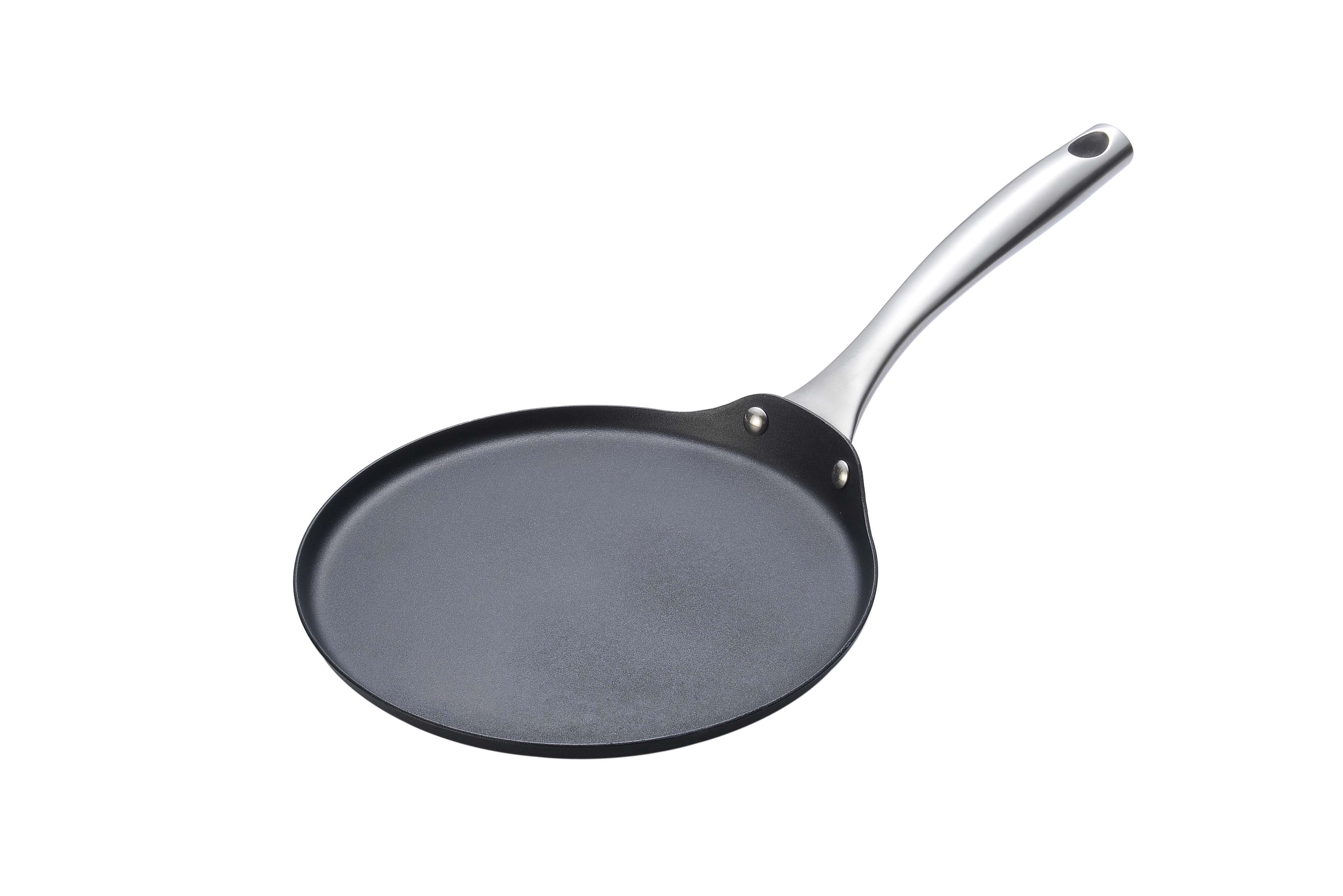
A Lotus Rock crepe pan is sold in a 24cm, 26cm, 28cm and 30cm sizing. With the hollow cast stainless steel handle above the pan is oven safe to 650 degrees Fahrenheit and it is broiler safe. It is suitable for all cooktops, including electric, gas, halogen, ceramic, glass and induction. After limited use a Lotus Rock crepe pan can be used in a dishwasher, but a regular hand wash is recommended.
April 1, 2025 / arnoldtnn / 0 Comments
The metal substrate for all Lotus Rock pans is heavy gauge carbon steel. There are numerous reasons why Lotus Rock uses this substrate instead of more commonly used metals for cookware, such as aluminum or stainless steel, as explained here. Traditionally for cookware usage carbon steel is often sold as uncoated, with just a protective coating on it which needs to be removed prior to use. Generally, the instructions on the packaging for uncoated carbon steel cookware items such as stir woks, frying pans and paella pans advise the consumer to season the pan before use.
What exactly is seasoning?
According to Wikipedia, seasoning is “the process of treating the surface of a saucepan, wok, crepe griddle or other cooking vessel with a stick-resistant coating formed from polymerized fat and oil on the surface.” It goes on to say that it is desirable for carbon steel cookware “because otherwise they are very sticky to foods and rust-prone. It is generally not desired on other types of cookware either for cosmetic reasons or because the chemical composition of the pan already results in a non-stick surface.”
So, basically uncoated carbon steel cookware needs a polymerized oil film over it for two reasons:
- Corrosion resistance
- Non-stick release.
Regarding the first reason to season a carbon steel pan – corrosion resistance – this is not necessary for Lotus Rock. This is because on both the interior and exterior of all Lotus Rock pans there is a thick enamel coating. So, as long as the Use & Care instructions are followed properly a Lotus Rock pan will not rust because the coating prevents the surface of the steel from any form of oxidation.
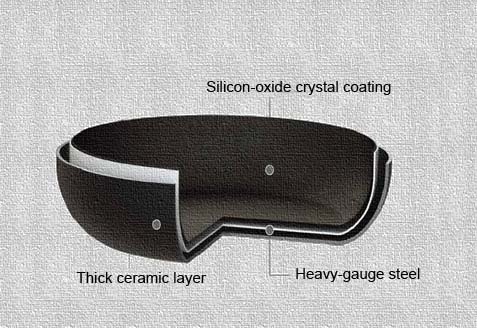
Is seasoning needed for non-stick release?
For the second reason to season a carbon steel pan – the non-stick release – this is also not necessary because all Lotus Rock pans have a silicon-oxide crystal coating. As explained here, this lipophilic coating gives all Lotus Rock pans a natural, durable non-stick release. While most non-stick pans on the market today have PTFE included in their coating to give them a non-stick effect, all Lotus Rock pans in contrast are PTFE/ PFOA free. The non-stick release for Lotus Rock comes from the consumer adding oil themselves to the pan prior to cooking and letting it permeate the silicon-oxide crystal coating.
However, although both seasoning and the process explained above do involve heating oil on an iron pan, the latter cannot be termed as seasoning for two reasons. First, seasoning is a reaction between the oil and the steel surface. With all Lotus Rock pans, cooking oil is never in contact with the heavy gauge steel substrate; instead the added cooking oil rests within the silicon-oxide crystal coating and on top of the thick ceramic coating.
The second reason is that for a carbon steel pan to be properly seasoned the oil needs to react with the steel surface and be polymerized. For seasoning to be successful the oil needs to surpass its smoke point, and then the chemical composition of the oil will alter to form a solid, hard film over the steel. For a Lotus Rock pan to have an effective and potent non-stick release or for that matter any other non-stick pan to be maintained well, the cooking oil should never be allowed to polymerize. If done so, it will form a barrier between the food and silicon-oxide crystal coating, which will impair the non-stick quality of the pan.
Disadvantages of a seasoned pan
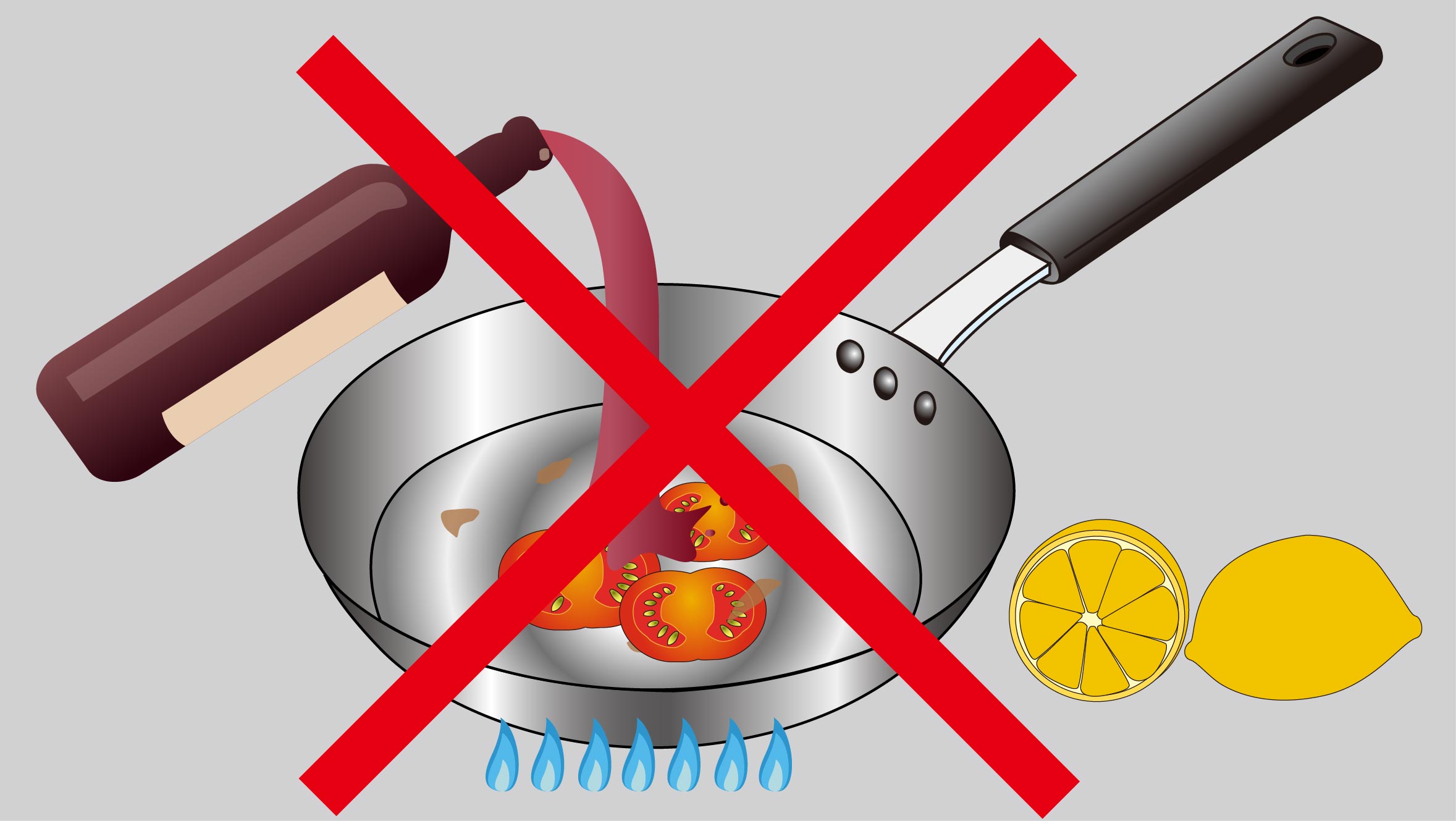 Although a seasoned steel pan undoubtedly has many benefits, to continually re-season a pan can be for some quite a hassle. Moreover, a seasoned pan does have some limitations when it comes to cooking. For example, ingredients which have are highly acidic cannot be used, such as lemon juice or tomatoes, because they will remove the non-stick patina which with continued use of fat for cooking occurs naturally on the pan. Another difficulty with a seasoned pan is that it is not suitable for de-glazing. Once the fond has built up on the pan after searing meat, generally an acidic liquid such as wine or broth is added to create a sauce. However, as has already been explained, the acidic nature of these sauces will react with the steel surface and impair the non-stick quality of the pan.
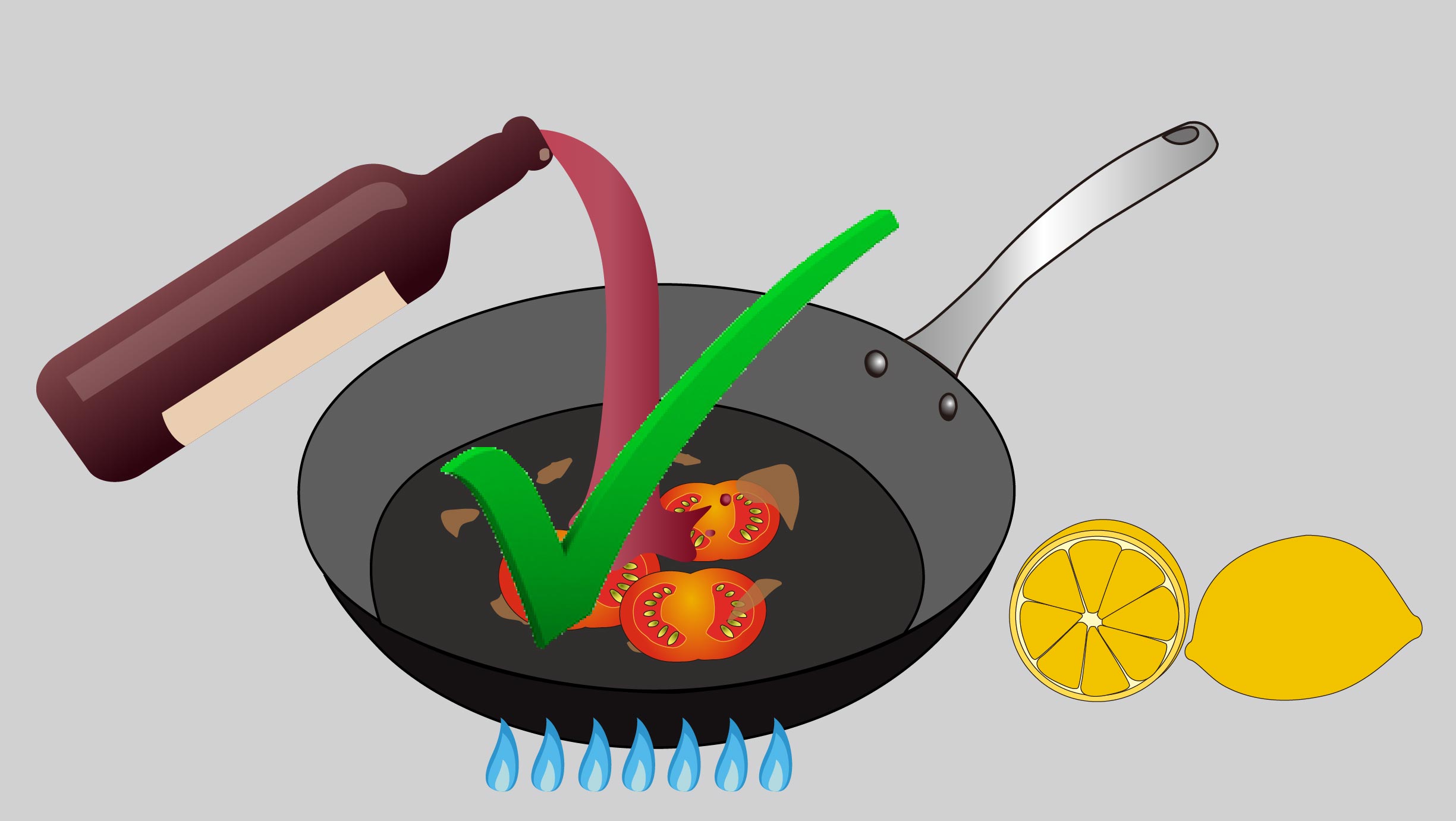 The silicon-oxide crystal coating of a Lotus Rock pan on the other hand is much less troublesome for cooking with. All kinds of acidic ingredients can be used with a Lotus Rock pan. So, for instance, a spaghetti Bolognese can be cooked on a Lotus Rock pan without any detriment to the quality of the non-stick release. In addition, a sauce such as gravy can be prepared from the fond after some chicken breasts have been seared on the stove top.
Conclusion
Generally, in the market place today carbon steel cookware, such as with famous brands including DeBuyer or Rosle, is sold uncoated. In order to protect these pans from rust, and to give them a non-stick release, the consumer is advised to season them before use. Seasoning involves heating oil to a high temperature on a steel pan, passed its smoke point. During this process the pores of the steel open and while this is happening the polymerized fat creates a hard, glassy film between and over the steel surface. With this treatment the steel pan is now not only protected from rust, but also conditioned with a non-stick effect.
Although Lotus Rock does use carbon steel, it does not need to be seasoned because on both the interior and exterior of the pan is a thick enamel coating protecting it from oxidation. This coating, just like the polymerized fat of a seasoned pan, provides effective corrosion resistance. However, unlike an uncoated steel pan, a Lotus Rock pan doesn’t give the consumer the hassle of re-seasoning the pan after each use. The thick enamel coating on Lotus Rock is metal utensil safe and is highly durable for long lasting protection from rust.
In addition, a Lotus Rock pan also doesn’t need to be seasoned to create a non-stick release because on top of the thick ceramic interior is a silicon-oxide coating. When oil is added to a Lotus Rock pan it permeates the lipophilic surface of the silicon-oxide coating to create a natural, non-stick effect. A significant advantage of the silicon-oxide crystal coating over the non-stick patina of a seasoned pan is that it is safe to use with acidic ingredients or sauces, so the consumer can use the pan for a greater variety of cooking methods.
March 21, 2025 / arnoldtnn / 0 Comments
Background
Until the 1960s nearly all cookware in most households around the world was either cast iron, copper, or stainless steel with no coating on the cooking surface. This began to change in 1954 when Marc Gregoire, a Frenchman, applied a coating which contained a substance called PTFE on a pan.
The rise of Teflon
The new coating, called Teflon, became a worldwide hit among consumers who wanted a more hassle-free, easy-to-use cookware item. In western society Teflon became a household word, so well-known that it was given as a nickname to politicians who seemed able to survive any disaster with their reputations unblemished – for example Tony Blair was known as ‘Teflon Tony’.

However, the Teflon brand’s credibility (like Tony Blair’s political career) began to suffer in the late 90s when it was found that if the coating was applied under too much heat the PTFE, which provided the non-stick release in the coating, would breakdown and emit toxic fumes which would kill birds and possibly be damaging to human health. There were also complaints that the coating would peel off after extensive use.
The emergence of ceramic coatings
Therefore, in the late 00’s coating manufacturers, such as Greenpan and Whitford, began to develop ceramic coatings, which were seen as a healthier alternative to Teflon because they contained no PTFE. At first ceramic coated pans were a huge success, because not only were they seen as a healthier alternative to PTFE-based coatings, but they also looked very attractive with their cream and white colour.
However, after intensive use by various customers all over the world it was soon discovered that although ceramic coatings didn’t have any health concerns, they were affected by some serious quality control issues. The biggest difficulty with ceramic coatings was that after sustained use the silicone oil inside the coating would dry out and the non-stick effect would become redundant. Customers were therefore paying for cookware utensils with a non-stick release which would not, in some cases, last longer than a year. In addition, it was also discovered that the colour stain and scratch resistance of ceramic coatings was not as good as previously thought.
Stone-finish cookware
Some cookware manufacturers responded to this by producing items with a stone finish. Although these cookware items still contained some PTFE, they at least had a stronger, more durable appearance than lightly coloured ceramic coatings. And yet, although these new coatings did appear to have a stronger construction, the stone finish was misleading, because they were not metal utensil-safe and, like every other non-stick coated cookware, intense use eventually degraded the coating, either wearing it away or reducing the non-stick release.
What next?
So by early 2013 there was a significant gap in the market: consumers wanted a high quality cookware item without possible health concerns (such as those associated with PTFE), a non-stick effect that would last for at least a few years (unlike ceramic coatings), and a pan which didn’t just look scratch-resistant but really was metal utensil-safe.
It is for this reason that the popularity of Lotus Rock cookware has risen exponentially in the last couple of years. As you can see from the table below Lotus Rock has various advantages, all of which either match or exceed the existing competition in the market place.
|
PTFE coating
|
Ceramic coating
|
Stone-finish coating
|
Lotus Rock coating
|
|
Durable non-stick release?
|
Good
|
Poor
|
Good
|
Excellent
|
|
Health issues?
|
Yes
|
None
|
Yes
|
None
|
|
Scratch resistance?
|
Poor
|
Ok
|
Good
|
Excellent
|
Lotus Rock cookware is now sold in all 6 continents of the world, from the USA, to Venezuela, to various European countries such as the UK, Italy and Turkey, to South Africa, Australia and Hong Kong. There are various reasons for this sudden popularity, but one of them is the natural, non-toxic, durable non-stick release.
Why does Lotus Rock have such a unique, long-term, and effective non-stick effect?
All Lotus Rock items contain a thin layer of nano-silica, which is lipophilic (fat-loving). This coating, which rests on top of a thick ceramic layer, is permeable to cooking oil. At the beginning of the cooking process the consumer must add cooking oil which then infiltrates the surface of the cookware.
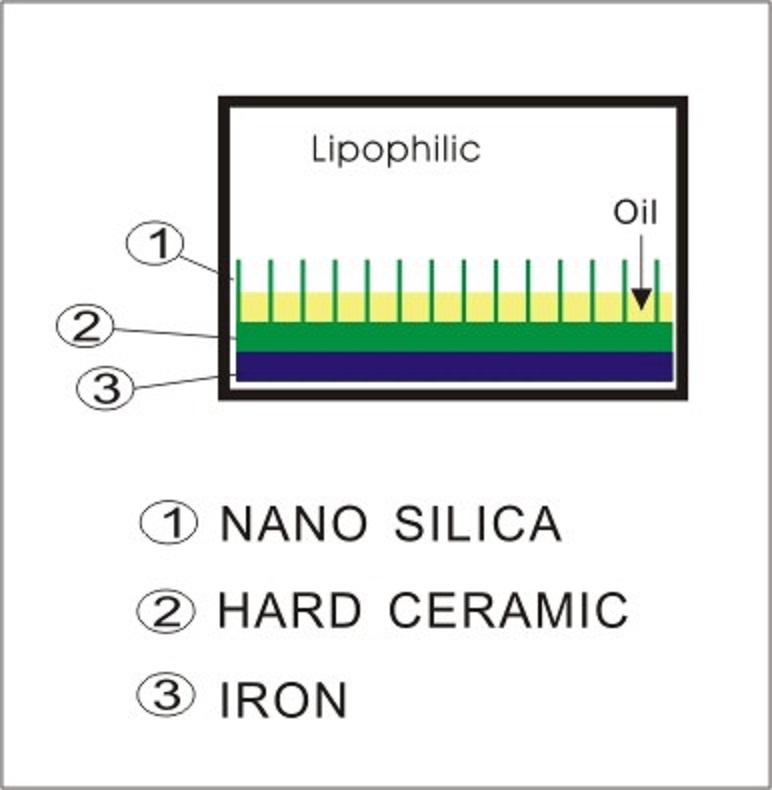
By permeating the surface of the cookware the oil is able to rest inside the nano-silica, thus creating a natural, long-lasting non-stick release which, unlike all other general coatings, won’t significantly worsen over time. Thus by the simple act of adding oil before cooking the customer creates a physical non-stick surface, perfect for a high-quality cooking experience – similar to cooking on uncoated cast iron, except that with Lotus Rock no re-seasoning is needed, so the customer need not worry about rust.
March 5, 2025 / arnoldtnn / 2 Comments
As explained here, if you discover that the non-stick performance of your Lotus Rock pan has become impaired then there is a procedure to renew it. However, if a Lotus Rock pan is maintained well then this non-stick renewal procedure should only have to be used rarely, if at all.
Generally all cookware sold today can be categorized in 3 ways, these are:
i) Chemical non-stick coated
ii) Stainless steel
iii) Reactive cookware (such as uncoated cast iron, carbon steel, aluminium, and copper)
Lotus Rock is such a unique and highly innovative product precisely because it doesn’t solely fall into any of these categories. Although it does have a non-stick release, Lotus Rock is highly distinctive in the market because the non-stick is PTFE/PFOA free and it doesn’t use sol-gel technology like a general ceramic coating. Also, unlike a chemical non-stick coating, Lotus Rock is metal utensil safe and it has high heat resistance.
Stainless steel of course does have excellent scratch and heat resistance but it does not have as good a heating effect as Lotus Rock for browning and searing, and it needs to use a lot more oil to make the pan’s surface non-stick.
In contrast to uncoated pans, Lotus Rock has a very thick layer of ceramic, in most case 4-5 times thicker than most PTFE non-stick coatings. However, Lotus Rock is similar to uncoated cast iron and carbon steel in that the pans surface needs to be ‘seasoned‘ to create a natural non-stick release. But this is where the similarity ends, because with a Lotus Rock pan you aren’t bonding the oil to the steel but instead to the hard ceramic layer. This has a number of advantages for a cookware utensil, such as: all acidic ingredients, and washing up detergent with an abrasive pad can be used freely without removing the seasoned coating. In addition, as long as the consumer does not aggresively mistreat a Lotus Rock pan it should not have to encounter some of the difficulties of rust that many uncoated cast iron or carbon steel pans quite often have.
However, in terms of maintaining its non-stick release then it does help to think of Lotus Rock as either an uncoated cast iron or carbon steel pan. This is because when seasoning both Lotus Rock and uncoated cast iron/ steel pans they need to have the ‘pores’ of the pan’s surface opened up to create more space for oil to better bond to it. After the pan has been washed the best way to do this to dry it over a heated stove top to open up the ‘pores’ of the steel/ hard ceramic layer. Once this is done the consumer should then wipe a very thin layer of oil on the surface. If a consumer treats a Lotus Rock pan in this way, just like they would with an uncoated cast iron/ carbon steel pan, then they can enjoy a non-stick release which will last for much longer than any general chemical non-stick coating.
After cooking with a Lotus Rock Zurich 26cm Frying Pan
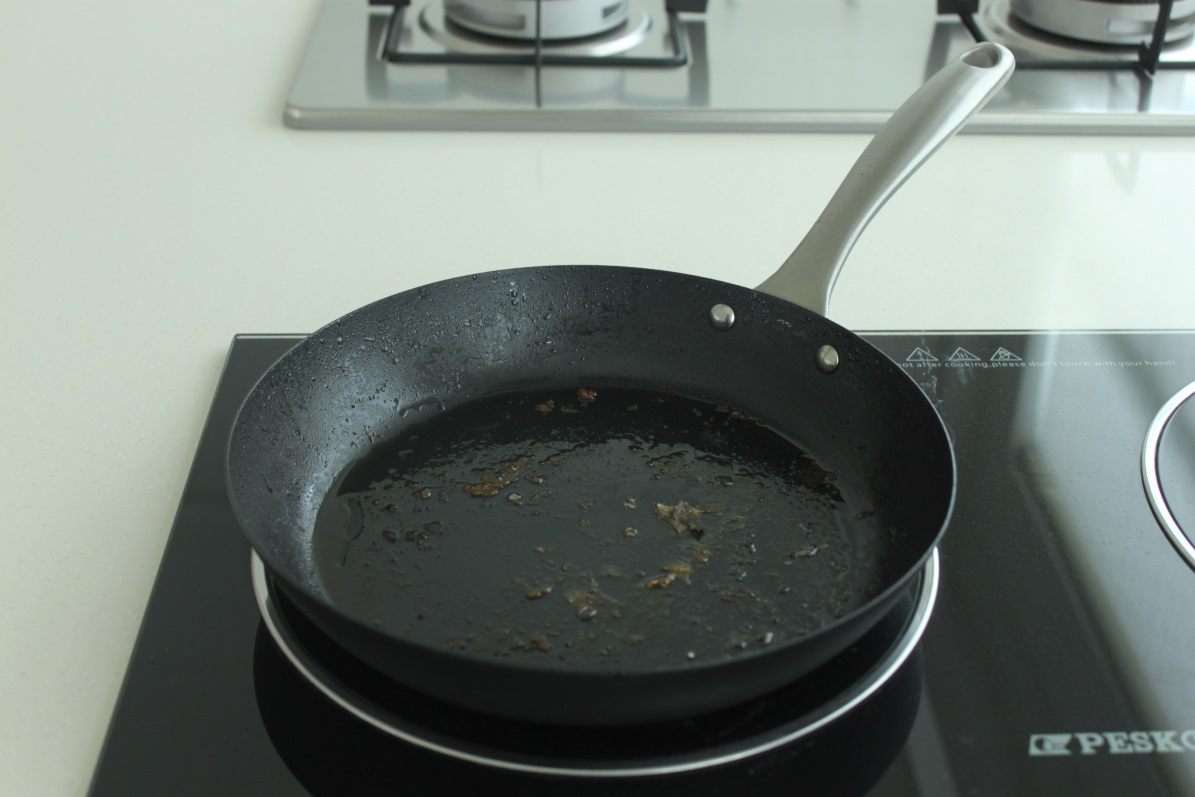
Lotus Rock Non-Stick Maintenance Procedure
1. Clean the pan with washing-up detergent and water
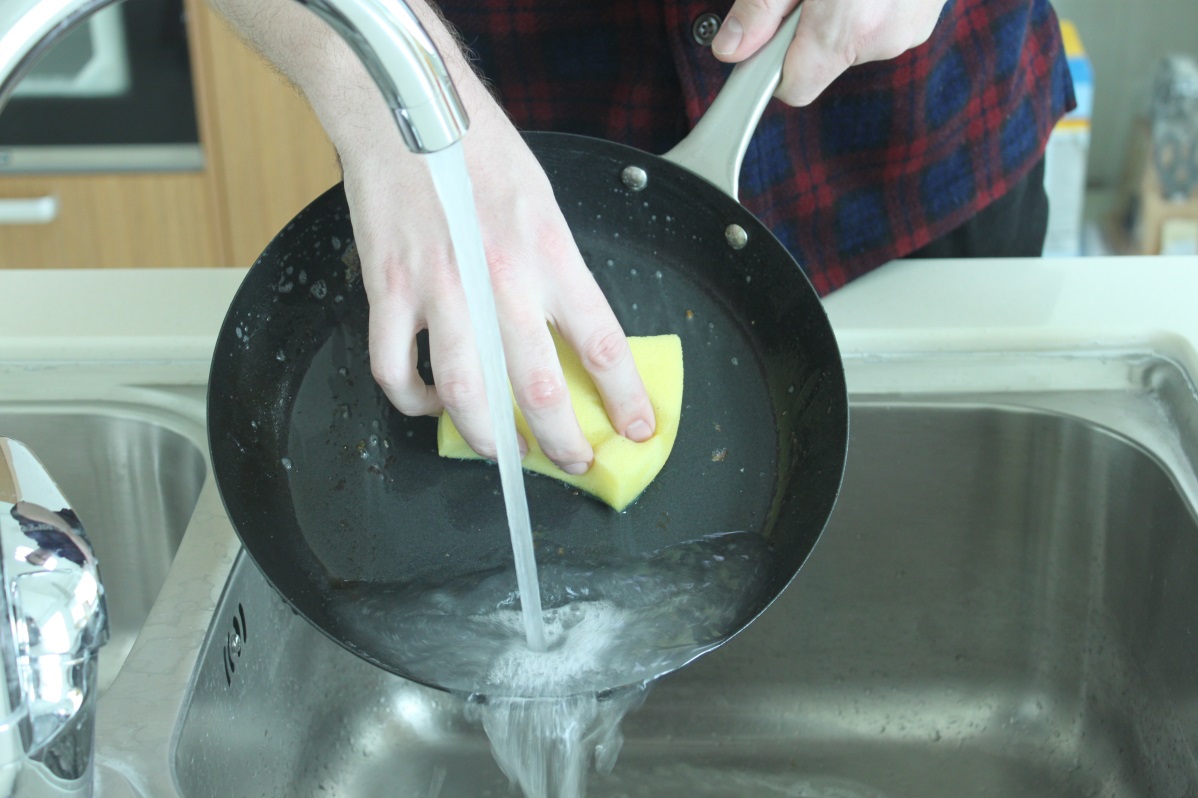
2. Heat the Lotus Rock frying pan over a stove top to dry it

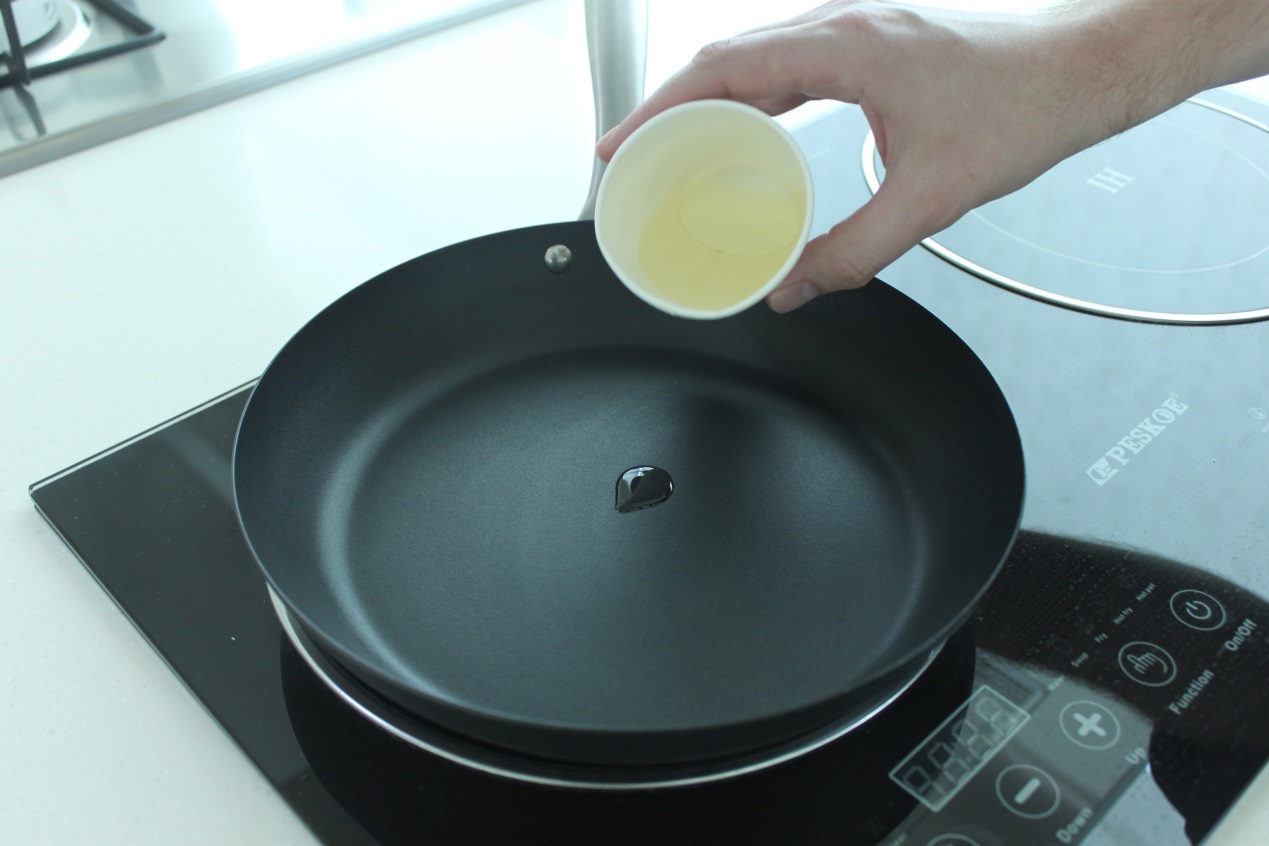
3. Once dry add just a bit of oil to the centre of the Lotus Rock frying pan
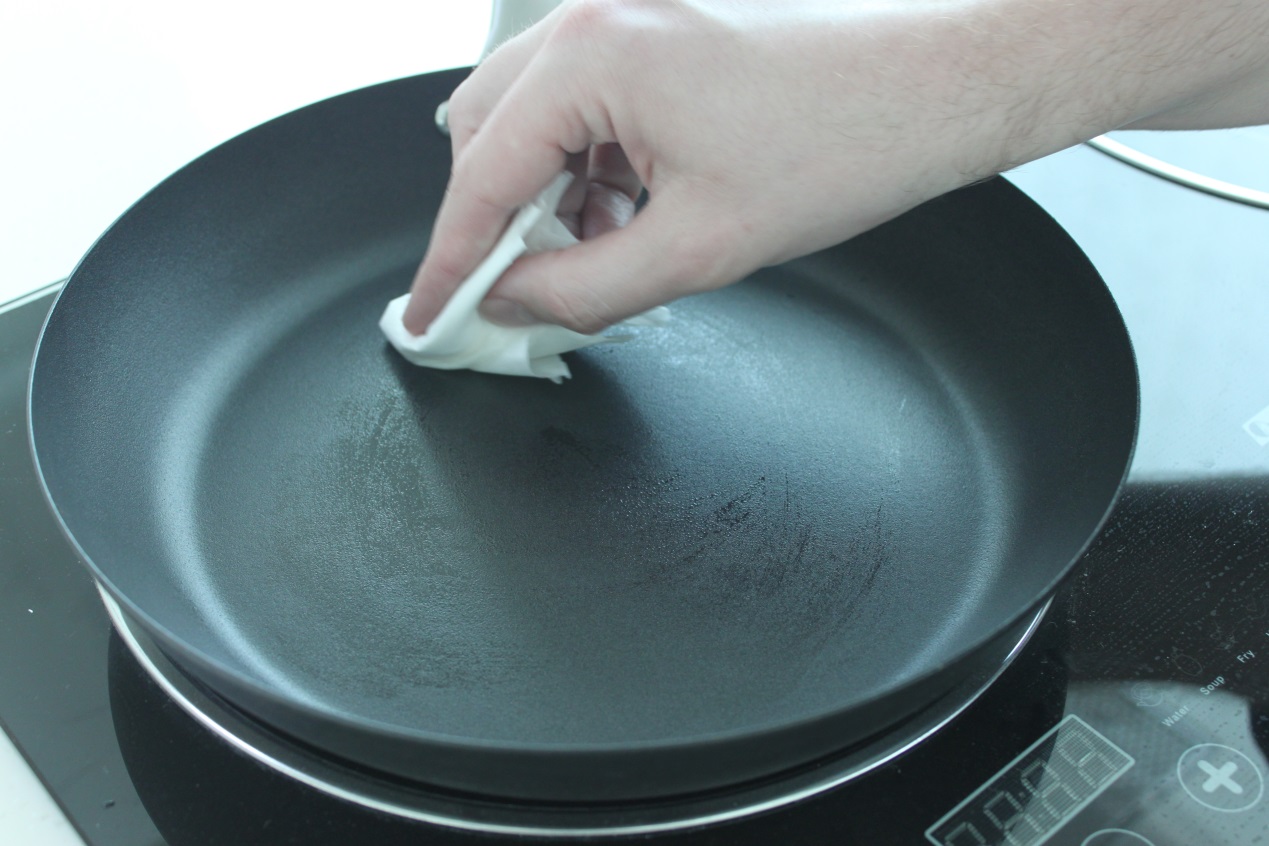
4. Wipe the oil around the interior of the Lotus Rock frying pan
January 17, 2025 / arnoldtnn / 0 Comments
As was explained in the blog post “High heat develops flavor” browning, the Maillard reaction is the source of deep flavors in meat. However, what is not commonly known is that after the meat has been sautéed or pan-seared, the caramelized browned bits that remain on the bottom of the pan, known in French as the ‘fond’, can be used to create a delicious sauce.
This process, known among professional chefs as Deglazing, is actually relatively simple. First, the meat and any excess fat must be removed from the pan. Then an aromatic (a shallot, garlic or onion) is sautéed, after which a liquid (broth, wine, cider or beer) is added. Many professional chefs consider wine the best liquid for deglazing because its acidity detaches the fond from the pan and immerses it within the sauce more quickly. In order to help the process along a spatula is often used to scrape the bottom of the pan to loosen these brown bits further. The fond will then dissolve into the sauce, adding complexity and depth.
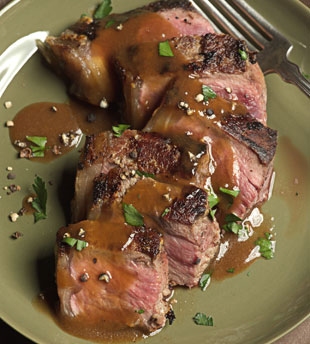 Later the liquid is reduced to concentrate the flavours of the sauce, and a little butter is whisked into the reduced sauce to give it some body. The finished sauce is then poured over the already well-browned meat to add extra flavor to an already crispy, succulent crust.
What is the best pan for Deglazing?
Deglazing doesn’t work well on non-stick cookware, because the non-stick coating prevents food sticking to the pan and creating a fond. Stainless steel, on the other hand, is good because seared meat, such as steaks, chicken or pork chops, will stick to the pan and produce the fond needed to create a sauce. However, as was explained here, stainless steel does not conduct heat quickly to the surface of the pan, so it does not reach the necessary temperature quickly enough to produce large amounts of caramelized browned bits on the bottom of the pan. The resulting fond is therefore not as dense and flavourful as it would be if the meat had been browned more intensely.
Cast iron has an excellent heating effect for browning, but is not suitable for deglazing if the pan is uncoated, because any acidic liquids such as wine used to create the sauce will react with the iron to remove the natural non-stick patina which is formed on the pan’s surface. Enameled cast iron pans can be used instead, but are extremely heavy and awkward to use.
A Lotus Rock pan is perfect for both searing meat to produce a crispy, well-browned crust, and for deglazing afterwards to create a delicious sauce. The heavy-gauge steel construction and thick ceramic interior mean a Lotus Rock pan can sear or sauté a piece of meat quickly and evenly for excellent browning. If no cooking oil was added before cooking (Lotus Rock’s non-release works best if fat is wiped onto its lipophilic coating) an abundance of brown bits should remain on the pan. This fond can then be used with an aromatic, a liquid and a thickener, for example an onion, wine and butter, to create an intensely flavourful sauce with a lot of body.
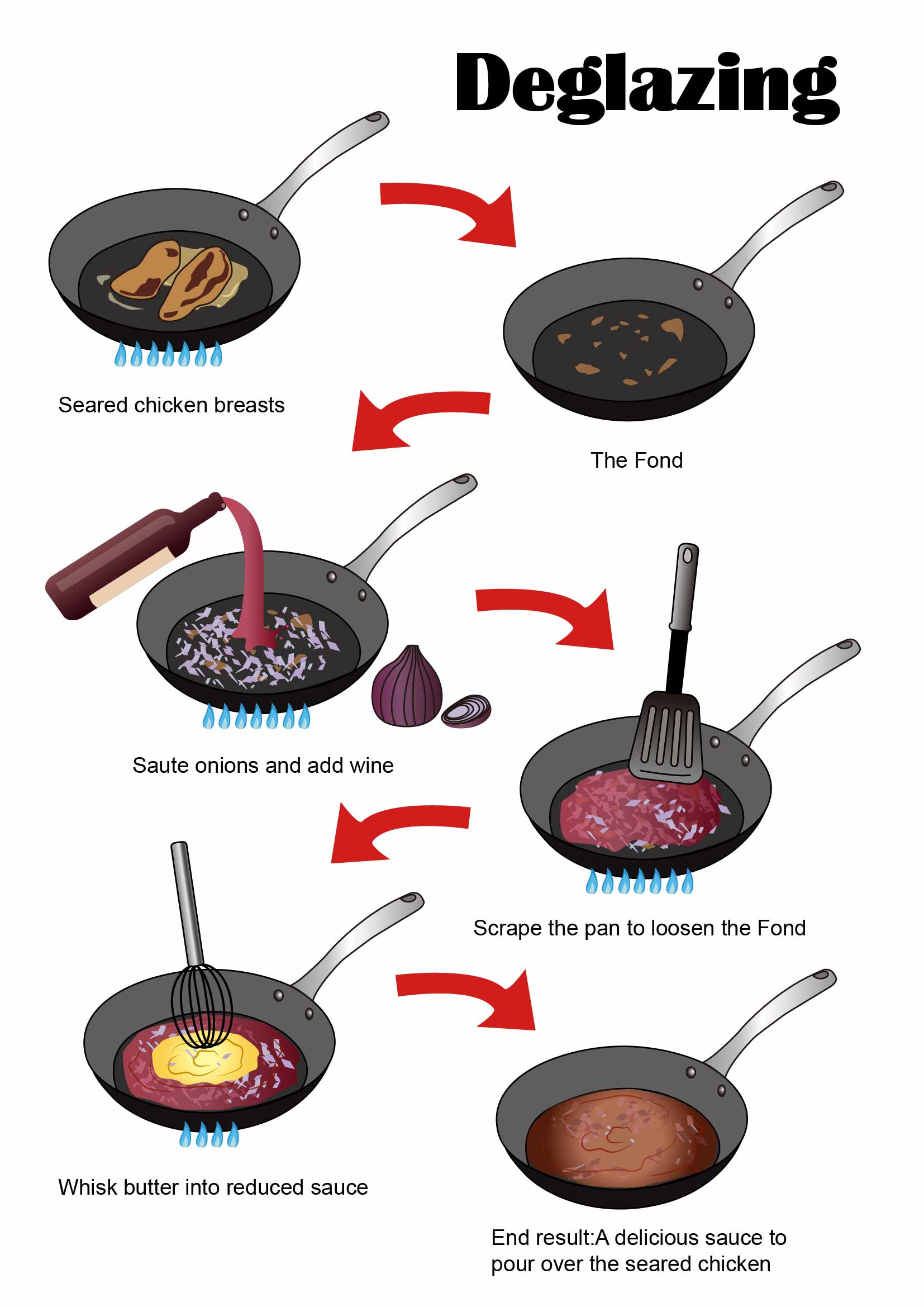
January 14, 2025 / arnoldtnn / 0 Comments
Combination Cooking involves both dry and moist-heat cooking. This type of cooking method requires long, gentle cooking to turn tougher cuts of meat into those fork-tender dishes that we often refer to as “comfort foods”.
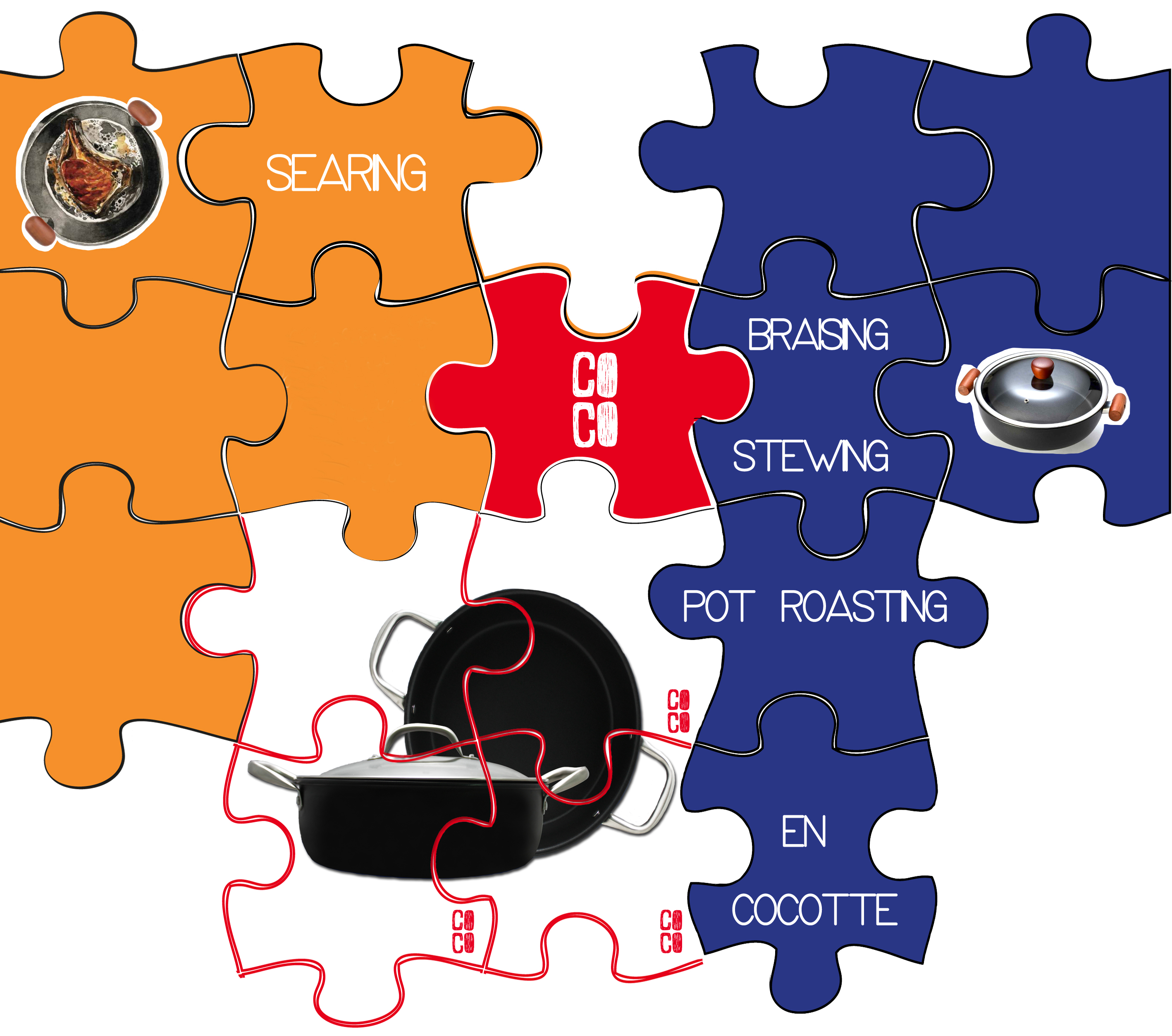
A Lotus Rock Braiser is best used for recipes which require meats or vegetables that need to be seared quickly in the open pan and then covered with a lid to cook slowly in their liquid (either in the oven or over the stove). Popular combination cooking techniques used with this pan after searing include braising, stewing, pot roasting and en cocotte.
The Lotus Rock Braiser is produced in 3 different sizes:24cm (2.54QT), 26cm(3.49QT), and 28cm (4.33QT).
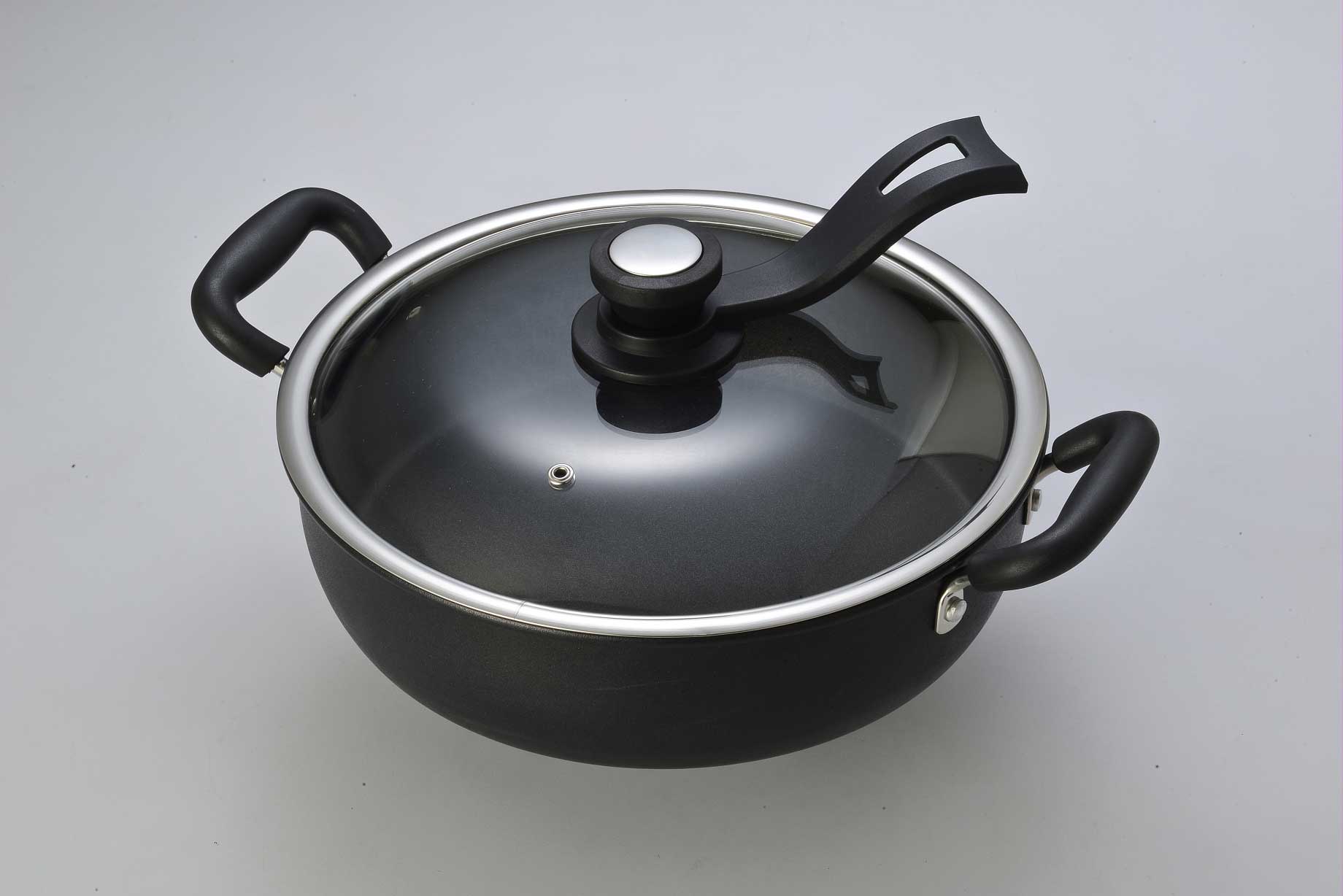
January 13, 2025 / arnoldtnn / 0 Comments
1. Long handle. lf the pan is over 30cmdiameter (often a stir wok), then a smallerhelper-handle will be attached on the oppositeside. The large handle facilitates flipping, whilethe short handle makes it easy to lift.

2. Dual handle. Having a handle on either sideis ideal for a large wok, paella pan or braiser,where the amount of food contained will be tooheavy to lift if there was just one handle.

January 1, 2025 / arnoldtnn / 0 Comments

One of the first fundamental skills which any professional culinary student learns is how to make a delicious stock. Not only is making your own stock extremely rewarding, it will taste better and be healthier than anything you can buy. Often dubbed “liquid gold”, a well-made gelatinous stock is what enables chefs to make those restaurant quality sauces.
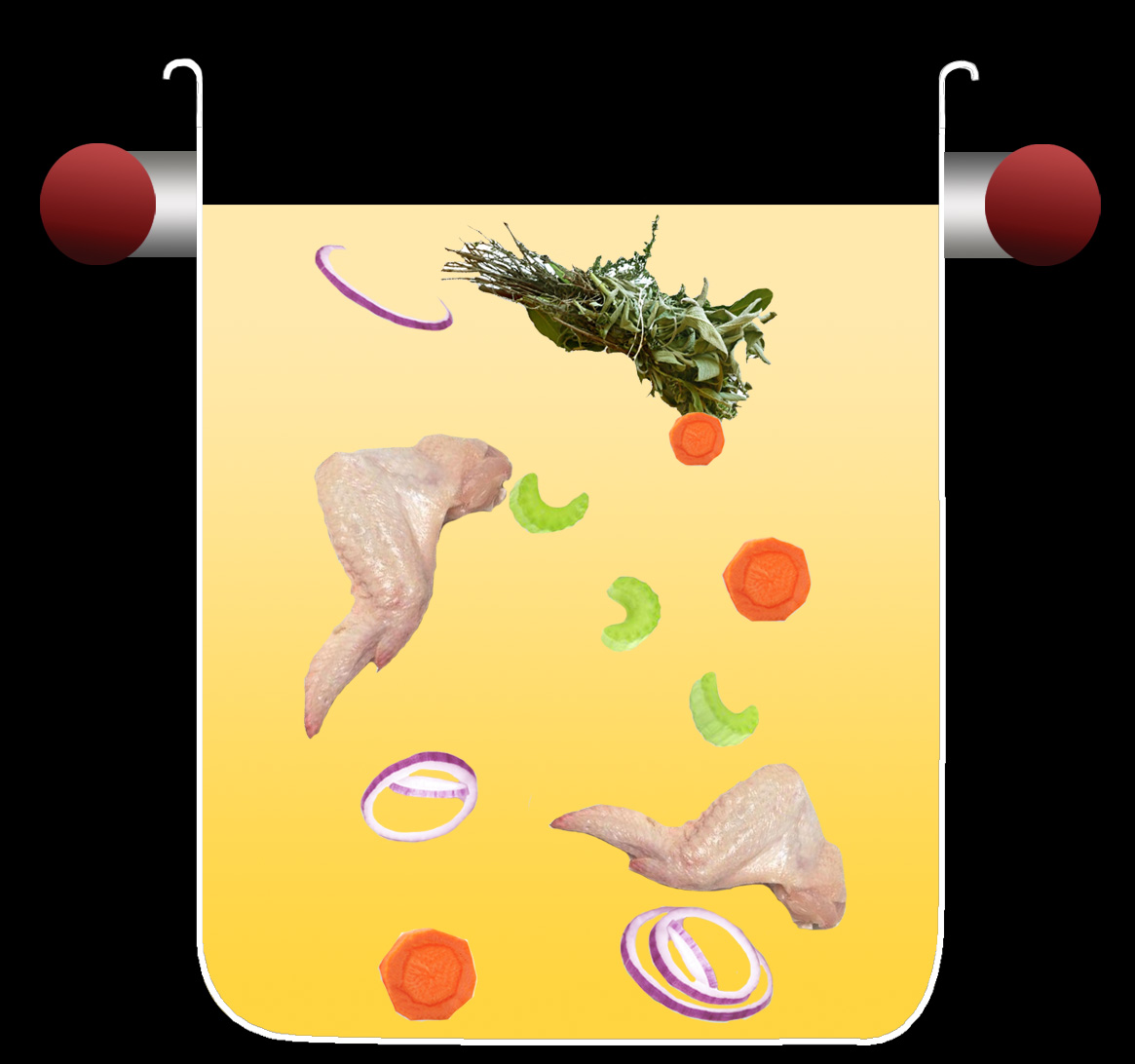 Advantages of a Lotus Rock Stock Pot:
- A rounded rim, which allows liquids to cascade out smoothly;
- Each stock pot has roomy, secure handles. When you’re lifting a pot this size filled with 6 pounds of chicken parts and 6 quarts of hot broth, you need strong roomy handles with thick grips;
- A Lotus Rock stock pot comes with a heavy-duty bottom. Not only does this make the pot extremely durable, it delivers even, controlled browning, which is essential for cooking dishes such as chilli.
The Lotus Rock Stock Pot is produced with a diameter of 24cm and with a capacity of 7.40QT.
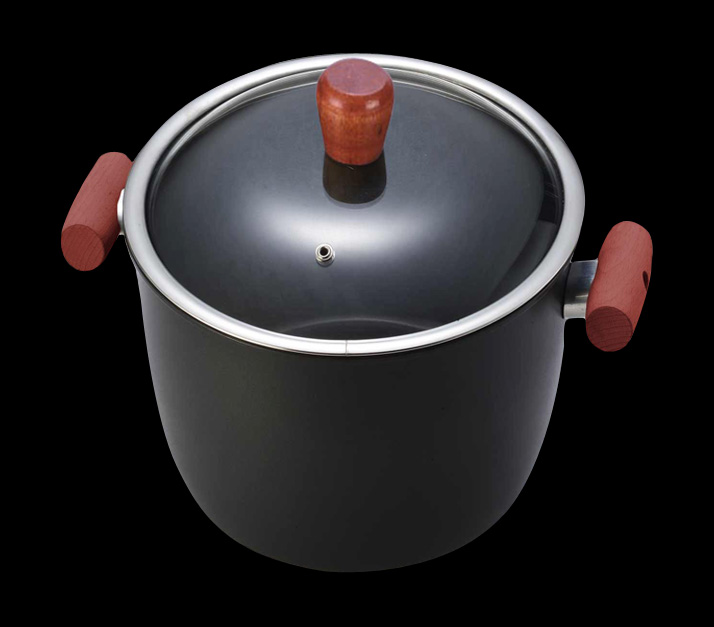
December 27, 2024 / arnoldtnn / 0 Comments
Background
Until the 1960s nearly all cookware in most households around the world was either cast iron, copper or stainless steel, with no coating on the cooking surface. This began to change in 1954 when Marc Gregoire, a Frenchman, applied a coating which contained a substance called PTFE (polytetrafluoroethylene) to a pan. 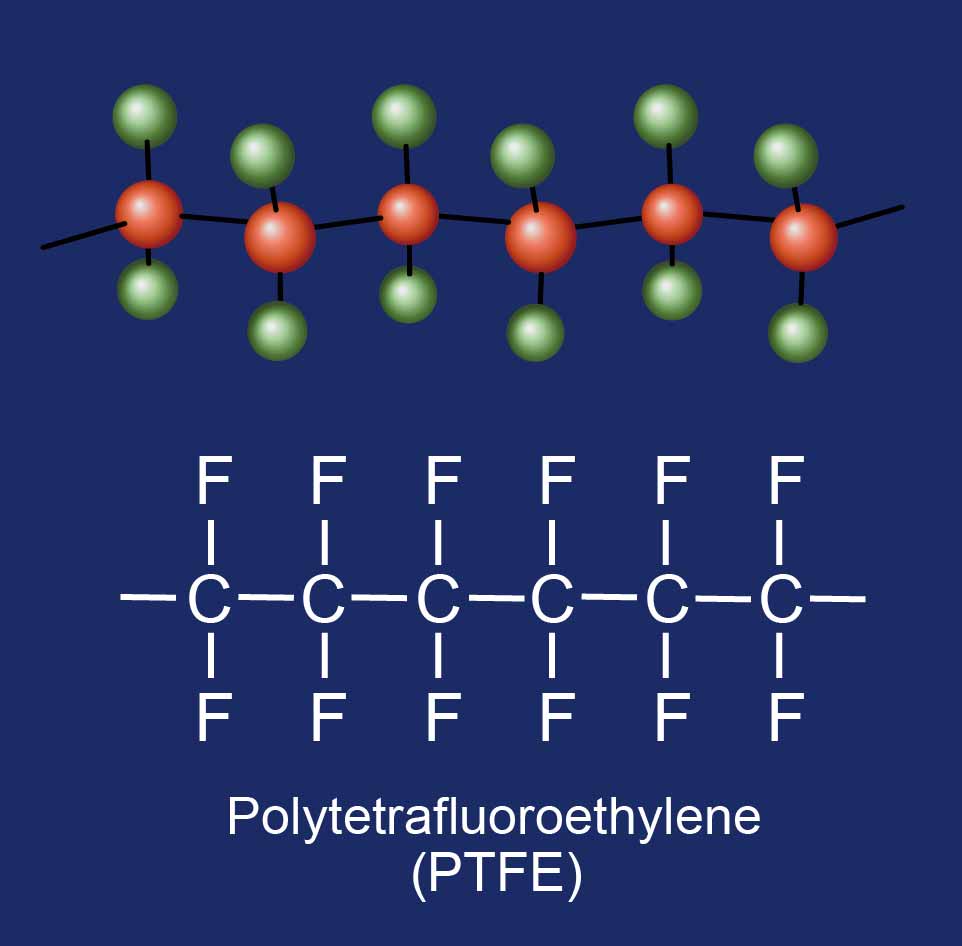 This substance contains fluropolymers, which even to this day have been proven to have the lowest coefficient of friction (CoF) of any known solid. In other words, the majority of materials (in this case foodstuffs) do not stick to it. This highly significant breakthrough in non-stick technology would have far-reaching consequences because today three quarters of all cookware utensils use a non-stick coating containing fluropolymers.
From the 1960s onwards this new PTFE-based non-stick coating was adopted by a company called DuPont, who gave it the brand name Teflon. It became a worldwide hit almost immediately among consumers who wanted a more hassle-free, easy-to-use cookware item. Unlike cast-iron or copper, Teflon didn’t need to be seasoned or continually re-polished, and in contrast to stainless steel, a large quantity of oil didn’t have to be used each time to stop items with a high protein content, such as eggs, poultry and fish, sticking to the pan.
PFOA
However, the Teflon brand’s credibility began to suffer later in the 20th century when it was found that a substance called PFOA (Perfluorooctanoic acid), which was used in the Teflon coating as an emulsifier to help the PTFE spread evenly on the pan surface, had serious health issues for human beings. The negative publicity forced Dupont to remove PFOA from the Teflon formula, replacing it with another emulsifying substance, still unknown even today.
PTFE
At the turn of the 20th century controversy over PTFE non-stick coating continued as some medical experts produced reports which claimed that if it was heated to above 350 degrees then toxic fumes would be emitted and that these would be lethal to birds. These findings also led some to believe and suspect that these toxic fumes could be hazardous to humans as well.
In addition to health concerns, the PTFE non-stick coating was also later found to have cooking performance problems. One of the obvious benefits of a PTFE non-stick coating is the fluropolymers which, as Marc Gregoire had earlier found out, are extremely stick-resistant to other substances around it. However, there is a flip-side to this benefit: within a coating PTFE does not bond well to itself, which means that this type of coating has a pinhole problem. This is a particular concern when oil is heated on the pan to a high temperature, as the oil molecules decrease in size and can then penetrate the coating. This can not only cause corrosion problems, but can also lead to the coating breaking up and peeling off – thus also impairing the quality of the non-stick release.
Lotus Rock
 Lotus Rock, on the other hand, has a natural, durable non-stick release which contains no PFOA or PTFE. Because it has no PTFE all Lotus Rock pans have excellent heat and scratch resistance. A Lotus Rock pans can be heated to over 350 degrees with no chance of any toxic fumes being emitted from the surface of the coating.
 Metal utensils, such as spatulas or knives and forks, can all be used on the surface of the coating without any chance of scratching the coating and making it peel off. Moreover, because all Lotus Rock pans have an extremely thick, solid ceramic interior, up to 100 microns, they have, unlike PTFE non-stick coatings, no pin-hole or peeling off related difficulties.
December 21, 2024 / arnoldtnn / 2 Comments
In the absence of flavorful ingredients, well-browned food has a richer, more varied flavor then poorly browned food.
What is browning?
 Browning is a chemical reaction, also known as the Maillard Reaction after the French scientist, Louis Camille Maillard, who first described the process in the early 1900s. The chemistry behind this reaction is not completely understood even today but, put simply, in many foods heat causes the amino acids (the building blocks of proteins) to react with certain types of sugars to create new, distinct flavor compounds. These compounds in turn react with more amino acids to form even more compounds, rapidly increasing in quantity on both the surface of the cooking food and the pan itself. Finally, very large molecules called Melanoidin pigments are formed which create the deep brown hue on the crusts of meat and vegetables.
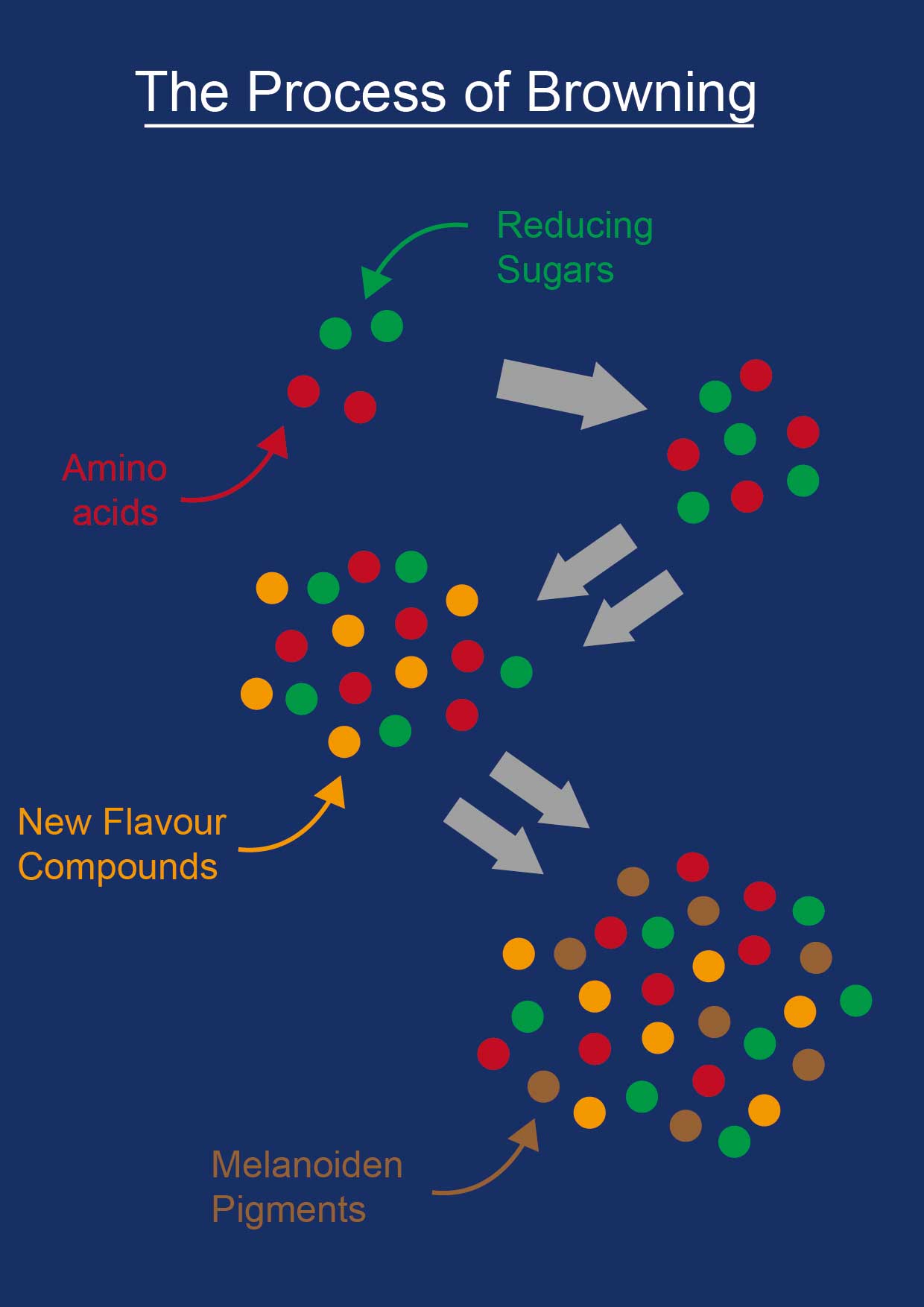
Sauteing and searing are generally considered the best cooking methods for giving meat, such as steak, or vegetables a well-browned, flavourful crust. In order to achieve this, a proper pan temperature is crucial for success. If the pan is too cool the foods may cook too slowly and virtually steam in exuded juices, preventing both crust and flavor development. The Maillard Reaction occurs only when the surface temperature exceeds 300 degrees.
What is the best frying pan for a delicious, browned crust on food?
Although aluminum and tri-ply stainless steel pans conduct heat around a frying pan very evenly, they do not conduct it to the surface of the pan very quickly. Significant heat is required to jump start the chemical reaction that causes food to brown; and longer cooking time, as with an aluminum or stainless steel pan, won’t lead to more browning unless the food is cooked for a very long time. However, if food is cooked for too long there will be large loss of moisture, so that that although the food might be well-browned on the outside, it will be too dry and chewy on the inside.
Ultimately, a hotter pan equals more browning. Cast iron is excellent for this because it not only retains heat extremely well but also, once heated up, conducts heat to the surface of the food very quickly. However, for cooking usage cast iron does have some significant disadvantages: it is heavy, expensive, difficult to clean, and the temperature of the pan can be difficult to control.
In contrast, a Lotus Rock pan shares many of the benefits of cast iron but is lighter, cheaper, easier to clean, and the pan heats up quickly too, but at a controlled setting, for excellent browning and flavourful crust development on food.
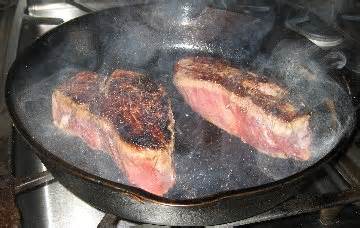
November 16, 2024 / arnoldtnn / 0 Comments
 In association with Emsan, a wide array of Lotus Rock cookware utensils are now sold throughout Turkey in a number of store outlets. All of these items are sold with Acacia wooden handles, either with the long square handle or the oval shape side handles.
Below are the various different Lotus Rock cookware items which are currently sold with Emsan in Turkey.
10″, 11″, 13″ Stir Wok
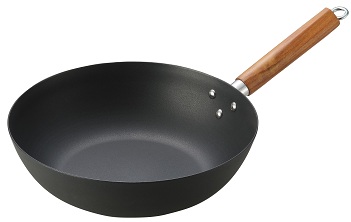
20cm, 24cm, 28cm Frying Pan
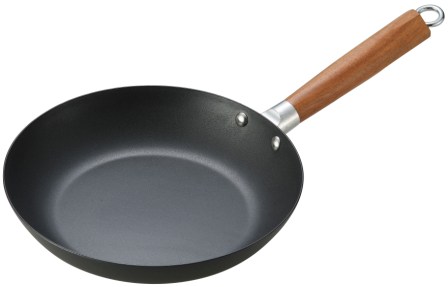
24cm Crepe Pan
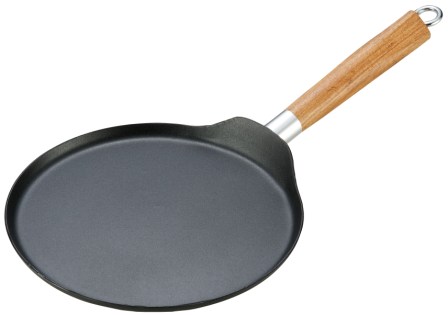
14cm Open Sauce Pan
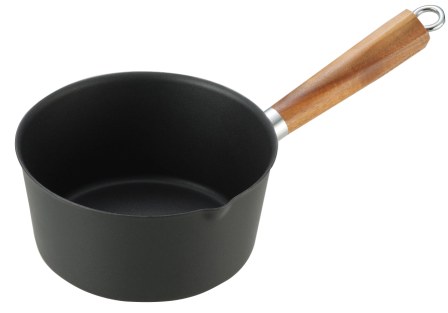
26*24cm Grill Pan
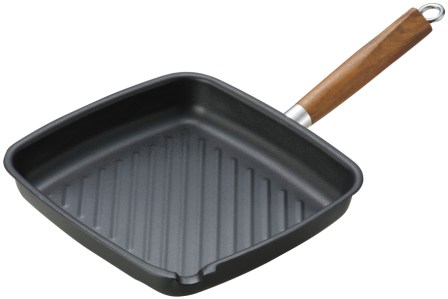
26cm, 28cm Braiser
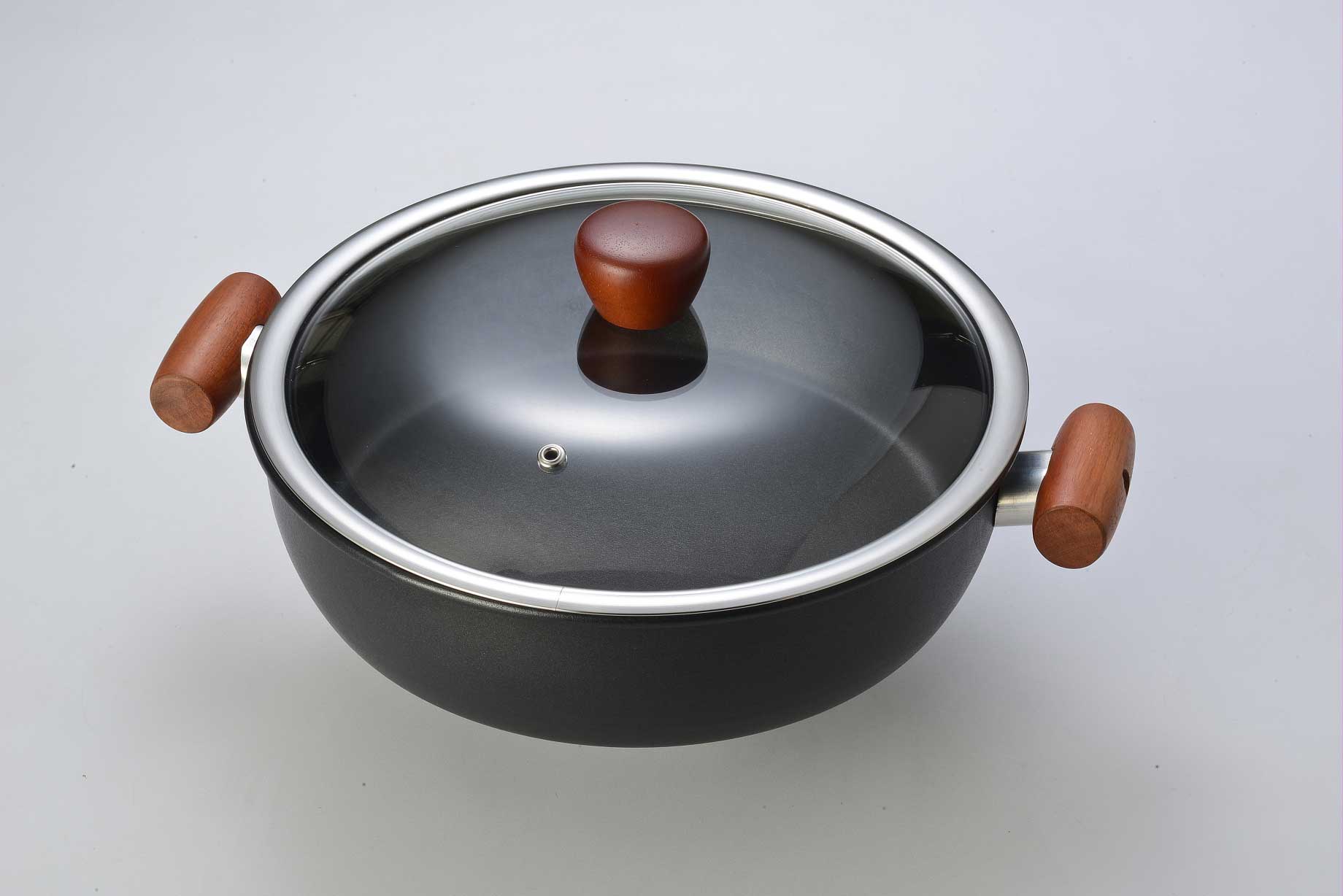
October 7, 2024 / arnoldtnn / 0 Comments
One of the significant disadvantages of non-stick coatings are their poor scratch resistance. Generally, on the Use & Care instructions for all non-stick coated cookware, metal utensils are prohibited and utensils, which use other materials such as wooden, plastic or rubber, are advised to be used with some care and attention. Although in recent years a lot of non-stick coatings have had reinforcing agents added to them, or their thickness through sol-gel technology increased to improve their abrasion resistance, nearly all non-stick coated cookware today is still not labelled as metal utensil safe.
However, with Lotus Rock items, whether they are for cooking, baking or for outdoor grilling, the natural, non-stick coating is metal utensil safe. So whether you want to carve up a turkey or a pizza; quickly stir fry some vegetables; flip over a crepe; turn over a steak or fish; or scrap off the delicious fond on your frying pan, all of this can be accomplished with a metal utensil, without any fear or apprehension of damaging the natural, non-stick surface of a Lotus Rock pan.
September 24, 2024 / arnoldtnn / 0 Comments
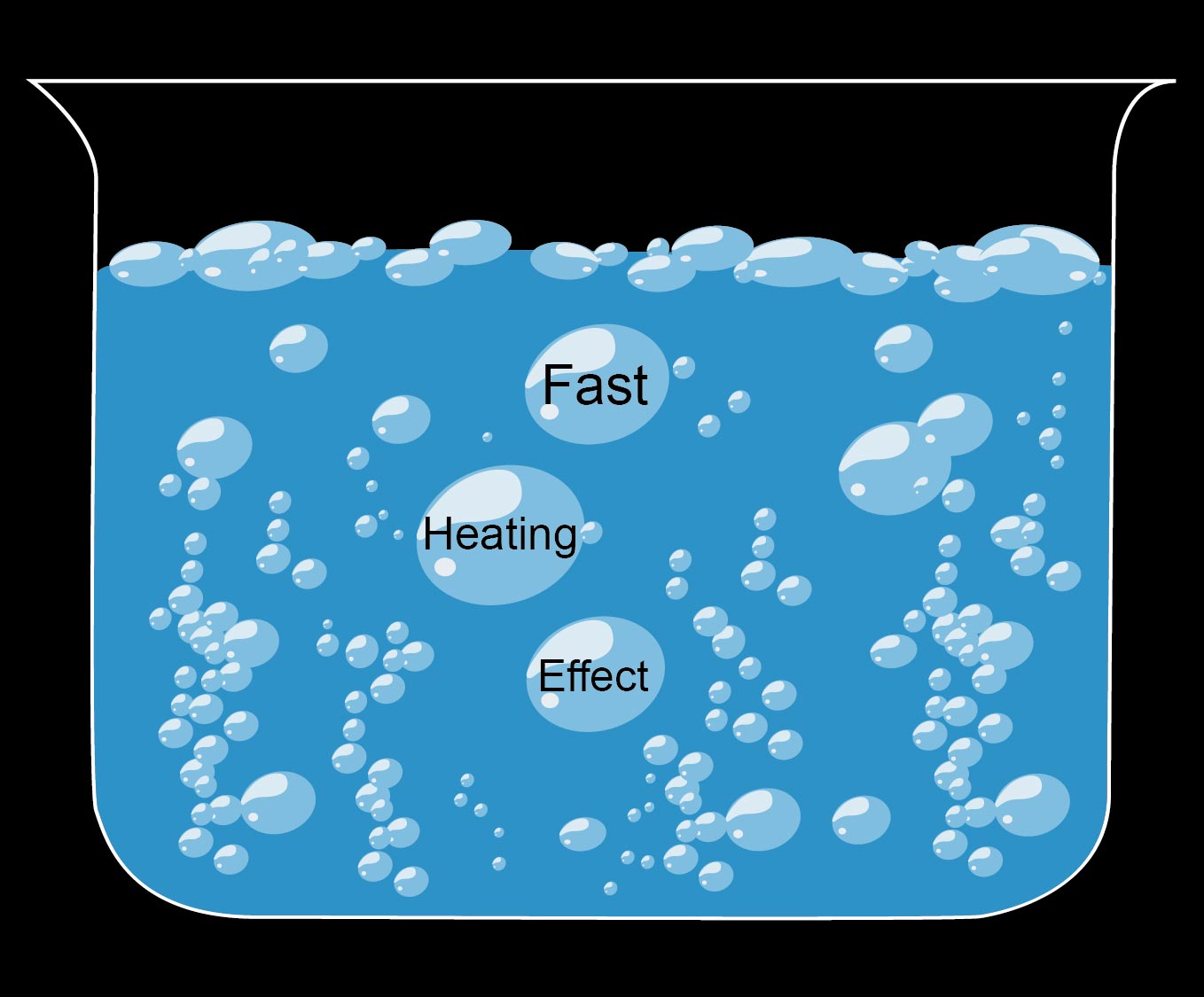
Moist-heat cooking uses water or steam to emphasize the natural flavor in foods. As previously explained here, a Lotus Rock Stir Wok can be an excellent way to steam a variety of seafood or vegetables. Conversely, for a submersion method of cooking, such as boiling, then either a Lotus Rock Sauce pan or Casserole is particularly good. The fast heating effect of the carbon steel substrate in a Lotus Rock Sauce pan and Casserole can reach the boiling point in water quickly. Cooking food within the rapid movement of bubbles in water, as they churn upwards to the surface, is an excellent cooking method to preserve the colour and nutrient content of some ingredients. In contrast, if certain types of ingredients are cooked for too long in water, such as through poaching or simmering, then they can either be discoloured or become quite mushy.
A quick boil of some vegetables, such as through Blanching or Parboiling, is also very useful if you want to prepare them for cooking later or for making an appetizing Crudite. Alternatively, boiling can also be used to re-heat vegetables instead of using the microwave.
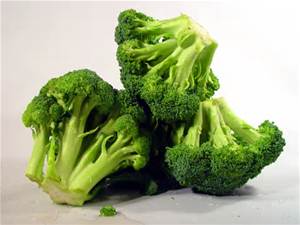 Green vegetables, such as Broccoli, Asparagus, and Green Beans, contain the pigment Chlorophyll, which is very sensitive to heat. If these vegetables are cooked for too long they will suffer major colour loss. The fast heating effect of a Lotus Rock Sauce pan or Casserole is the perfect utensil to preserve the pigment of green vegetables. A quick boiling in water not only maintains the flavour and colour of the vegetables, but also produces the desired texture too.
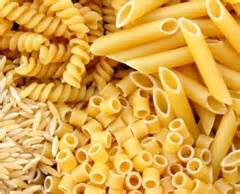 In addition to some vegetables, other types of food such as pasta also require water to be rapidly boiling while it is being cooked. This is so the pasta moves freely, cooks evenly, and so it doesn’t stick together. The fast heating effect of a Lotus Rock saucepan can ensure that the pasta is always cooked this way for a perfect ‘al dente’ crunch.
Lotus Rock Sauce Pan sizing:
14cm (0.69QT), 16cm (1.01QT), 18cm (1.80QT), 20cm (2.54QT)
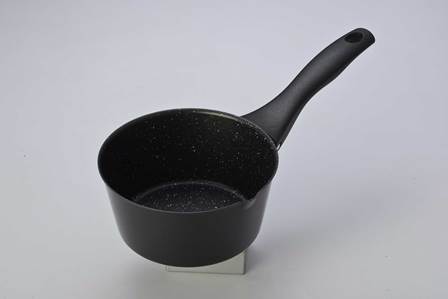
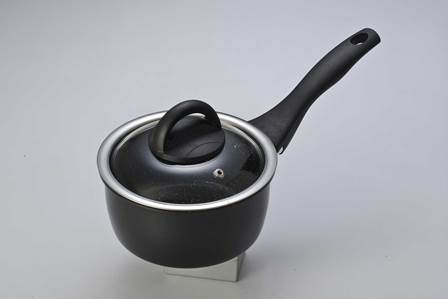
Lotus Rock Casserole sizing:
20cm (2.96QT), 22cm (4.23QT), 24cm (5.81QT), 26cm (7.40QT), 28cm (8.66QT)
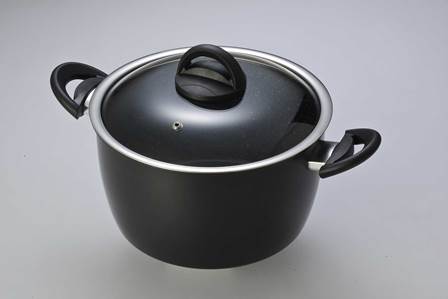
March 24, 2016 / arnoldtnn / 0 Comments
One of the significant benefits of a Lotus Rock pan is its special suitability for high heat cooking. Unlike a general non-stick pan, a Lotus Rock pan is excellent for pan-frying, grilling, stir frying, and sautéing on a high heat to develop a delicious, brown crust on meat, fish and vegetables.
However, for some popular dishes such as scrambled eggs, the browning reaction is exactly what you do not want. If scrambled eggs are cooked this way then they will be tough and rubbery, rather than soft or fluffy. So since the Lotus Rock material construction is highly suitable for high heat cooking, does that make it impractical for the type of low temperature cooking that is needed for scrambled eggs?
The straight answer to this question is an emphatic no, but in order to cook soft and fluffy scrambled eggs with a Lotus Rock pan a different type of cooking approach is needed. In fact, it is necessary to think more like a professional chef. In a restaurant kitchen, time and efficiency are of the utmost importance. It is for this reason that professional chefs often develop cooking techniques that make it possible to create some popular, well-known dishes in half the normal time, yet which taste just as good or, because of higher moisture or vitamin retention, even more delicious or healthy.
Currently one of the most famous professional chefs around is Gordon Ramsey, the presenter of the popular television series Kitchen Nightmares. In this video clip Gordon decides to cook a delicious breakfast for his wife who is still in bed upstairs. However, just like all professional chefs, he wants to cook the scrambled eggs quickly, partly to save time, partly so it can be eaten while still warm with sautéed mushrooms, tomatoes, and toasted bread. So rather than just use the standard cooking technique for scrambled eggs, which would be to use an aluminum non-stick coated frying pan to cook the eggs slowly until they form curds, he develops a different approach. Not only does he use a different material for the pan, stainless steel, but instead of just leaving it on the stove, he continually moves the pan to the counter top and back to the heated stove, stirring the eggs thoroughly throughout. The advantage of not heating the eggs continually is that they do not get over-cooked and tough. At the same time the high heat retention of stainless steel means that the pan does not get too cold while it is on the counter top, and so there is a reduced chance that the eggs will uncurdle and break up.
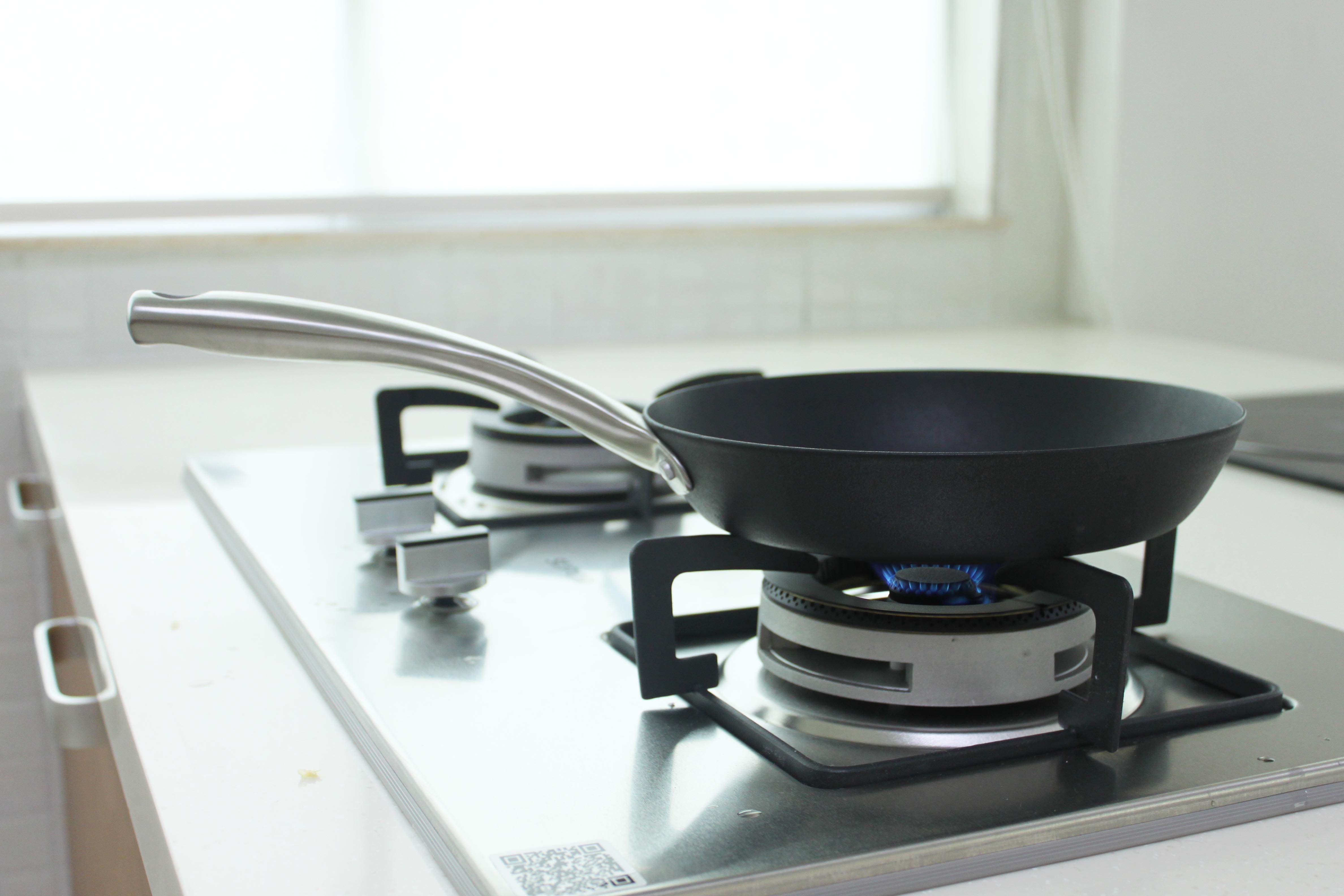 When cooking scrambled eggs with a Lotus Rock pan it would be advisable not to copy Gordon Ramsey’s cooking technique in its entirety because, although carbon steel, the substrate of all Lotus Rock pans, does have similar heat retention qualities to stainless steel, it also has a different rate of heat conductivity, which requires his technique to be modified slightly. Before adding any ingredients, pre-heat the pan at a very low temperature to allow the heat to be absorbed into its highly dense structure. Then turn the heat off and leave the pan to cool for about 10 seconds before adding the egg mixture, using a spatula to keep moving it from the outer part of the pan to the centre to allow as much of the mixture to cook evenly as possible. If during cooking you feel the pan has cooled down too much and the eggs are not coagulating as they should, return the pan to the stove to add some extra heat.
Another way to prevent overcooking is to add milk or sour cream to the eggs when whisking them together. Or alternatively, copy the Gordon Ramsey approach and add crème fraiche towards the end of the cooking to help cool the temperature of the eggs down.
So in conclusion, scrambled eggs can be cooked to perfection by removing a Lotus Rock pan from the heat source before adding the egg mixture, and by including another ingredient such as milk to slow the cooking process down. These soft and fluffy scrambled eggs can then be added to other ingredients for the perfect breakfast or entrée.
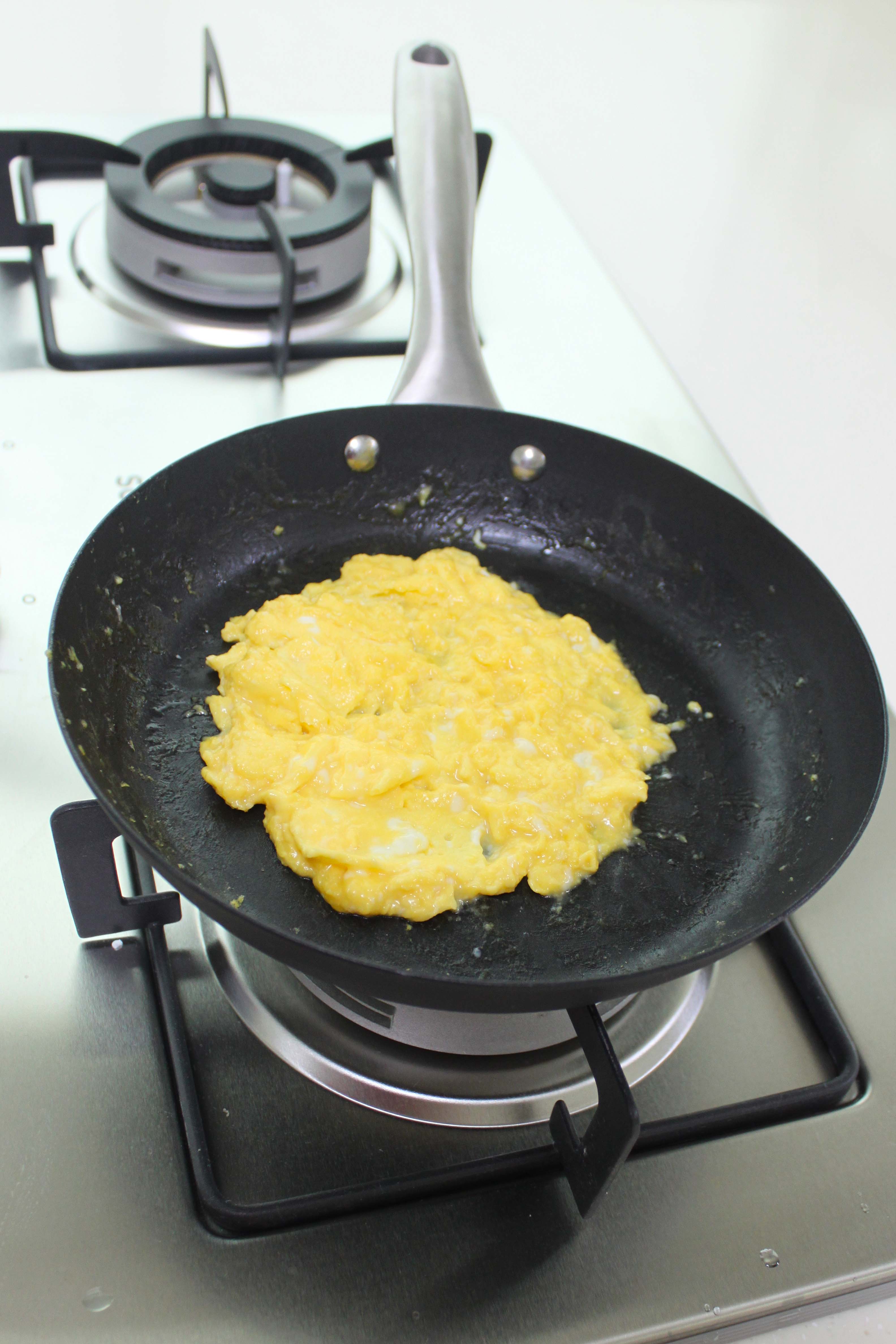
March 8, 2016 / arnoldtnn / 2 Comments
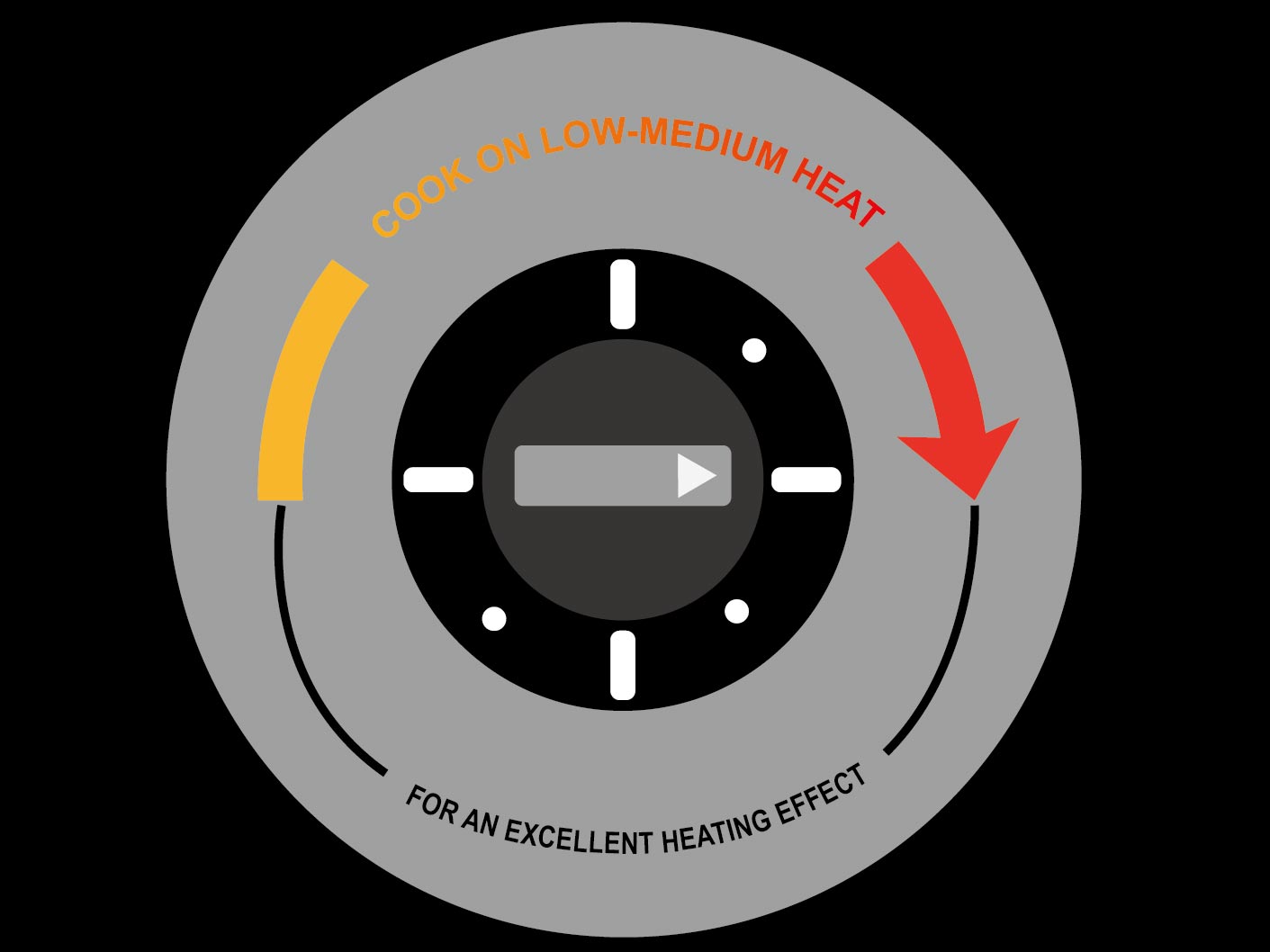
As was mentioned in the previous post, Lotus Rock is a highly distinctive and innovative cookware utensil, unlike other types of cookware sold in the market today. It has many benefits for use with cooking, including:
However, some of the benefits listed above require the ‘use and care‘ instructions for Lotus Rock to be followed – if not the pan will not perform to its optimum ability and performance. Without a doubt one of the most important instructions for using a Lotus Rock pan is to “Use a low-medium heat setting”.
Many pots and pans produced in the market today are made with aluminum. One of the advantages of aluminum for cookware is that it conducts heat very evenly; however it is not generally used for professional-style cooking because it has very poor heat retention. Its efficient heat conduction, along with its low density, means that aluminum has a low heat capacity, i.e. it loses heat very quickly. Consequently a medium-high heat setting has to be used in order to keep aluminium pans as hot as possible during cooking.
Lotus Rock, on the other hand, has very different thermal qualities to aluminum. The metal substrate for all Lotus Rock pans is carbon steel, which conducts heat less evenly than aluminum. As explained in this blog post, if a carbon steel pan has a thin gauge then most of the heat will be distributed to the centre of the pan. However, a Lotus Rock pan has a very heavy gauge, along with the thick ceramic layer on both the interior and exterior of the pan, which causes the heat to be distributed more evenly.
Below are some reviews that consumers in the USA have written above the heating effect for Lotus Rock pans.
“Outstanding Christmas gift for my husband who loves to cook. The best pans we’ve ever owned. Cleans straight away and stacks nicely in the cupboard. The only con I would say is learning not to use a high temperature. The pan sits so flat that we’re not used to this high quality item and using the same temperature we used from our old pans took some getting used to. These pans brown better than anything we’ve used before including cast iron skillets!””
“I finally got tired of my cheap, wobbly pans and ordered this set. They are very heavy and I’ve noticed that I can cook at a lower heat with them. Love them, only regret not purchasing them sooner!”
“Right now, I would rate them at 4.5 stars. There is a learning curve in switching from aluminum-based to carbon steel pans in terms of heating rate, temperature control, etc., so I’m still learning.”
“It’s a great size, I will use it a great deal. One warning, it cooks Hot, so keep the temps on your range lower until you get used to it. Not a bad feature, but something you should know ahead of time.”
The thermal properties of aluminum and carbon steel can be imagined as a bucket of heat with faucets dumping heat into and draining heat out of the bucket. Aluminum with its high heat conductivity has large faucets letting a lot of heat into the bucket, but also a lot out of it. However, because it is not very dense it cannot hold much heat so the water travels through the bucket quite quickly. Carbon steel, on the other hand, has a lower heat conductivity and so has smaller faucets. But it does have a larger heat capacity so it can contain more water. Therefore the water, just like the heat going through the pan, takes longer to get through and out of the tank.
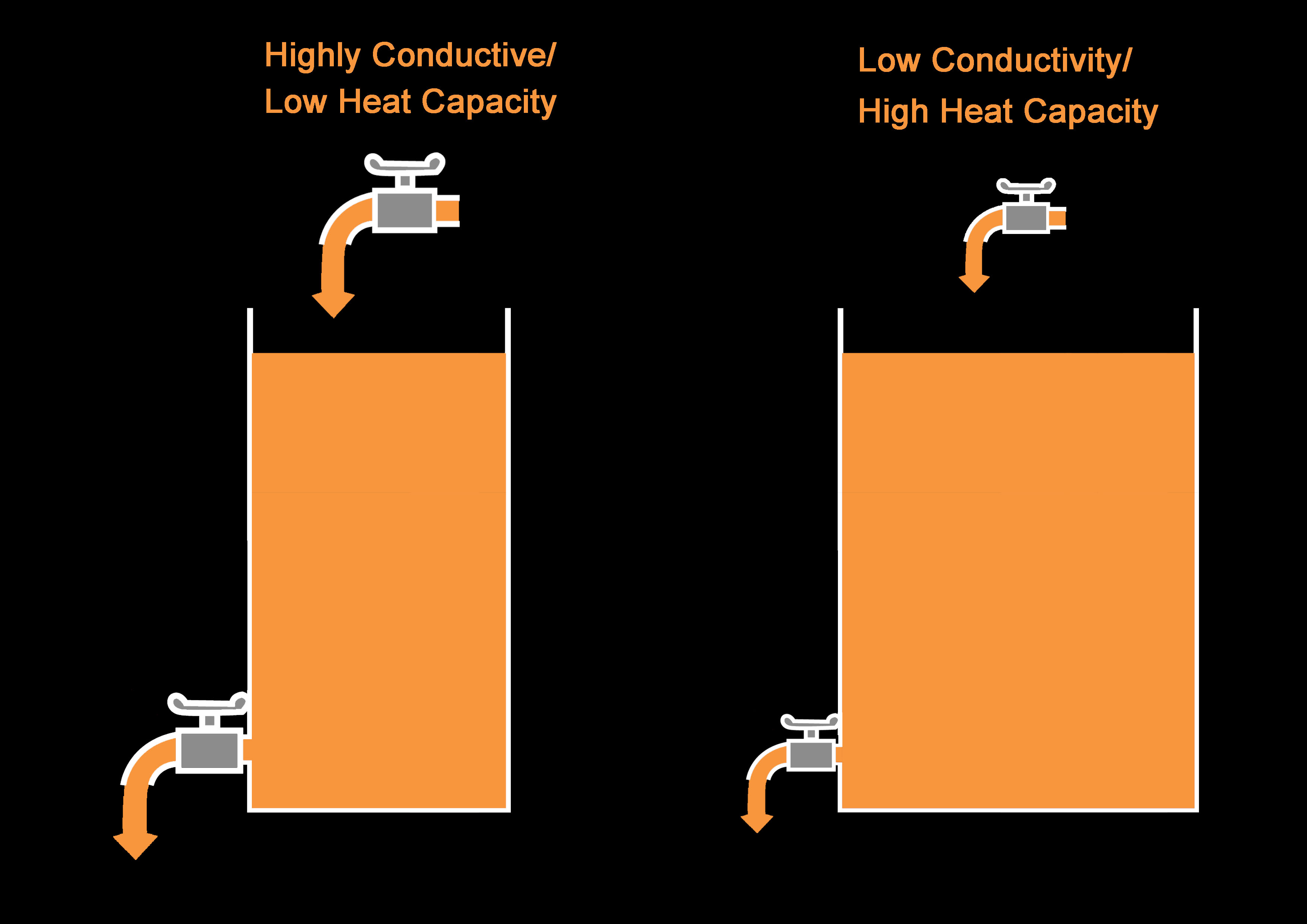
But even with its heavy gauge and thick, hard ceramic layer, if a Lotus Rock pan is put on a medium-high heat setting then it will not distribute heat as evenly as an aluminum pan. For a Lotus Rock pan to distribute heat evenly it needs to be put on a low-medium heat setting, so that the pan has the necessary time to build up and retain the heat inside it. It is true that even at a high heat setting a Lotus Rock pan will distribute heat around itself better than a pan with a thin gauge, but it will still be hotter at the centre than at the side of the pan.
Overheating a Lotus Rock pan has two other main disadvantages. First, there is a risk of warping the pan, causing it to spin motion on a flat top cooking surface, or, if, the centre of the pan will rises higher than the sides, preventing oil spreading evenly over its surface. The second disadvantage of over-heating is scorching. If the oil or other small ingredients are over-heated then they can cover the silicon-oxide crystal coating and cancel the non-stick effect.
Therefore, it is essential for a Lotus Rock pan to be used a low-medium heat setting, to allow a slow heat buildup into the pan’s highly dense structure. As explained above, unlike an aluminum pan, Lotus Rock has high heat retention even at a low heat setting. Heat from the stove top will not easily escape to the atmosphere or be drawn into ingredients on the pan’s surface. Therefore, for an excellent heating effect and to maintain the high quality of the Lotus Rock pan, it is essential to always pre-heat at a low-medium temperature. Remember: keep the heat down!
March 4, 2016 / arnoldtnn / 0 Comments
 A Lotus Rock roasting pan is highly versatile and extremely durable. Instead of just using it twice a year for special occasions such as Christmas or Thanksgiving, a Lotus Rock roasting pan can be used to roast, bake and sear a variety of dishes all year round. Not only can it be used to bake kitchen favourites such as lasagna, and maccorini & cheese, but a Lotus Rock roasting pan can also be used to make delicious gravy on the stove top. Its versatility is such that you don’t even need to worry about which type of stove top you can use it on because Lotus Rock is compatible for induction and all other typs of cooking top surfaces. Lotus Rock’s heavy gauge steel construction, along with a highly thick interior and exterior coating make it a very durable pan, which is especially suitable to withstand the constant wear and tear of a roasting rack sliding back & forth in a highly grease stain environment. The thick, black matte construction of Lotus Rock also ensures the roasting pan heats evenly, with no hot spots, for an excellent heating effect for golden brown potatoes and much else. So the next time you consider to purchase a roasting pan, remember it doesn’t just have to be for Christmas, it can be a pan for life!
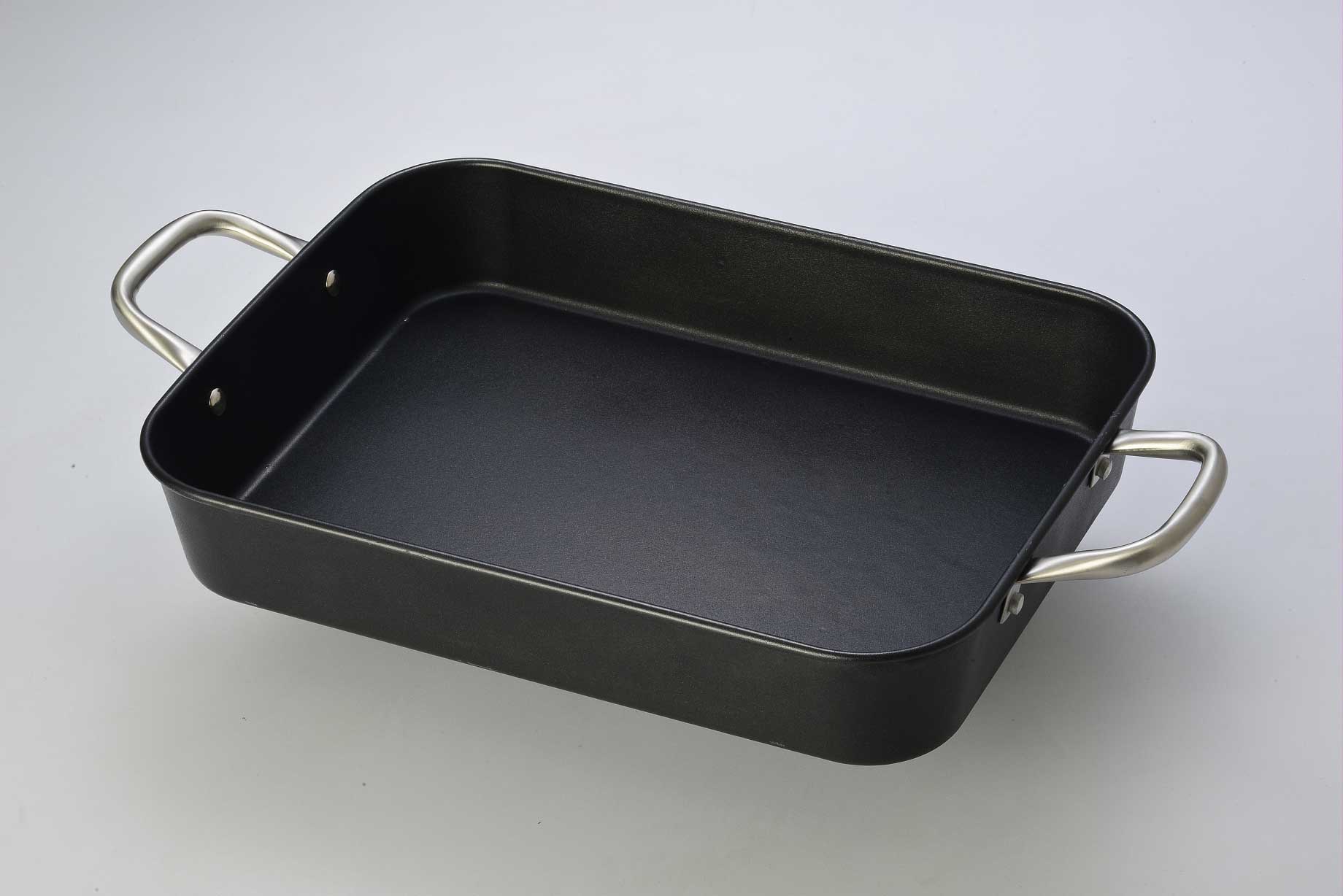
Product Specification
- Durable Lotus Rock construction stands up to the intense heat of your oven, stove-top or grill.
- Large stainless steel handles are easy to grasp even when wearing grilling mitts.
- Made with a durable, hard ceramic coating with a silicon-oxide crystal PFOA/PTFE-free, natural nonstick surface for easy food release and cleaning.
- Nonreactive cooking surface is ideal for deglazing pan and making gravies and sauces on the stovetop.
- Ideal for all types of cooktops, including induction
February 1, 2016 / arnoldtnn / 2 Comments
 As previously explained here, for best use a Lotus Rock pan should be pre-heated at a low-medium temperature. This way the pan will build up heat within its highly dense structure more gradually and evenly than if it is heated on a high flame immediately. Similar to cast iron, when a Lotus Rock pan has a lot of heat stored in it, the pan will brown, saute, grill, and stir fry food much better than if the food is added when the pan is still cold.
High protein content food, such as steaks, stick during cooking when the sulfur atoms in the protein react with the metal atoms in the pan, forming  a strong chemical bond and fusing the meat to the skillet. Once the pan becomes hot enough, the link between the protein and the metal will loosen, and the bond will eventually break.
A Lotus Rock pan is ideal for searing highly stick-prone food, such as a steak, because it can be pre-heated to a high temperature without damaging the pan’s non-stick performance or pan’s construction. Most general non-stick cookware is organic-bonded and so can easily break under a high temperature. If a non-stick coating is continually over-heated then it will either quickly start to degrade (such as peeling off or blistering), or if it contains PTFE for its non-stick release, a hazardous chemical smoke may appear which has been proven to be fatal to birds.
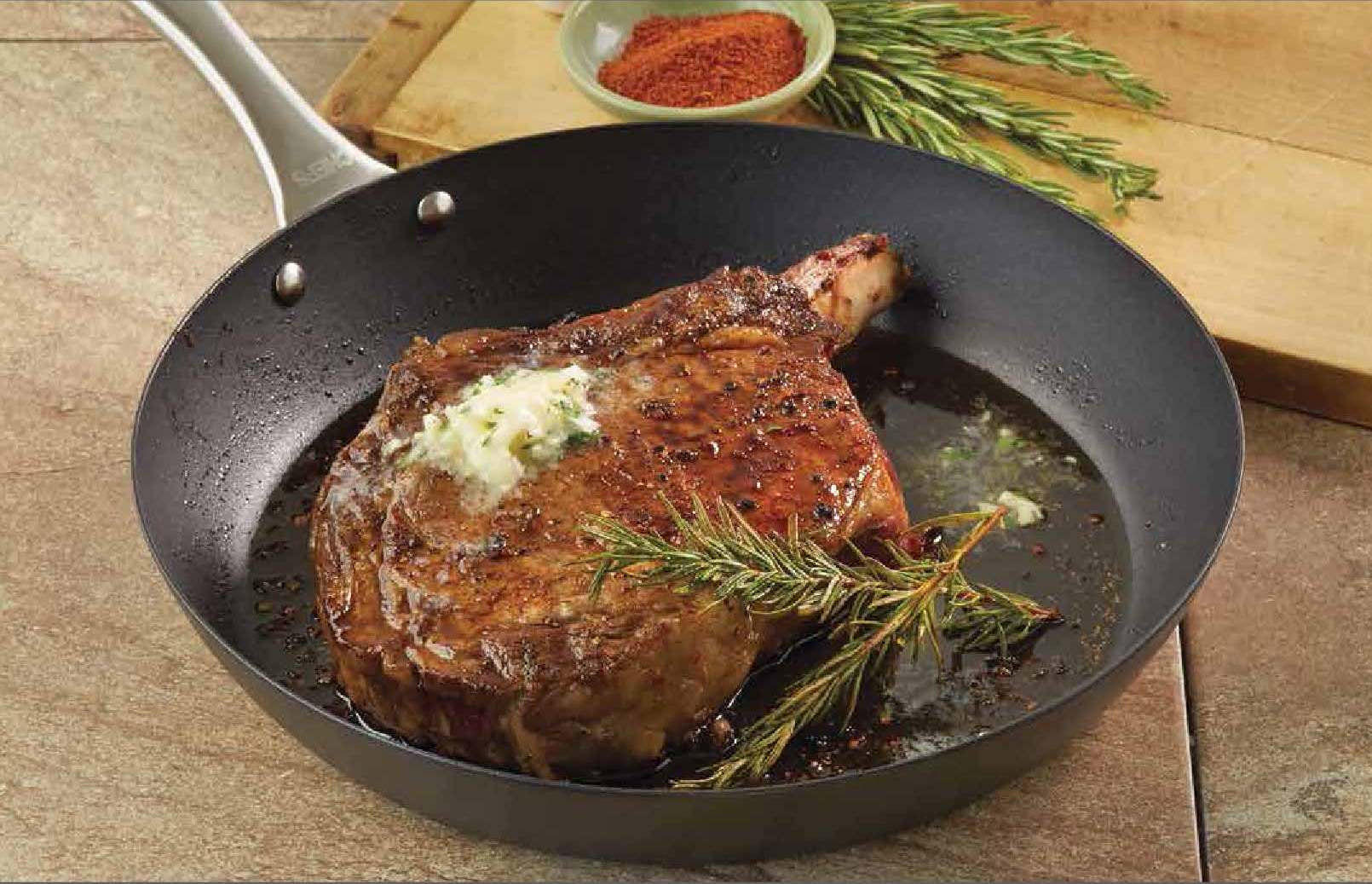
December 18, 2015 / arnoldtnn / 0 Comments

A Lotus Rock Baking Sheet isn’t just for baking cookies, it is a Kitchen Workhorse. Cooking enthusiasts might reach for a rimmed baking sheet many times a day. For such intense usage a pan that cannot be twisted and doesn’t warp easily is essential.
Common uses for a Lotus Rock Baking Sheet
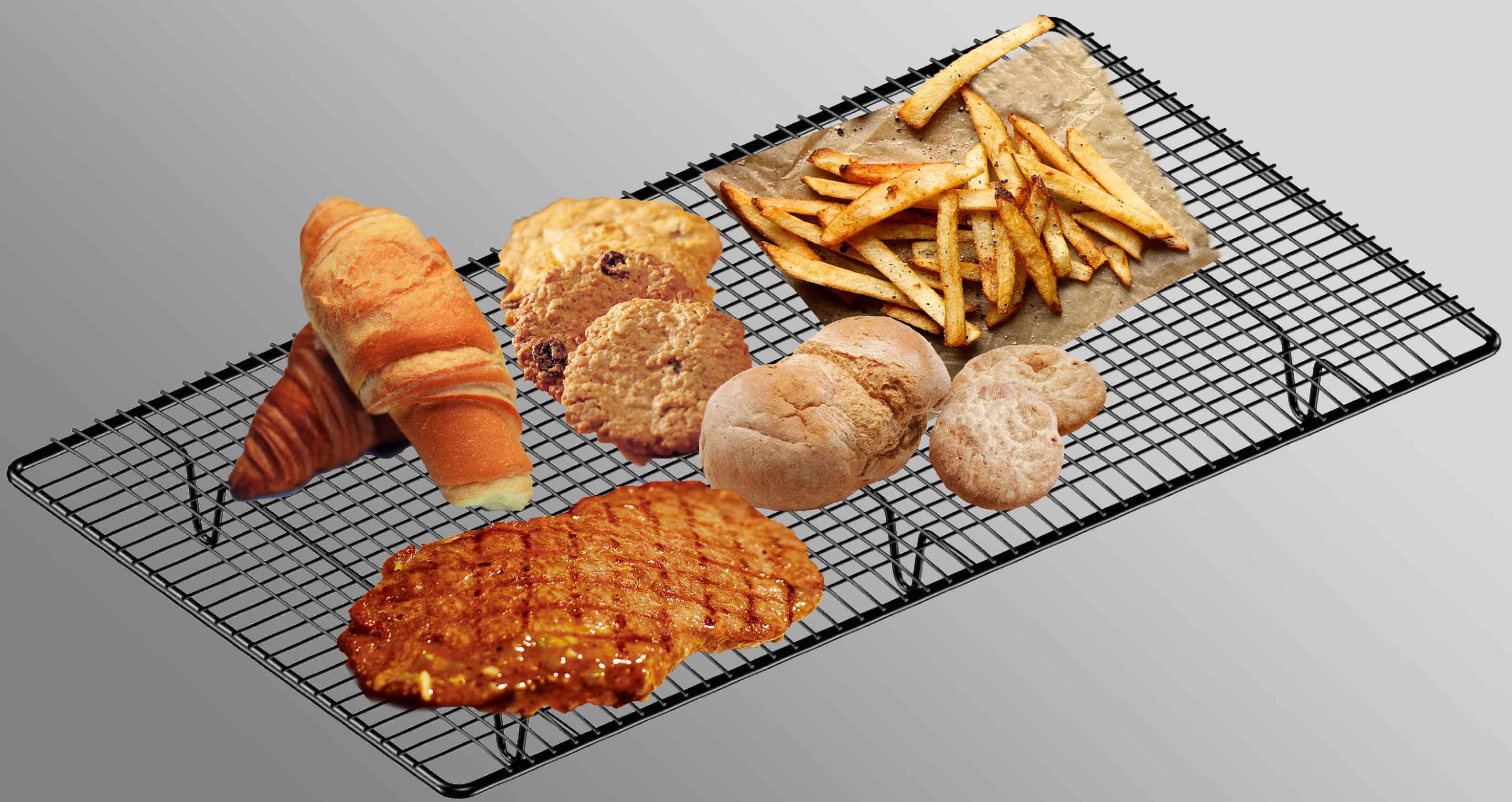 ROASTING
BROILING
BAKING
- Biscuits
- Baguettes
- Scones
- Jellyroll Cakes
PREPARATION WORK
- Holding ingredients on a wire resting rack
The most common problem with a baking sheet is warping due to its long length. A Lotus Rock Baking Sheet is made of heavy gauge steel, which can withstand frequent, daiily use and still be highly resistant to deformation.
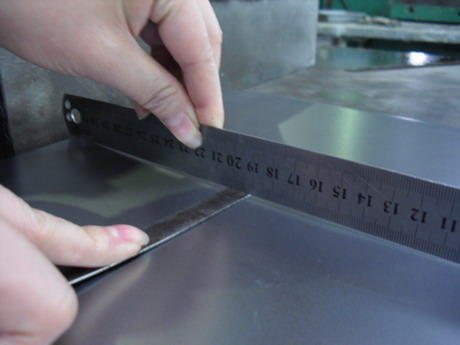 A simple ruler test can be done to judge the concavity of the baking sheet. Turn the pan over and set the ruler on top. Normally, if another ruler can be placed underneath, while at the same time touching the ruler above it, then the concavity is about correct.
The Lotus Rock Baking Sheet is produced in 3 different sizes: 13″, 14″, & 17″.
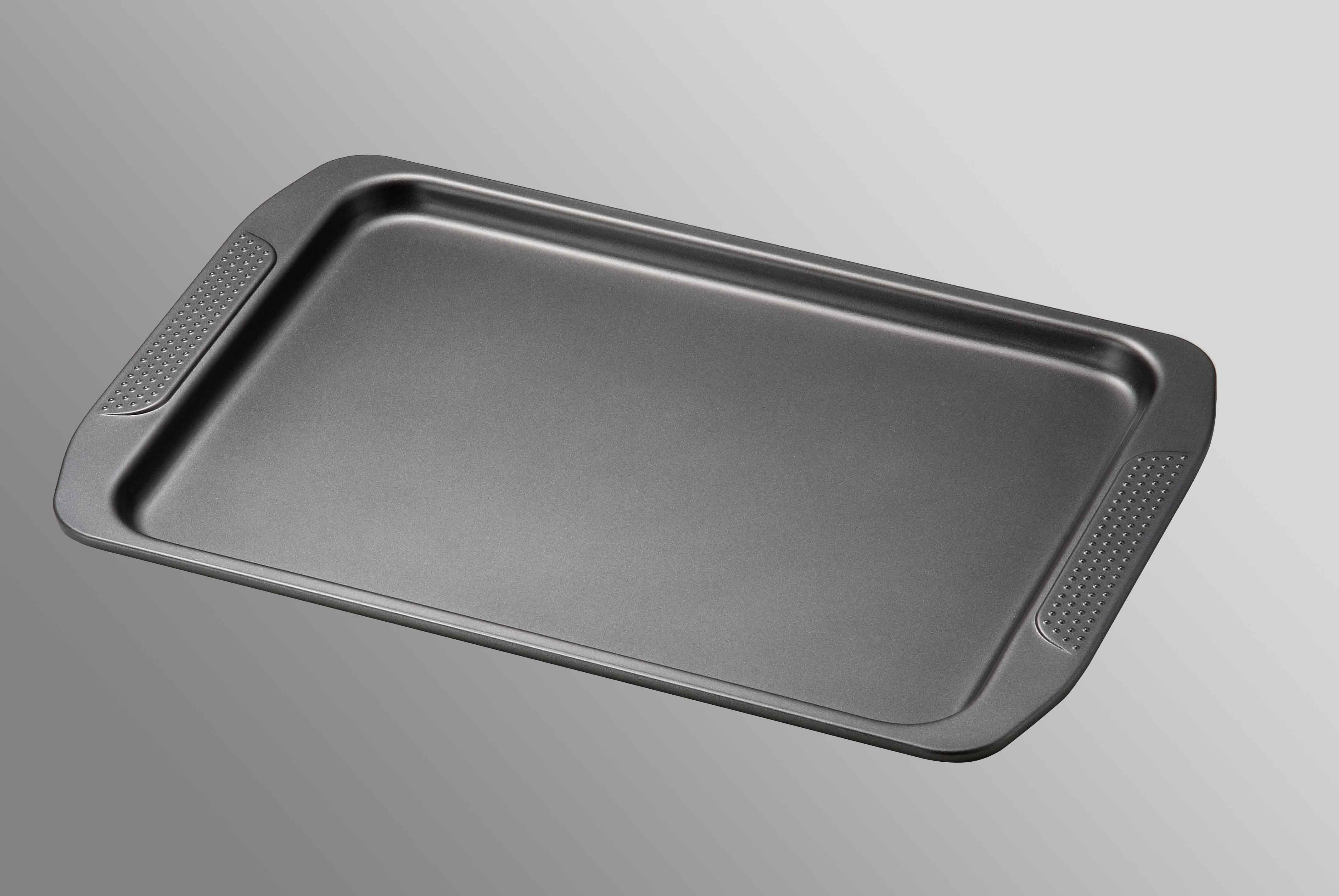
July 14, 2015 / arnoldtnn / 0 Comments
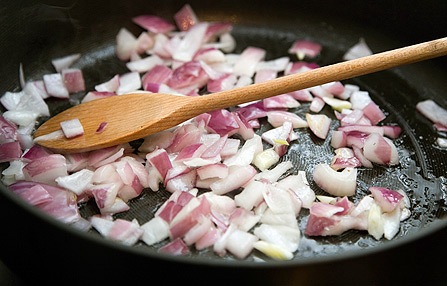
As many readers of this blog will already know, Lotus Rock cookware is excellent for high-heat cooking. Sautéing is one such commonly used high heat cooking method, popular in both domestic and professional kitchens. To sauté is to cook food quickly in a minimal amount of fat over relatively high heat. The word comes from the French verb sauter, which means “to jump,” and describes not only how food reacts when placed in a hot pan but also the method of tossing the food in the pan.
There are 3 things to keep in mind when sautéing:
i) The food should be cut into smaller, bite-sized pieces.
ii) A high heat and a good sizzle should generally be maintained at all times.
iii) The food should be tossed from time-to-time to ensure that it cooks evenly.
As has been explained here and here, a Lotus Rock pan has excellent thermal properties for high heat cooking, such as for sautéing. For a brief summary there are a few reasons for this. First, a Lotus Rock pan heats up very quickly because of the material properties of the carbon steel substrate within it. Secondly, its steel material gauge along with the ceramic layer coated around it is very thick. This high thickness ensures that heat is spread evenly around a Lotus Rock pan. Lastly, the high density of the steel along with the excellent insulation capability of the ceramic layer around it means that even when food is added for sautéing the temperature of the pan will not drop significantly. Thus, with a Lotus Rock pan a good sizzle can start immediately and be maintained without the food steaming in its own juices, for excellent browning and a succulent flavour.
However, even before the sautéing process can begin, it is important that the pan is pre-heated to a high temperature before adding oil or butter to it. If ingredients are added to a cold pan, with cold oil on it, and then slowly heated up this will result in food which is bone dry. The reason for this is related to moisture retention: if a piece of food is heated up slowly, the ingredients of the dish will gradually release moisture, gently simmering in their own fat. Instead for a better sautéing cooking result small cuts of meat and vegetables should be browned quickly at a high heat, which will at the same retain their moist and rich flavours.
A Lotus Rock pan is particularly suitable for being pre-heated to a high temperature for Sautéing. This is because the coating of Lotus Rock has a specially configured design which has very high heat resistance. The Lotus Rock silicon-oxide crystal coating is made up of inorganic substances: it is in the form of a thin crystal, which has no traces of carbon within it. Conversely, the type of ceramic material that the silicon-oxide crystal coating rests on can resist temperatures of up to 350 degrees centigrade. This is particularly advantageous for a high-heat cooking method such as sautéing which requires the pan to be preheated to a high enough temperature so browning can start immediately once the food is added to the pan.
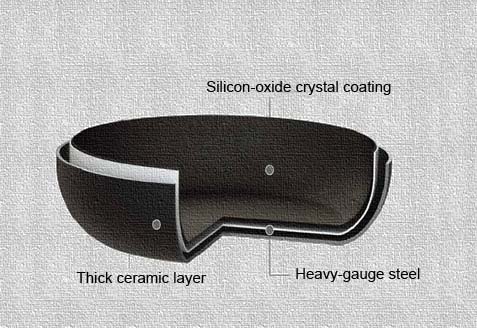
In contrast to Lotus Rock, most general non-stick cookware is organic-bonded and so can easily break under a high temperature. If a non-stick coating is continually over-heated then it will either quickly start to degrade (such as peeling off or blistering), or if it contains PTFE for its non-stick release, a hazardous chemical smoke may appear which has been proven to be fatal to birds. So in general, non-stick pans are not suitable to be pre-heated to a high temperature for a cooking method such as sautéing. Instead they are more appropriate for cooking more delicate produce, such as tofu or fried eggs, which do not require a very high heat at the start of cooking.
In addition to Lotus Rock, another material for cookware which does have very high heat resistance is cast iron. Pans made of this material have an excellent intense and even heating effect and can maintain a good sizzle at all times during sautéing. However, as was noted in point 3, generally a good saute requires some tossing and because of the heavy weight of cast iron pans, for most people this would be quite troublesome. Also, with sautéing it is important not to overcook the food in order to avoid excess moisture loss. Cast iron cookware is very slow to cool down, so unless the food is taken out of the pan very quickly, many of the bite-sized pieces may well continue to sizzle too long and be browned too much.
Conclusion
Sauteing is a dry heat cooking method, and it is an ideal means for searing or browning food, a process that imparts significant flavor. To accomplish this, high heat is needed and food must not be introduced until the pan and the fat have been pre-heated first.
A Lotus Rock pan is ideal for sautéing because it can be pre-heated to a high enough temperature* to start browning and caramelizing meat and vegetables immediately, without damaging the pan’s non-stick performance or construction. A Lotus Rock pan’s heavy gauge carbon steel and thick ceramic coating has the necessary thermal properties to generate intense heat for a good sizzle, all of which is essential for sautéing. Conversely, a Lotus Rock pan is not so heavy that it cannot be tossed from time-to-time to ensure that the sautéed food cooks evenly.
Conversely, the thick gauge and density of the steel substrate, along with the excellent insulation properties of the ceramic layer coated around it, mean that even when food is added to a Lotus Rock pan only a limited amount of heat is lost from it. This means that when a cook wants to add some diced potatoes or chicken to saute it doesn’t have to readjust the heat setting to get the pan hot enough again at the optimum temperature for excellent browning and caramelizing.
*Important! Although a Lotus Rock pan does have excellent high heat resistance, its fast heating effect does mean that the pan should always be heated at a low-medium temperature. This way a Lotus Rock pan will build up heat within its highly dense structure more gradually and evenly than if it is heated on a high flame immediately. As explained above, when a pan has a lot of heat stored in it, the pan will brown, sauté, grill and stir fry food much better than if the food is added when the pan is still cold. If a Lotus Rock pan is heated up too quickly this may damage it through warping its base into either in a convex or concave shape, which could make the pan obsolete for use on a flat top cooking surface.
A popular Saute pan in the Lotus Rock cookware collection has a 28cm diameter and is attached with the Zurich forged stainless steel handle.
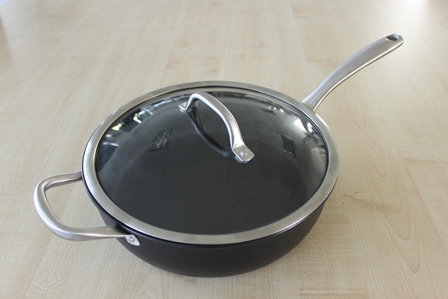
Product Features
- Rugged hard carbon steel construction offers optimum strength and durability
- Highly innovative, reinforced ceramic coating is metal utensil safe
- Engineered of virtually pure, heavy-gauge 2.0mm carbon steel for fast, even heating
- Ultra-durable thick ceramic exterior will not chip, stain or crack
- Silicon-oxide crystal cooking surface does not react with acidic foods
- Tempered, domed glass lid with wide stainless steel band seals in moisture and nutrients
- Cast, brushed stainless steel, double-riveted handle for stay-cool cooking
- Easy-grip helper handle ensures safe transfer of food
- Straight sides accommodate liquids; a lid locks in moisture for slow braising.
- Rims are shaped to allow for dripless pouring.
- Classic matte finish delivers elegant cooktop to tabletop presentation
- Safe for gas, ceramic, glass, electric, halogen and induction stove tops
- Oven and broiler safe to 450 F
- PFOA/PTFE-free
July 1, 2015 / arnoldtnn / 0 Comments
Previous posts on this blog have explained how a Lotus Rock wok can be used for a number of different basic cooking techniques, such as stir frying, steaming and deep fat frying. However, its versatility doesn’t stop there; a Lotus Rock wok is also excellent for smoking various types of popular dishes, such as salmon and chicken wings.
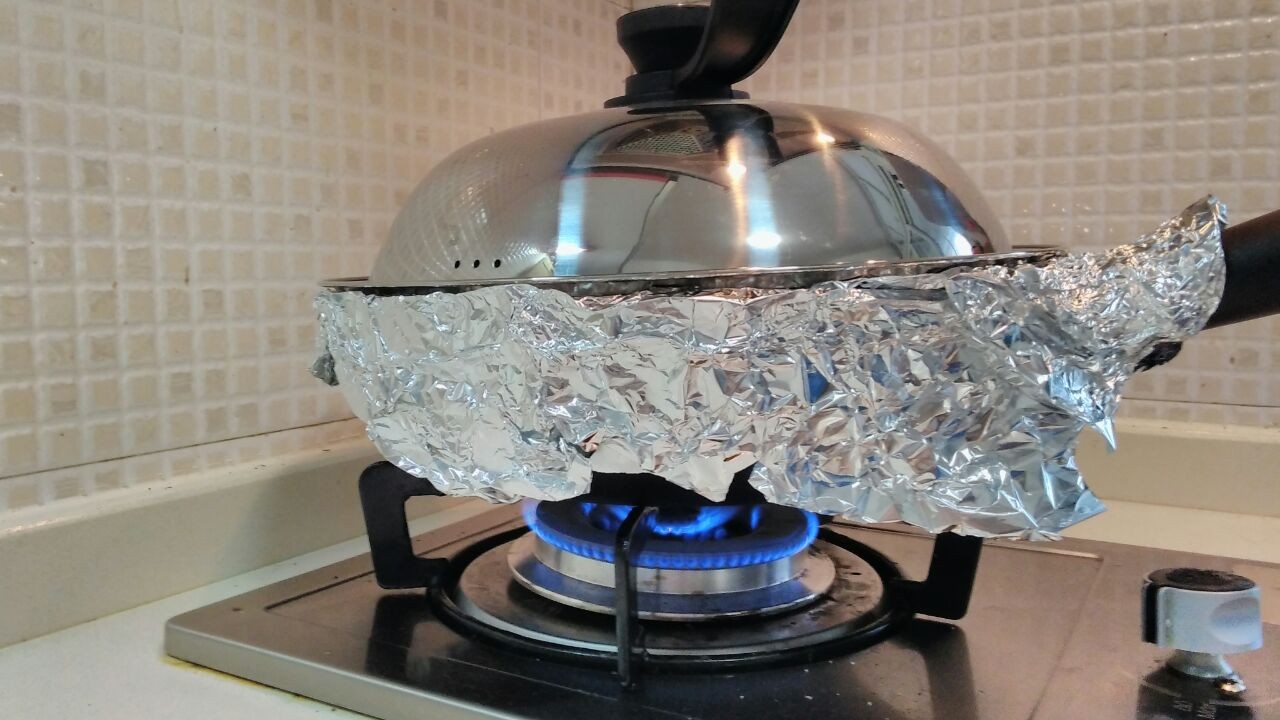 Normally when people think of a cooking technigue such as smoking they would imagine a large backyard with a big outdoor grill, but in fact this is not necessary. All you require is a wok, aluminum foil and a stove top. However, a wok isn’t just more convenient to use for smoking, it has some other advantages over an outdoor grill. One such benefit is that the heat under a wok is much more adjustable than the blast you get from hot coals on a grill or in a smoker, which expands the possibilities when it comes to choosing ingredients to smoke with. A wok is also very suitable for smoking compared to other standard pans because its spacious interior provides more room for smoke to circulate around the food.
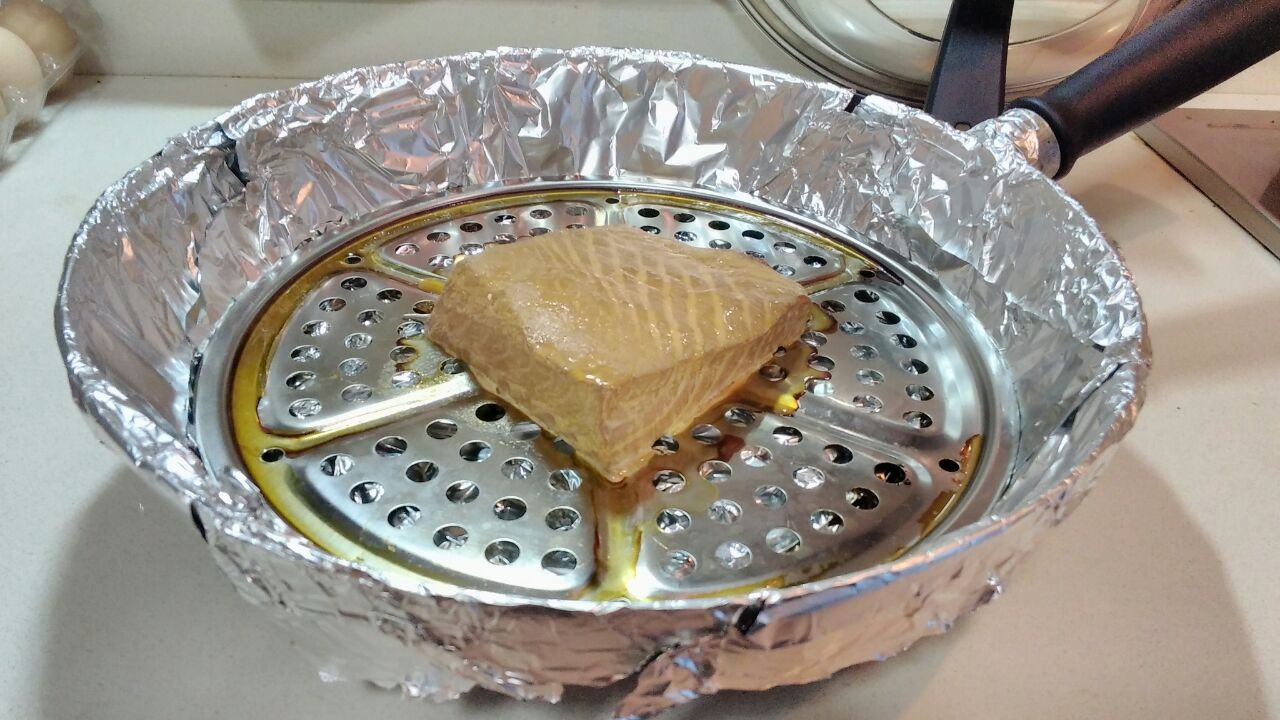 The method for smoking salmon, for example, with a wok is simple: scatter tea leaves, sugar, and rice in the bottom of a foil-lined wok—the tea contributes aromatic smoke, the sugar caramelizes to lightly color and sweeten the food, and the rice acts as the fuel source, keeping everything smoking. Take another piece of foil and make it into a small circle that will cover the mixed ingredients below. Then get a round cooling rack and place it on top of the aluminum foil. After placing the salmon on the centre of the rack, cover the wok with another large piece of aluminum foil, and tent it so there is enough space for the smoke to circulate above and around the salmon. Make sure to press on the edges of the aluminum foil so no smoke gets out. Before you put the wok on the stove top place a dome shaped lid carefully on top of it. Heat the wok on high until you see smoke coming out of it, at that point you will need to lower the heat to about medium and let it smoke for about roughly 10 minutes. When the salmon is ready to be checked make sure you go outside before taking off the lid.
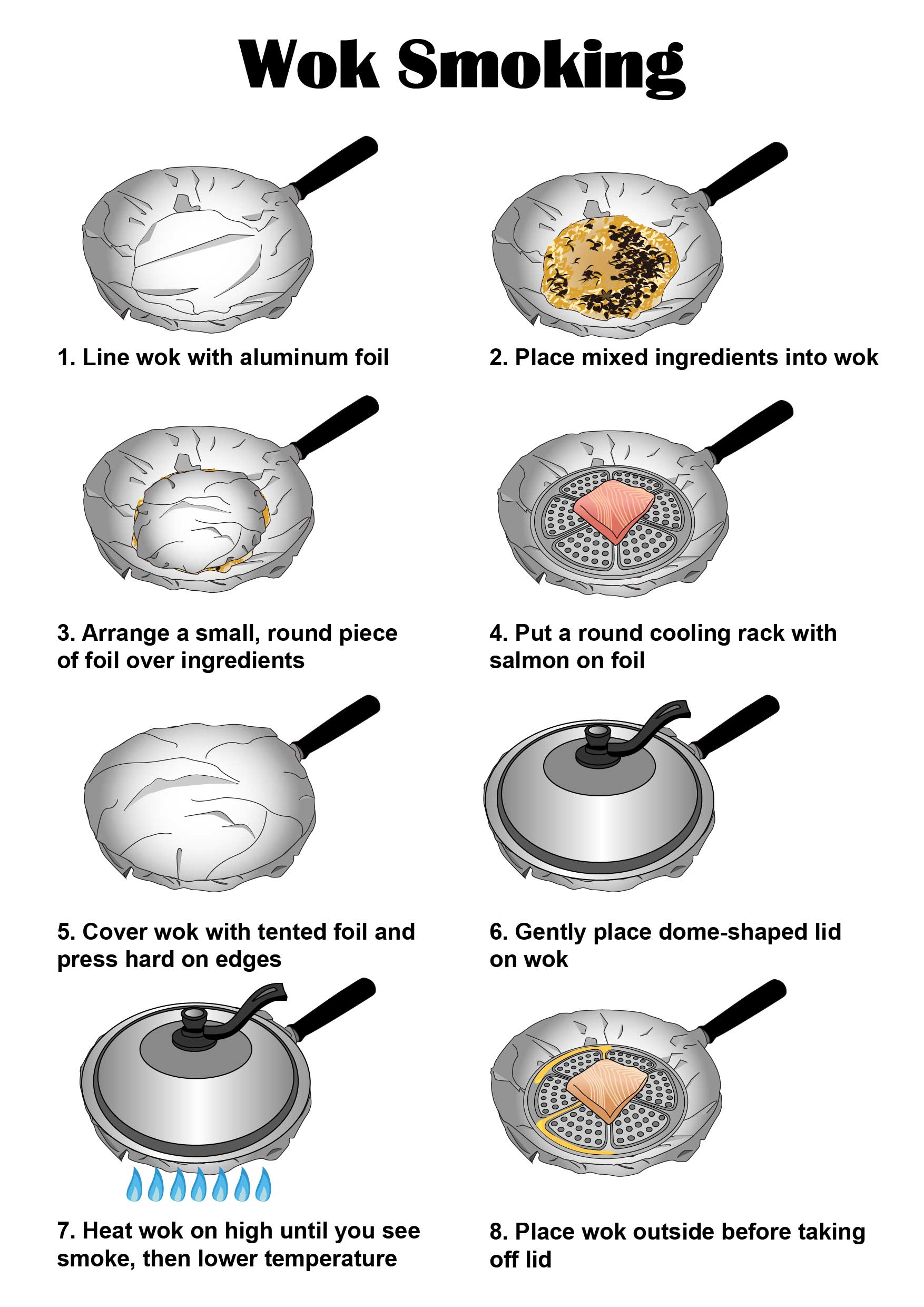
June 23, 2015 / arnoldtnn / 0 Comments
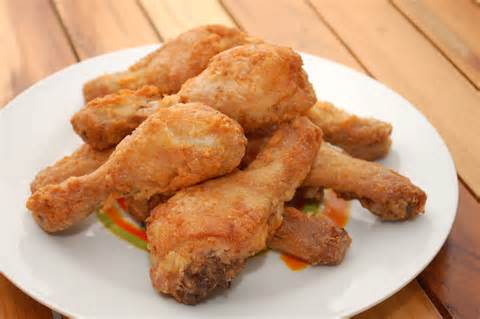
As explained in the previous post, a Lotus Rock Stir Wok is an excellent cooking utensil for steaming various types of food. However, unlike steaming which uses boiling water, Lotus Rock’s non-reactive coating can also be used for another highly intensive cooking method which instead uses boiling oil: deep fat frying.
Oil temperature
Good deep fat frying is all about getting the right oil temperature. Among cooking experts 325 degrees Fahrenheit is generally considered the optimum temperature at which to deep fry food, such as for chicken, shrimp and French fries. At this temperature the heat is high enough to turn the water in a piece of chicken to steam, to dry out the outer edge, and to form a brown, crispy crust, all the while cooking it for a moisty and creamy centre.
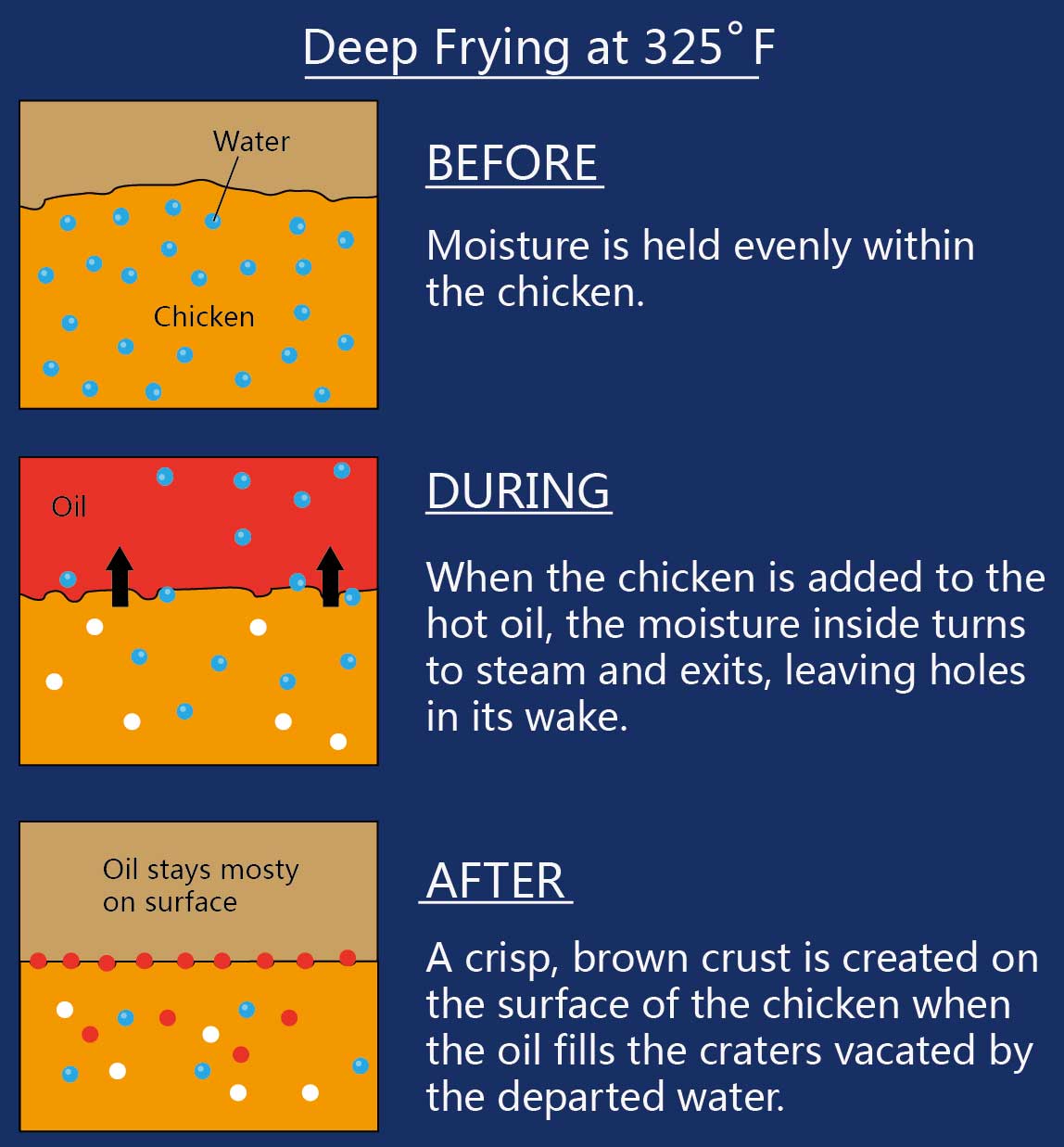
However, if the temperature is too low then the browning reaction does not occur. If this happens then there is nothing keeping the moisture of the fried food from migrating to the outer edges, and the result is a limp and soggy end product.
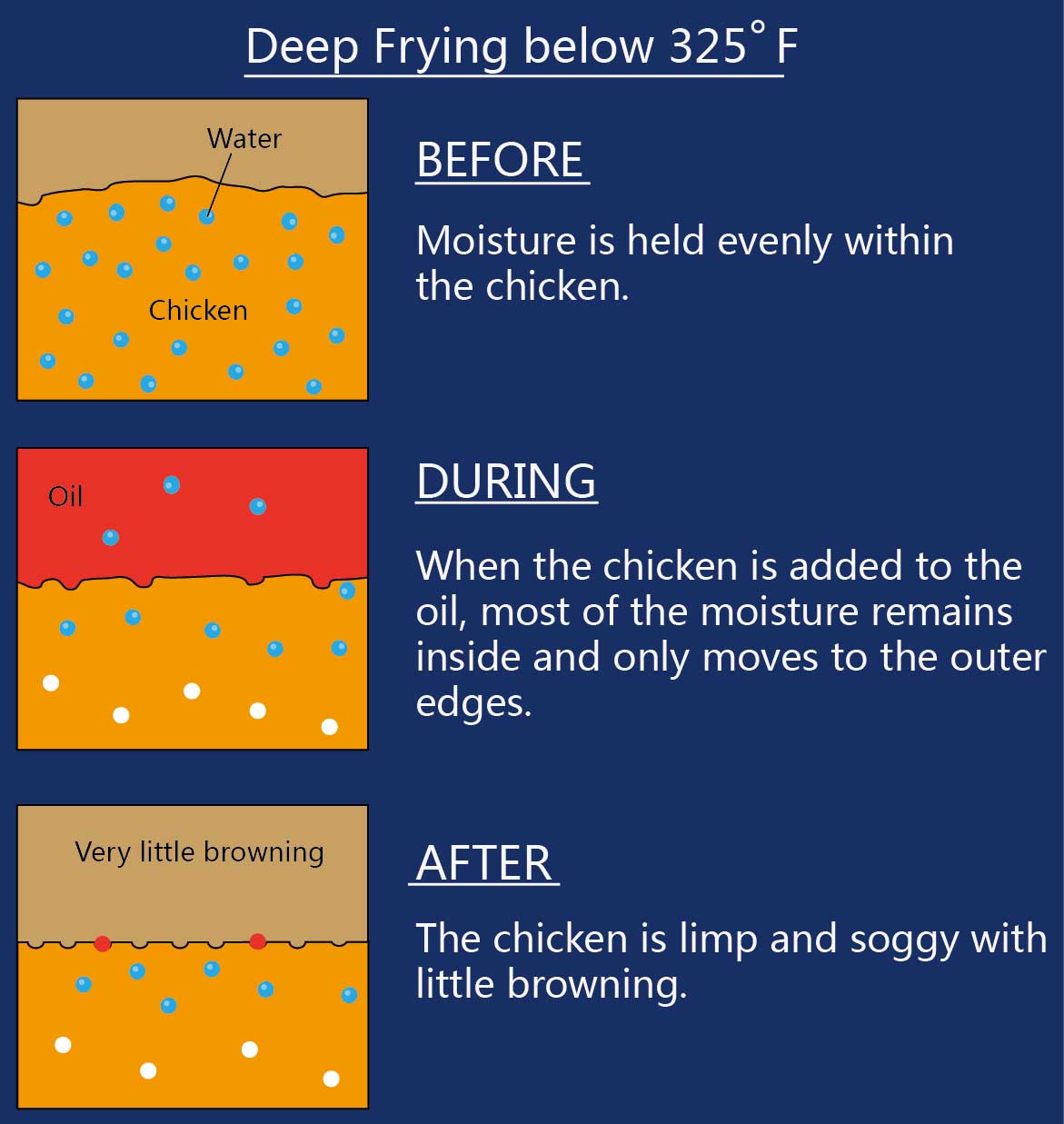
So, for delicious fried food the oil temperature is very important and a Lotus Rock stir wok has excellent thermal properties to not only reach a a high temperature quickly but also to retain it within the pan while the food is being fried. Lotus Rock is made up of a thick 2.0mm carbon steel substrate, a material which heats up very quickly. On an induction cooking top surface it can reach an internal surface temperature of 284 degrees Fahrenheit after only 60 seconds of heating. At this fast rate of heat conduction the ideal oil temperature for deep fat frying of 325 degrees Fahrenheit can be reached quickly. Conversely, because of the high density of the heavy 2.0mm gauge carbon steel, a high amount of the conducted heat is retained within the wok to maintain a high oil temperature despite the cooling effect of adding food for frying.
Stir wok shape
A Lotus Rock’s stir wok concave shape is particular advantageous for deep fat frying. Normally, for domestic kitchens a straight-sized cooking pot such as a Dutch oven is often used. However, this type of cooking utensil has a number of disadvantages for deep fat frying compared to a stir wok, these include:
- Messy. The straight-sided edges of a Dutch Oven mean the kitchen surface can quite often get splattered with little droplets of oil splashing out from the sizzling food inside the pot. In contrast, the edges of a wok spread out a good 7 centimeters or so on either side from where the oil is cooking, catching any splashes of oil and keeping your kitchen surface cleaner.
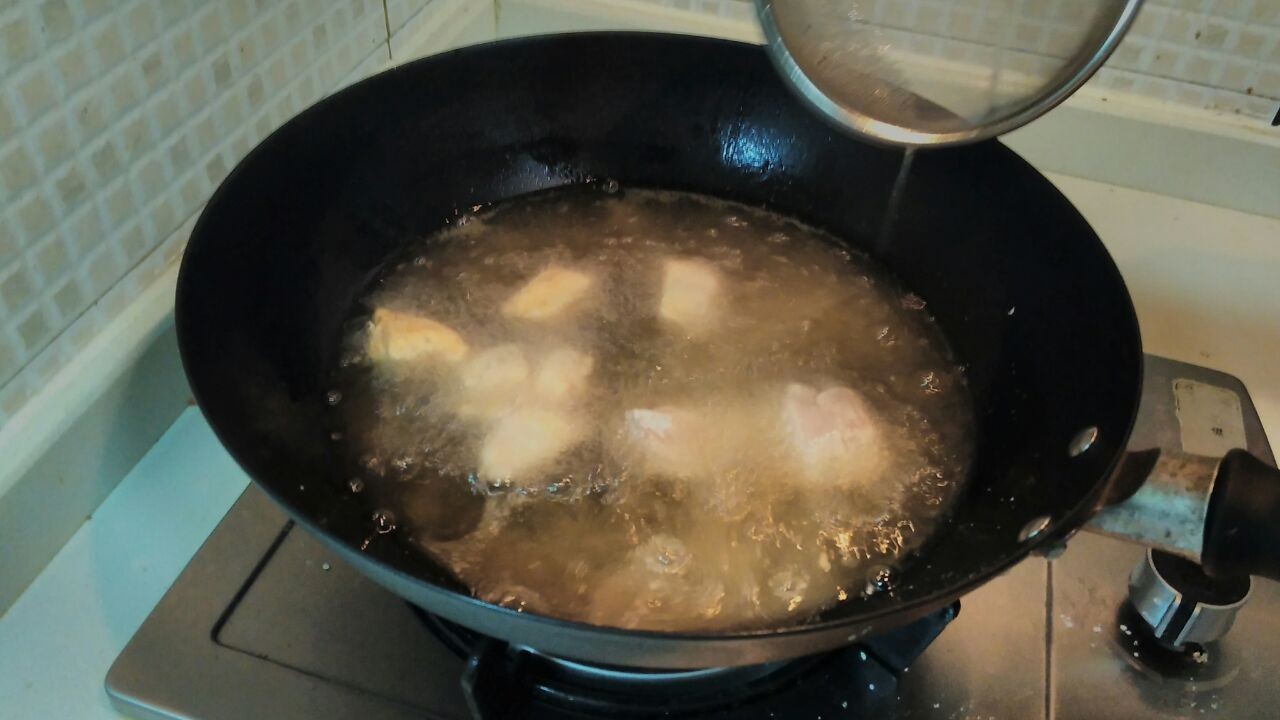 Cooking surface area. The extra space provided with the wide edges of a stir wok is not only beneficial for keeping oil inside, but it is also useful for maintaining a high oil temperature. With deep fat frying it is important that the food is not too crowded inside the pan. If there is too much food in the pan then it will be more likely to congregate together which would cause the temperature of the oil to decrease. As explained above, if this happens and the temperature drops to below 325F (generally considered the optimum temperature for deep fat frying) it can leave the surface of the fried food soggy when instead it should be crispy. With the wider cooking area of a stir wok compared to a Dutch Oven, food can be fried more evenly, at a high temperature in order to develop a tasty dry, crispy crust.
- Easier cleaning. During deep fat frying bits of fried food, such as burnt bread crumbs, will separate and sink to the bottom. With a Dutch Oven these can congregate in the corners of the pan making it very hard to clean properly. With a wok, on the other hand, these dirty particles have nowhere to hide and are easier to remove with a strainer as you fry.
- Less oil needed. Deep-frying in a wok is ideal because its concave shape requires less oil than a regular pot. This is especially useful because you cannot dispose of oil in in a plastic garbage liner. So the less oil you have after cooking, the less hassle you will have to get rid of it.
Conclusion
A Lotus Rock stir wok’s material composition and shape makes it particularly suitable for deep fat frying. It’s fast heating effect can get the oil up to a high temperature quickly while its thickness and density can maintain that temperature even when food is being added to the wok. Unlike a PTFE non-stick coated wok, which might get damaged from hot particles of oil getting inside the coating, a Lotus Rock stir wok has an extremely tight bonded ceramic layer, which has very high heat resistance and can withstand the rigors of deep fat frying. Other materials for a wok, such as stainless steel, might well have a strong construction to withstand the effects of a high oil temperature, but they will not heat up as quickly or retain heat quite as well as a Lotus Rock stir wok. Getting the right oil temperature inside the wok is very important for good deep fat frying for if it is not hot enough, then the moisture inside the food will not turn to steam, the outer edge will not dry out, and the trademark brown and crispy crust will not form. Deep-frying in a wok is ideal because its concave shape requires less oil than a Dutch Oven, and the wide cooking surface area of the wok allows more food to be fried at one time without over-crowding, which with a Dutch Oven would mean frying in fewer batches.
June 16, 2015 / arnoldtnn / 0 Comments
A wok can be used for a variety of different cooking methods. These include the most obvious one, stir frying, and also deep frying and smoking. It is less well known that with the right accessories, such a steel rack and a dome-shaped lid, a wok can also be used for steaming.
Steaming with a wok involves placing the food on a perforated steel rack above a small amount of simmering water and covering it all with a lid. As the water evaporates it creates steam which transfers the heat energy to the food and cooks it. Foods that can be cooked this way include:
- Pastry-based foods, such as dumplings or other dim sum-related dishes.
- Green vegetables, such as broccoli, artichoke, eggplant, are all very suitable for steaming.
- Shellfish and seafood
- Soft, fatty cuts of meat before stir frying.
What are the benefits of steaming compared to other cooking methods?
Steaming is a relatively quick and hassle-free cooking method for those who wish to spend less time in the kitchen, but without compromising the taste and nutritional value of their food. Steaming preserves nutrients in the food that are destroyed by micro-waving, pressure-cooking or boiling, especially folic acid and vitamin C. Studies have shown that boiling reduces folic acid by 35% and vitamin C by 25%, whereas steaming reduces both by only 15%.
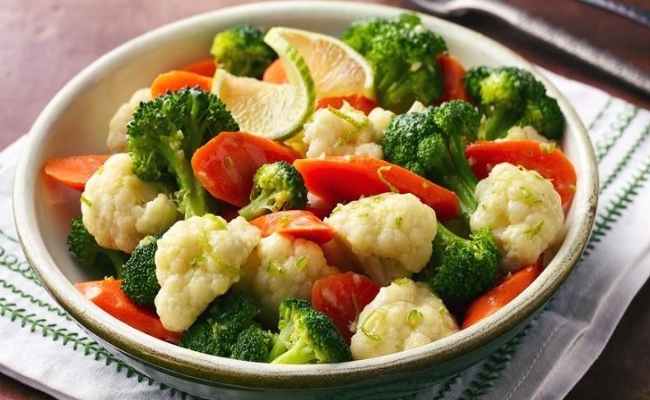
Why use a Lotus Rock stir wok for steaming?
Most stir woks are made of the following materials:
- uncoated carbon steel, uncoated cast iron;
- stainless steel;
- non-stick coated aluminum.
Steaming requires a large amount of water to be boiled, making it preferable for the wok’s surface to be non-reactive (i.e. coated). If it is not, boiling water in the wok will cause rust or will remove or discolour the seasoning. Consequently uncoated carbon steel and cast iron woks, which both have excellent thermal properties for stir frying, are unsuitable for steaming.
Aluminum non-stick coated stir woks have the opposite problem. Although a PTFE non-stick coating is very non-reactive, it is not bonded very tightly together and during steaming the particles of fast moving water vapour can penetrate the coating, making it peel off and impairing its quality. In recent years ceramic coatings have been used on stir woks, and this type of coating is much more tightly bonded together than a PTFE non-stick coating. However, although a ceramic coating may have a stronger construction than a PTFE non-stick coating, the silicone oil which gives the coating its non-stick release cannot withstand the high temperature which occurs during steaming and so often the silicone oil dries out quite quickly.
Uncoated stainless steel is a more appropriate material for steaming, as its surface is more non-reactive than either carbon steel or cast iron, and there is no non-stick coating to be damaged. However, steaming is a very intense cooking process and even a stainless steel wok can, over time, start to rust if frequently used for steaming. In addition its thermal properties (uneven heat transmission, with a high tendency for hot spots) make it less suitable for stir frying, which is what woks are mostly used for.
A Lotus Rock pan has none of these disadvantages. Unlike uncoated carbon steel and cast iron, a Lotus Rock pan has a non-reactive surface which is suitable for boiling water. Unlike most general non-stick cookware (whether PTFE or ceramic), which is organic bonded and can easily break under a high temperature, the Lotus Rock coating is made up of inorganic substances and has much higher heat resistance. This type of coating material is more advantageous for a cooking method such as steaming, especially when compared to a general non-stick coating, which will either break up or dry out in such hot and moist conditions. Lastly, in contrast to stainless steel, a Lotus Rock stir wok’s thick carbon steel base has a much better heating effect for stir frying, making it more multi-functional.
Lotus Rock stir wok accessories for steaming
Stainless Steel Rack
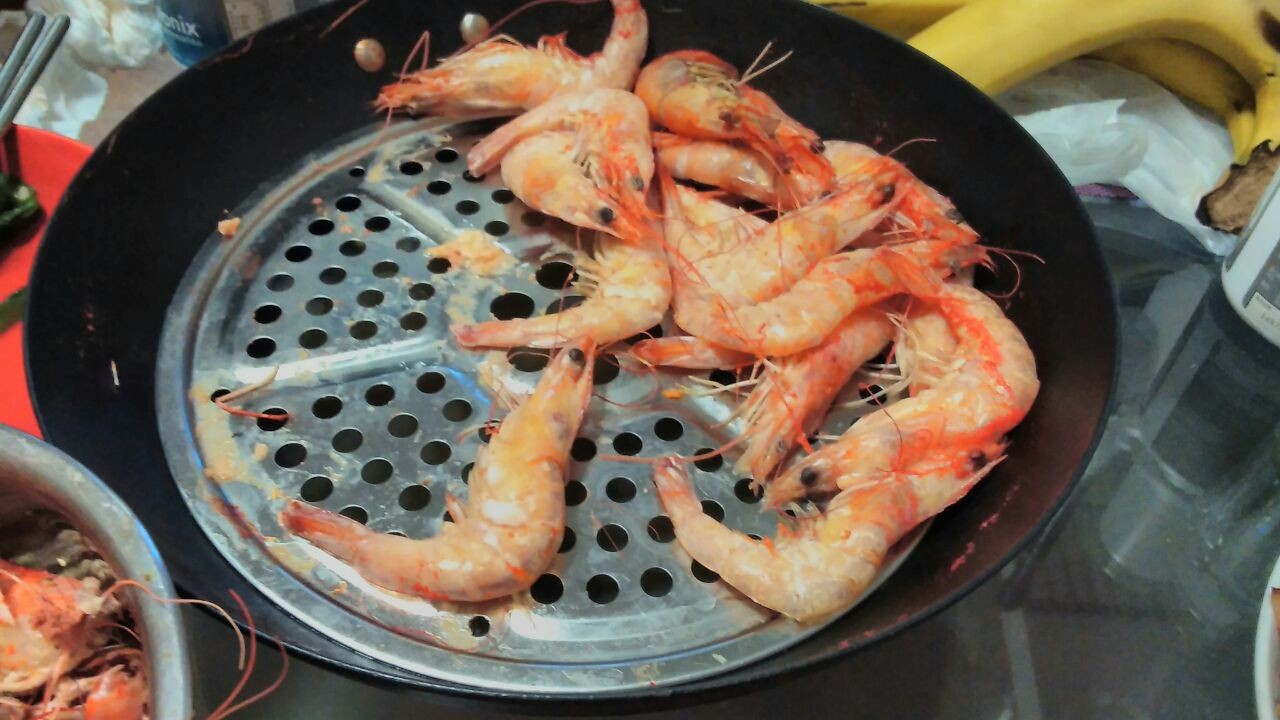 A Lotus Rock steamer rack is thick and strong enough to withstand the weight of one or more porcelain dishes on top of it, for steaming entrees, such as fish, which taste better if the juices can be used for a sauce. The stainless steel material is highly heat-proof, with excellent corrosion resistance. The holes in the rack are wide enough to create convection currents to circulate the steam around your food. However, they are also small enough to prevent food falling into the boiling water below. All Lotus Rock steamer racks are sold with a diameter which generally fits half way down the stir wok. This way there is enough space for the steam to circulate between the food and the lid, while at the same time ensuring there is enough distance between the rack and the boiling water to avoid water splattering and soaking the food.
Stainless Steel Glass Dome Lid
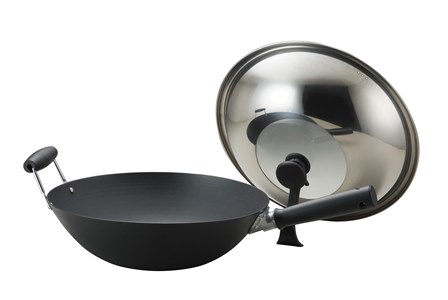 A tight-fitting dome-shaped lid is essential for steaming. In order to ensure that very little steam escapes from the wok during cooking all Lotus Rock lids are manufactured to fit the edges of the wok very tightly. The dome shape is important because it allows condensation to run down the sides of the lid, rather than dripping onto the food you are steaming. The rim and sides of a Lotus Rock stir wok lid are made of stainless steel, whose its strong construction can withstand the intense heat from the rising steam below it. To steam food well timing is all important (if you steam for too long then the food can be quite dry), so a glass centre allows the cook to monitor the progress of the cooking more easily and safely. Lastly, the lid has a clip-on knob design which allows the lid to be safely removed from the wok (especially useful after steaming as the temperature inside the wok can get very hot). After this the lid can then be placed upright on the kitchen worktop with the clip-on handle as support.